Four Books. Four Number Ones.
I never considered myself a writer. If you had mentioned the idea to me years ago, I never would have believed it. But after hearing so many people encourage me to write about EMS history, leadership, and my experiences, I'm glad I finally picked up the pen. With the release of The Dark Ages of EMS, four of my last four books have reached #1 in one or more Amazon categories. That's not something I ever planned for or expected, and it's worth pausing to reflect on what it means.
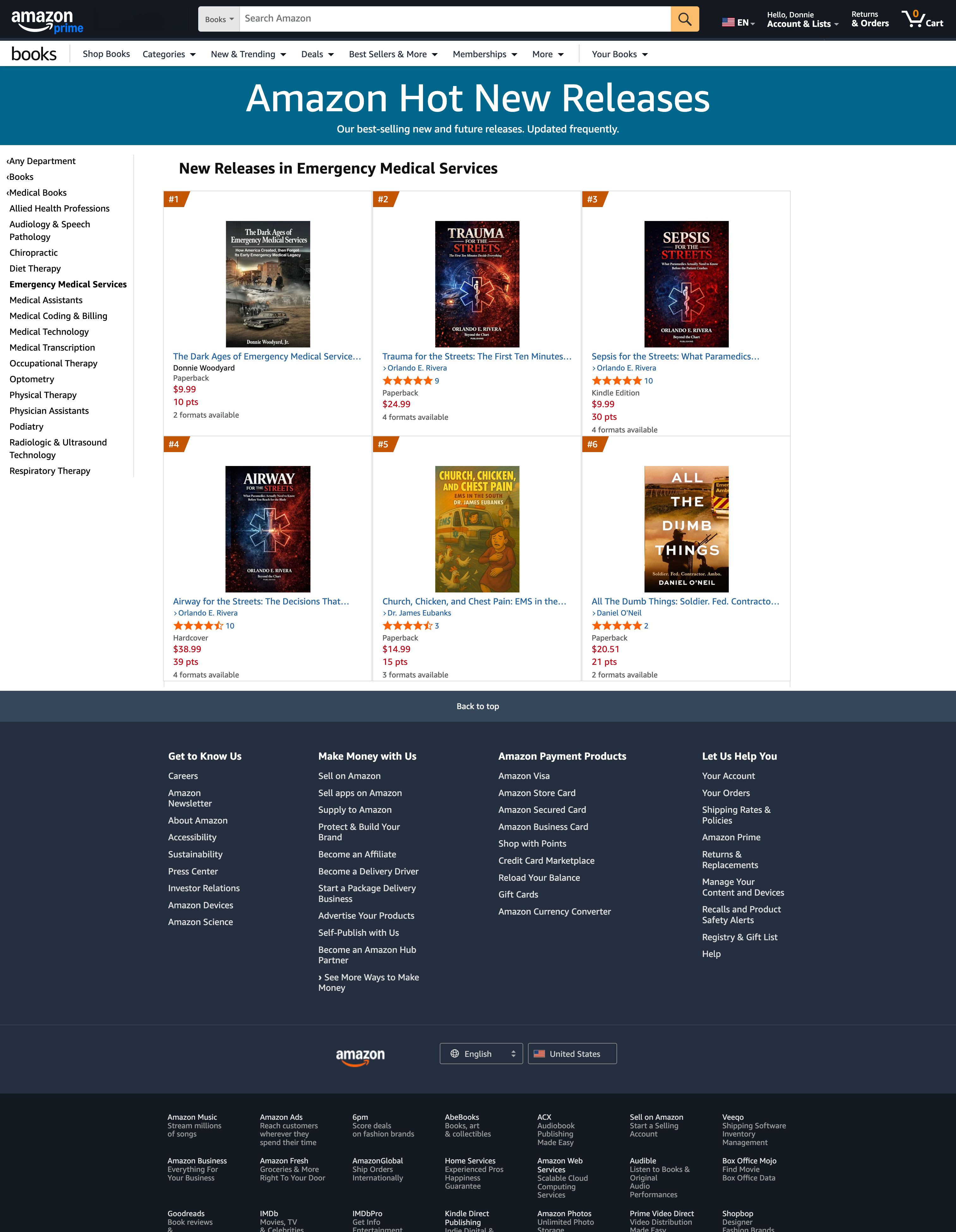
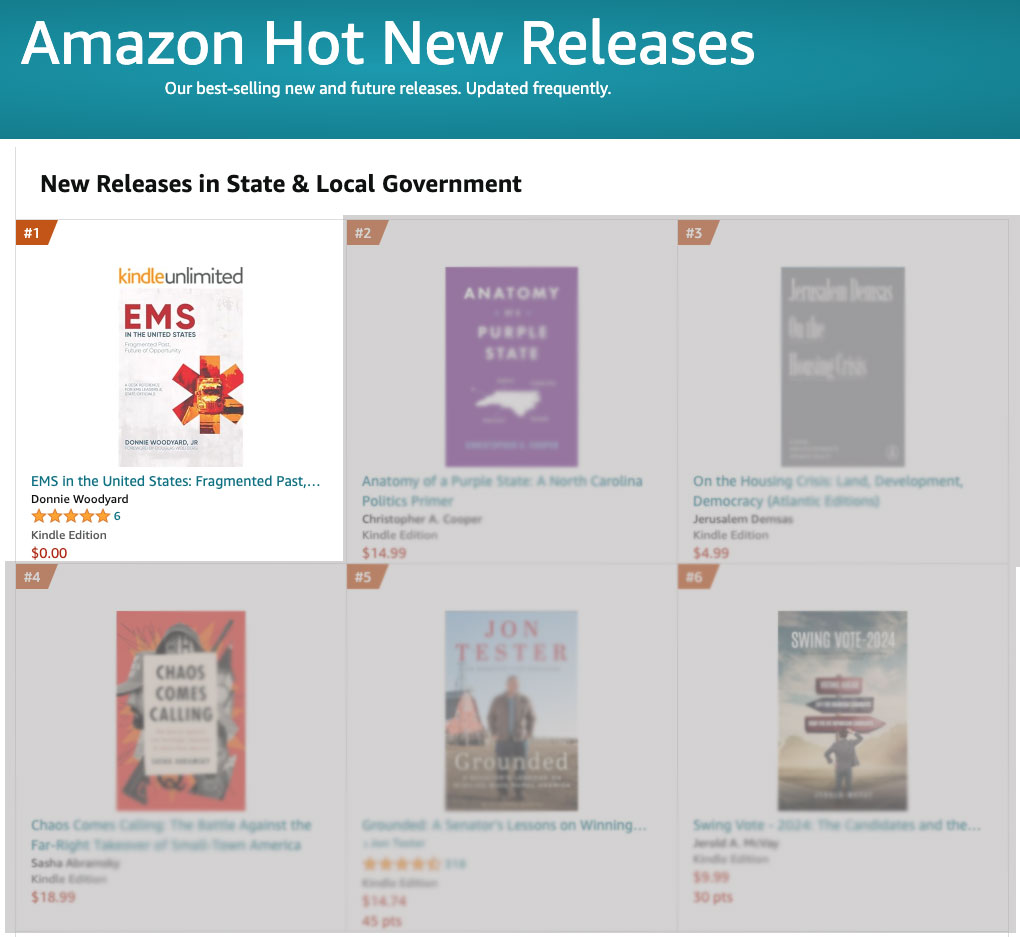
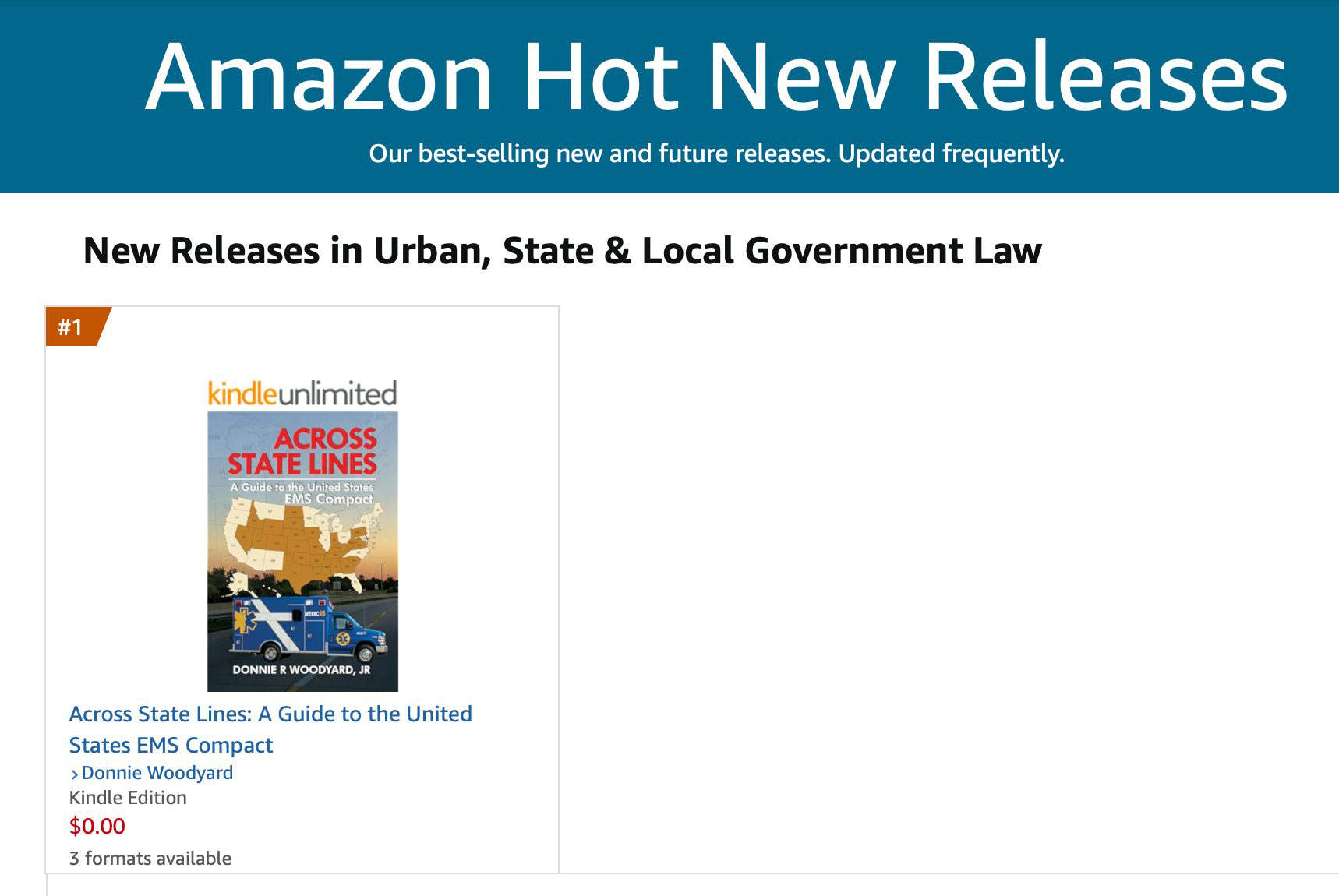
Earlier this week, The Dark Ages of EMS debuted at #1 in Amazon's New Releases in Emergency Medical Services. It joins EMS in the United States, which hit #1 in New Releases in State & Local Government, and Across State Lines, which reached #1 in New Releases in Urban, State & Local Government Law. Leadership in Action earned its own #1 ranking as well. Four consecutive books. Four number one rankings.
More than anything, this is an indication that EMS is hungry for information and resources. The profession wants substance, and it's seeking it out.
Why This Matters
EMS has never had a deep bench of published literature. For decades, the profession's knowledge base has been passed down through oral tradition, conference hallways, and a handful of textbooks focused almost exclusively on clinical protocols. The policy side, the history, the legal architecture, the workforce challenges. Those stories have largely gone unwritten.
That's what these books are trying to change. Each one tackles a different dimension of the profession that had no comprehensive reference:
EMS in the United States: Fragmented Past, Future of Opportunity is a 483-page desk reference that maps the full landscape of American EMS: service delivery models, funding structures, regulation, workforce challenges, and the path forward. It became a reference for state officials, agency leaders, and graduate students almost immediately after publication.
Across State Lines: A Guide to the United States EMS Compact is the only textbook in existence on the EMS Compact, covering legal foundations, the privilege to practice, disaster response, military transitions, and the operational record of six-plus years of implementation. Every chapter is available to read free online at ems-history.com.
Leadership in Action: The Wisdom and Stories of EMS Innovators brought together 45 leaders and 53 chapters of real-world leadership lessons, with a foreword by Secretary Leon E. Panetta. It's the kind of book the profession needed but never had: a leadership text written by and for the people who actually run EMS systems.
And now, The Dark Ages of EMS: How America Created, then Forgot, Its Early Emergency Medical Legacy fills the biggest gap of all. Most histories of EMS start in 1966. This one starts in the 1860s and shows that American cities had built sophisticated, physician-staffed, hospital-integrated ambulance systems by the 1880s, decades before the White Paper. Understanding what was built, what was destroyed, and what was incompletely rebuilt isn't background. It's the explanation for why EMS has the issues it faces today.
What the Rankings Really Tell Us
A #1 ranking on Amazon doesn't mean you've outsold Stephen King. Category rankings reflect relative performance within a specific niche over a specific window. But that's precisely what makes these results meaningful: they show that people inside and around EMS are actively seeking out this material. Policy texts, historical analysis, legal frameworks, leadership philosophy. These aren't the genres that typically fly off the shelves. The fact that they did, repeatedly, says something about the appetite within this profession for serious, substantive work.
EMS professionals are tired of being told their profession lacks a body of literature. They're building one.
What's Next
I'm not slowing down. The ems-history.com archive continues to grow, now housing over 390 primary source documents, 52 pioneer profiles, and a timeline spanning six eras from the Civil War to the present. Every book I write feeds the archive, and the archive feeds the books. It's a self-reinforcing cycle of documentation, preservation, and education.
All of these books, and the historical resources behind them, exist because I believe EMS deserves to be understood on its own terms: not as a subset of fire, not as a stepchild of emergency medicine, but as its own profession with its own history, its own legal framework, and its own future. Four #1 rankings suggest the profession agrees.
Thank you to everyone who has read, shared, reviewed, and supported this work. The best is still ahead.