Building the framework
States assumed leadership of EMS regulation while national organizations drove standardized curricula, certifications, and system-level accountability.
In 1983, the National Association of Emergency Medical Technicians (NAEMT), in cooperation with the American College of Surgeons Committee on Trauma, developed Prehospital Trauma Life Support (PHTLS). The course was created to provide trauma education specifically for EMS clinicians, building upon the concepts of the Advanced Trauma Life Support (ATLS) program for physicians.
Today, PHTLS is a globally recognized program that has trained over 500,000 individuals in more than 50 countries. It has become a cornerstone of trauma education in EMS, emphasizing critical thinking and trauma assessment.
Image: Dr. Norman McSwain – PHTLS Founder and Trauma Educator

Read the NAEMT History of PHTLS
Learn more at NAEMT.org
Tribute to Dr. Norman McSwain (JEMS)
“…as a means of encouraging States to adopt a uniform Emergency Medical Technician training program… while [States] had some form of Paramedic certification…it was not known whether the State certification program was based on NHTSA guidelines, or on individual State requirements.”This effort exposed the deep fragmentation in EMS certification standards across the country. Although EMTs and paramedics were operating in nearly every state, there was no clear consensus on training, scope, or credentialing alignment. By the 1990s, this lack of uniformity culminated in more than 40 different variations of EMT certification across the U.S.
"... a large cluster of health care related professions and personnel whose functions include assisting, facilitating, or complementing the work of physicians and other specialists in the health care system, and who choose to be identified as allied health personnel." – CAHEA, 1987
NHTSA conducted the initial assessment of Texas's EMS system, the earliest assessment in the ems-history.com archive. A five-member Technical Assistance Team evaluated the state's EMS against a “standard of excellence,” finding no trauma center designations, no state EMS medical director, no statewide data system, and a comprehensive rules package pending but unadopted. The TAT termed all recommendations “critical.”
NHTSA conducted its initial assessment of Montana's EMS system, evaluating a frontier state with fewer than six persons per square mile. The assessment found a 90% volunteer workforce, no Level I trauma center, no state EMS medical director, no trauma system enabling legislation, and only 25 paramedics serving over 147,000 square miles. The report established the baseline against which Montana's 2005 reassessment would measure progress.
NHTSA conducted its initial assessment of the Massachusetts EMS system, one of the earliest Technical Assistance Team reports in the collection. Conducted during declining state revenues, the assessment commended perseverance in maintaining a strong ambulance regulatory program, regional council system, five trauma centers, and an outstanding medevac system — while calling for stakeholders to create a shared vision for the year 2000.
On January 28, 1995, the University of Maryland, Baltimore County (UMBC) launched the first Critical Care Emergency Medical Transport Program (CCEMTP℠) with 25 students in Baltimore, Maryland. The program was developed in response to the growing demand for specially trained paramedics capable of managing complex interfacility transfers involving critically ill or injured patients.
CCEMTP℠ quickly became a nationally recognized model for critical care transport education, helping to formalize and elevate the role of critical care paramedics across the U.S. and beyond.
Image: UMBC CCEMTP℠ Logo – Source: UMBC
This structural change was enacted by Executive Order No. 27 and marked a pivotal moment in the modernization of emergency services in the city.
More information: FDNY Bureau of EMS (Wikipedia)
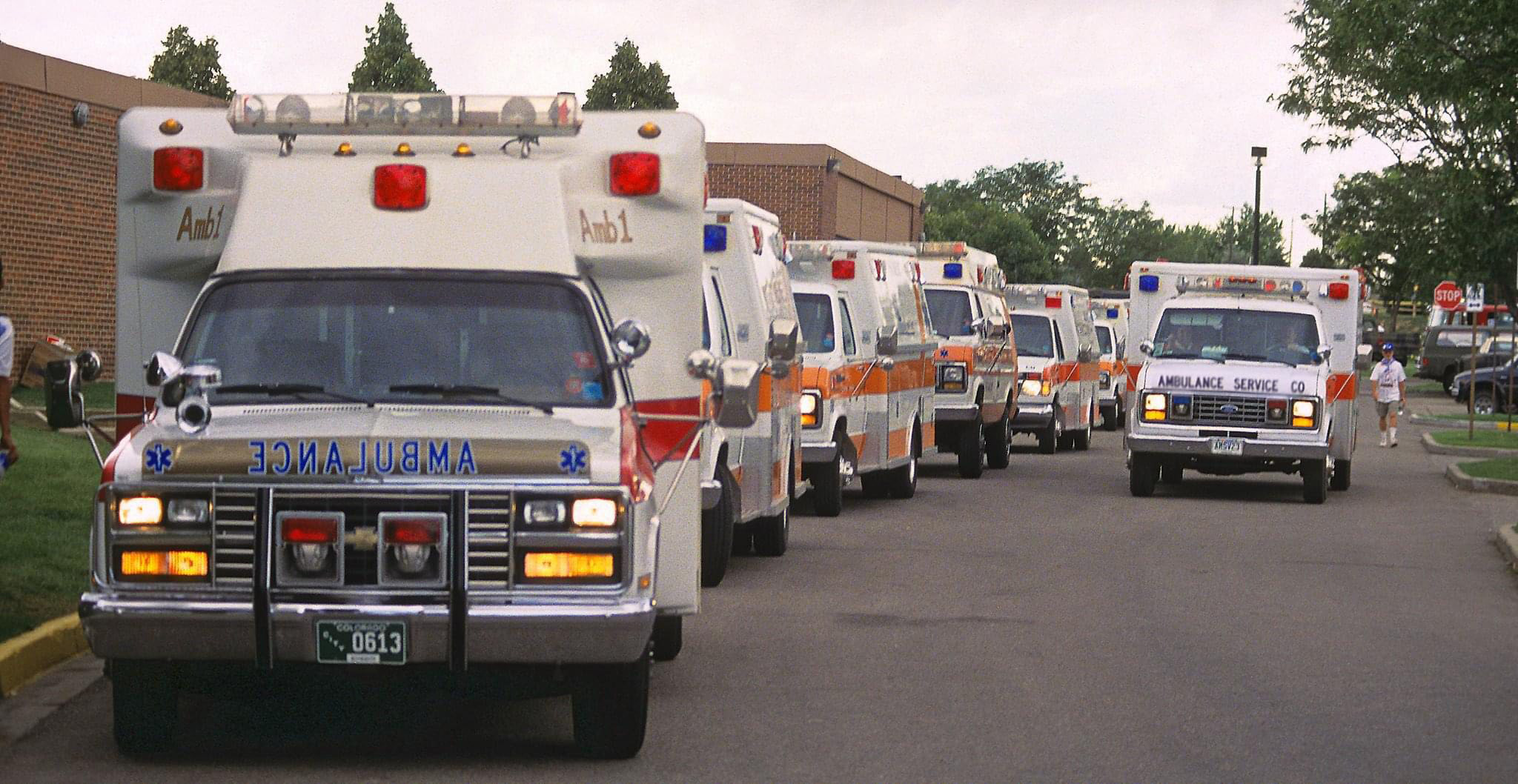
The National Highway Traffic Safety Administration conducted its first technical assessment of Colorado's emergency medical services system, evaluating system organization, training, communications, and medical direction against national standards.
NHTSA assessed California's statewide EMS system, the largest in the nation, evaluating its multi-tiered structure of local EMS agencies, trauma systems, and coordination across 58 counties.
NHTSA reassessed Alaska's EMS system, following the 1992 initial assessment. The Technical Assistance Team described solitary Emergency Trauma Technicians responding to family and neighbors in remote villages reachable only by snow machine, dog sled, or satellite phone. The report warned that the state's communications infrastructure was 'in danger of collapse' and identified Indian Health Service funding compacting as an existential threat to rural EMS sustainability.