The Data Said It Wasn't Possible. I Built It Anyway.
Why I wrote The Blank Page.

The data said it was not possible, viable, or sustainable. I built it anyway. A few years later, a multibillion-dollar global corporation acquired it.
The "it" was Med1, an emergency medical service I founded in post-war Sri Lanka. The country had just emerged from a 26-year civil war. The healthcare system was strained. The roads were difficult, the regulatory framework for prehospital care was thin, and there was no commercial precedent in the region for an American or European-standard ambulance service. Every reasonable analysis suggested it wouldn't work. Margins would be too thin. Demand would be too soft. The infrastructure was too immature.
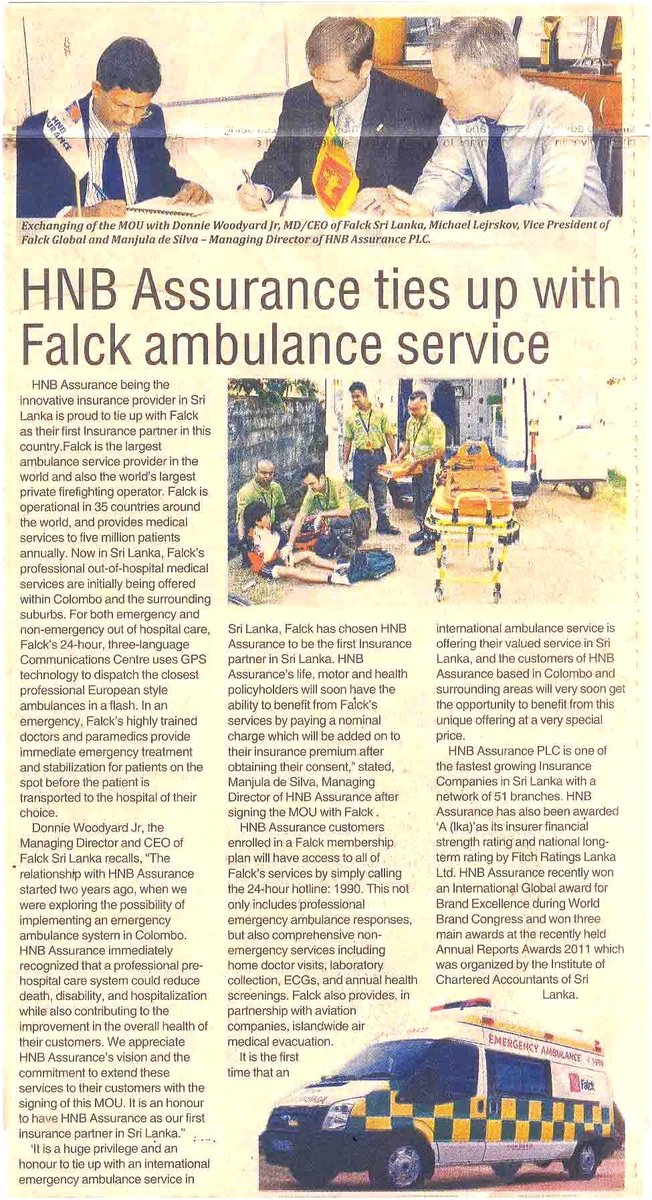
I started anyway. We registered as a Board of Investment company under the name Med1 (Pvt) Limited, brought in clinical leadership, imported ambulances and equipment that met international standards, trained crews, and put fifteen ambulances on the road in Colombo with plans to expand nationwide.
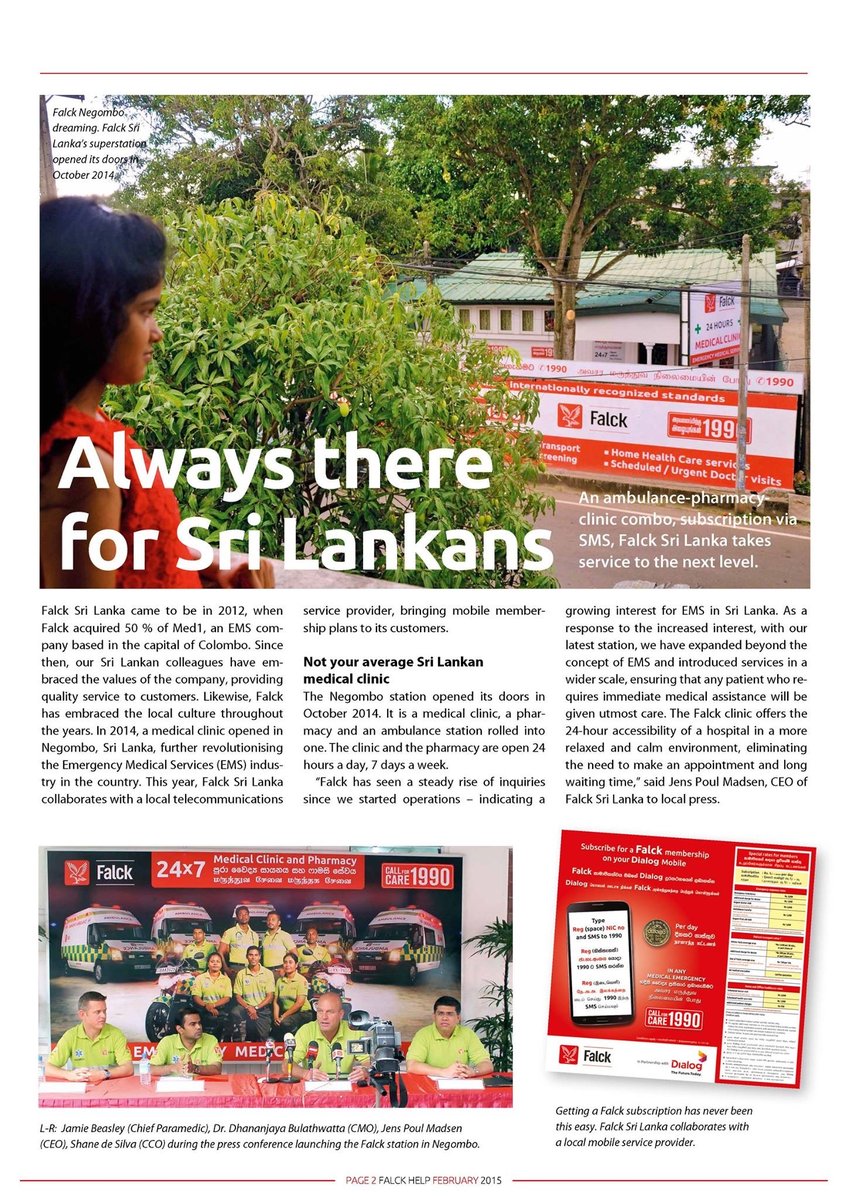
In late 2012, Falck A/S of Denmark — the world's largest ambulance provider, operating in more than thirty countries — acquired the company. The thing the data said wasn't possible became their entry point into the South Asian market.
Today, more than fifteen years have passed since I drained my life savings to pursue that dream. Falck, in partnership with the World Bank, ran the service for a number of years. Then it morphed and changed again, and again. The model changed, the needs changed, but today Sri Lanka has a national EMS service that has been ranked among the most technologically advanced in the world. The country has responded to millions of calls for assistance, and many of the original EMTs are still working.
I've thought about that experience a lot in the years since. Not because the outcome was unusual — plenty of founders have stories like it — but because of what it revealed about how leaders are trained.
The Skill No One Teaches
Most leadership advice teaches you to execute the plan. To trust the data. To wait for proof. To benchmark against what has already worked. The implicit promise is that if you do those things well enough, you will succeed.
That advice is not wrong. It is just incomplete. It works beautifully for one kind of leadership: running a system that already exists, with feedback loops that already produce data, with a precedent that already shows the way. Most management literature is written for that situation. Most MBA programs train for that situation. Most performance reviews reward that situation.
But the leaders who actually change things aren't waiting for the data. They're building what the data hasn't measured yet.
That is a different skill. It's not the same skill as running a proven system. It's not even the same skill as adapting one at the edges where the original design starts to fray. It is a third thing — the work of authoring something that has never existed, with no blueprint, no proof, and no one who has done it to follow.
Almost nobody teaches that third skill. That's what The Blank Page is about.
The Blank Page
In the book, I describe leadership as a continuum of three modes, defined not by your rank or your personality but by the terrain you are standing on:
Operate. Run the proven system. Apply collected knowledge to known scenarios. This is where most leaders spend most of their careers, and rightly so. Most of the world runs on operational excellence.
Adapt. Work the edges. Modify and extend existing systems where they begin to fail against conditions their original designers never anticipated. Most senior leaders eventually find themselves here. The system still works, but only with adjustment.
Author. Build what does not yet exist. No blueprint, no proof, no one who has done it to follow. The defining work of the next decade.
The best leaders can move between all three. Most leaders never master the third. And the central failure mode I see in modern organizations — what I call layer misdiagnosis — is applying an Operational mindset to Frontier work, or treating an Operational system as if it were still a Frontier problem.
When you're standing in Frontier terrain, the data isn't slow. It doesn't exist yet. Waiting for it isn't prudence. It's paralysis. And the people who succeed there are not the ones with the most courage in some heroic sense. They are the ones who recognize the terrain for what it is and adjust the skill set accordingly.
Why This Matters Now
I am writing this in 2026. Artificial intelligence is opening frontiers faster than the existing blueprints can be revised. Autonomous systems, converging technologies, and entire industries that did not exist five years ago are being authored in real time by people who had no permission to start.
The leaders who will matter most in the years ahead are not the ones who can execute the best existing plans. They are the ones who can author what comes next. And the institutions that thrive will be the ones that learn to identify which terrain they are standing on — and assign the right mode to the right moment.
This is the book I would have wanted twenty years ago, standing in Colombo looking at a spreadsheet that said the thing I was about to build would not survive.
What the Book Offers
The Blank Page: How to Build What Doesn't Exist and Lead Where No One Has is drawn from three decades of building systems where none existed — across post-war Sri Lanka, humanitarian operations during one of the world's largest refugee crises, the United States EMS Compact, and emerging work in AI, aerospace, and medicine. It introduces the Blueprint Hierarchy as a framework, walks through the specific moves required to do Frontier work well, and includes a toolkit and theoretical foundations as appendices for leaders who want to take the framework further.
It will not make the step easier. But it will make you ready.
I stepped away over ten years ago, and have not been back to Sri Lanka a single time. Today, the service is someone else's vision and someone else's dream. And that is exactly how it should be.
The Blank Page is available now in hardcover, paperback, and eBook. Buy on Amazon · Learn more about the book.