It Wasn’t a Job. It Was a Calling: Remembering Randolph Mantooth (1945–2026)
Randolph Mantooth died yesterday, July 9, 2026, at the age of 80, after facing a series of cancers with the same steadiness he spent fifty years urging on the rest of us. The obituaries will tell you, correctly, that he played firefighter-paramedic John Gage on Emergency! from 1972 to 1979, and that the show introduced the American public to a brand-new word: paramedic. All of that is true, and none of it is the reason this profession is grieving today.
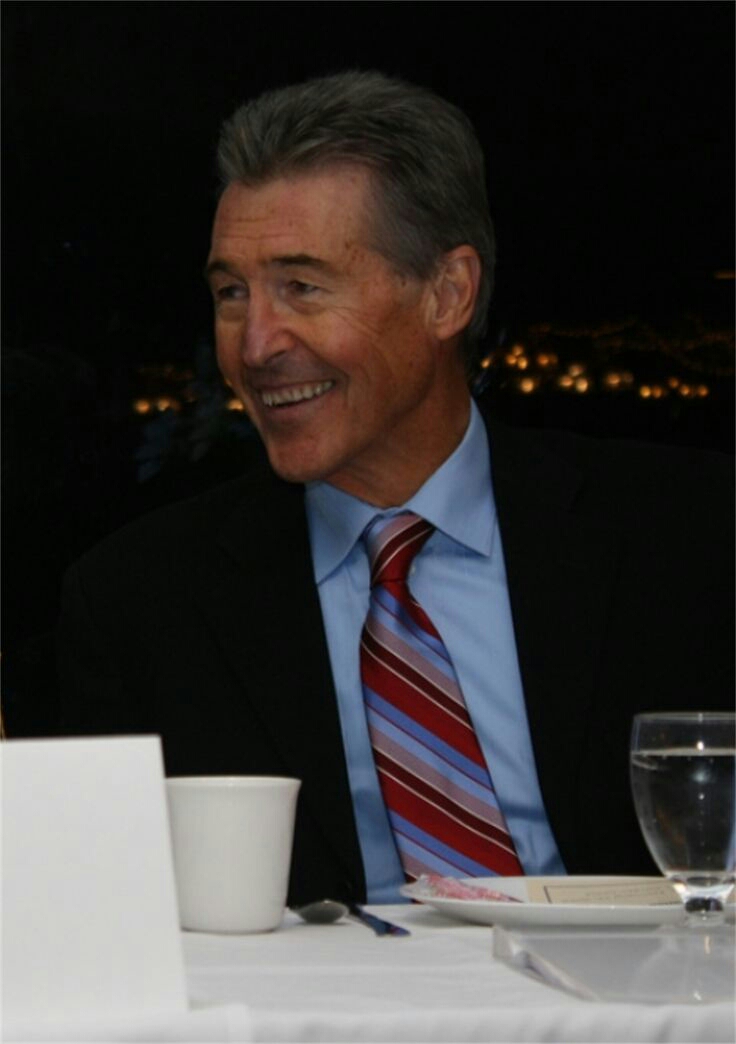
When Emergency! premiered, there were roughly a dozen paramedic units in the United States. The show did what no federal report, no act of Congress, and no medical journal could do: it walked into America’s living rooms every Saturday night and showed families what prehospital care could be. Legislators watched it. City councils watched it. And a generation of kids watched Johnny and Roy and decided, sometimes without realizing it for years, what they were going to do with their lives. Then another generation did. Then another. Randy took the role seriously enough to complete six months of paramedic training before filming (he told me so himself), and it showed in every frame.
But the reason Randolph Mantooth belongs among the pioneers of EMS, the reason he appears in the Pioneers collection on this site and in my book, is what he did after the cameras stopped. For five decades, he dedicated an enormous part of his life to this profession: speaking at EMS conferences year after year, serving as a health-and-safety spokesperson for the International Association of Fire Fighters and a spokesperson for the International Association of Fire Chiefs’ EMS Section, holding lifetime membership in the National Association of Emergency Medical Technicians, receiving the IAFC’s James O. Page Award of Excellence and designation as an Honorary Fire Chief of the Los Angeles County Fire Department, the agency whose paramedics he once portrayed. He never stopped showing up for us. And every time he spoke, he brought the conversation back to the same place: the humanity of the work.
In His Own Words
Over the years I transcribed a number of Randy’s talks to EMS audiences. I heard him deliver the heart of this message more than once, and it never lost its power. These are his words, verbatim.
“What you all do, what firefighters, paramedics, and EMTs do, isn’t a job. It’s a calling. And I can tell you from personal experience that it is the most important calling in life.”
“It wasn’t the excitement of the show that spoke to you; it was the humanity. You absorbed the empathy and compassion that Johnny and Roy displayed toward their patients. That spoke to your DNA.”
“When you reach out and hold somebody’s hand, or express a reassuring word, or simply call someone by his or her name, that small act of humanity is never wasted. Sometimes it’s the smallest, most insignificant thing that makes the biggest difference in someone’s life.”
“Ask yourself as you’re approaching: what if this was you or someone you love?… How would you want them to be treated? Because but for the grace of God, that could be you.”
“There’s a German word that best describes the God-given talent you all seem to have: Gefühl, a feeling for feelings. That’s what you all have.”
He liked to quote Mark Twain: “The two most important events in someone’s life are the day you were born and the day you found out why. I believe there’s a lot of you out here that have already experienced both.” And paraphrasing the EMS author Thom Dick, he would remind a room full of providers that patients “won’t even remember the medicine we deliver. But they will always remember how we made them feel. That, in the end, is how we’ll all be judged.”
Why the “Calling” Line Matters
It would be easy to hear “it’s a calling” as a platitude. It isn’t. It is the economic history of this profession in a single sentence.
Police officers are not volunteers. Schoolteachers are not volunteers. Hospital nurses and physicians are not volunteers. But for five decades, thousands of American communities survived on volunteer EMTs and paramedics. Even now, in some communities, a fast-food server earns more than a paramedic. Why has this profession carried that weight when no other essential service is asked to? Because what firefighters, paramedics, and EMTs do isn’t a job. It’s a calling, and generations of providers have answered it whether or not anyone paid them fairly to do so. Randy understood that better than almost anyone, which is why he spent fifty years telling providers they were seen, and telling everyone else what they were worth.
Be Safe Out There
Randy closed his talks the same way, and it is how I will close this one:
“When I ask you to be safe out there, I’m not just saying have a nice day. I mean it… You never know whose life you’re gonna save, or whose life you’re gonna change.”
Randolph Mantooth changed millions of them. Rest easy, Randy. The calling continues.