When the Past Shows Up in the Present
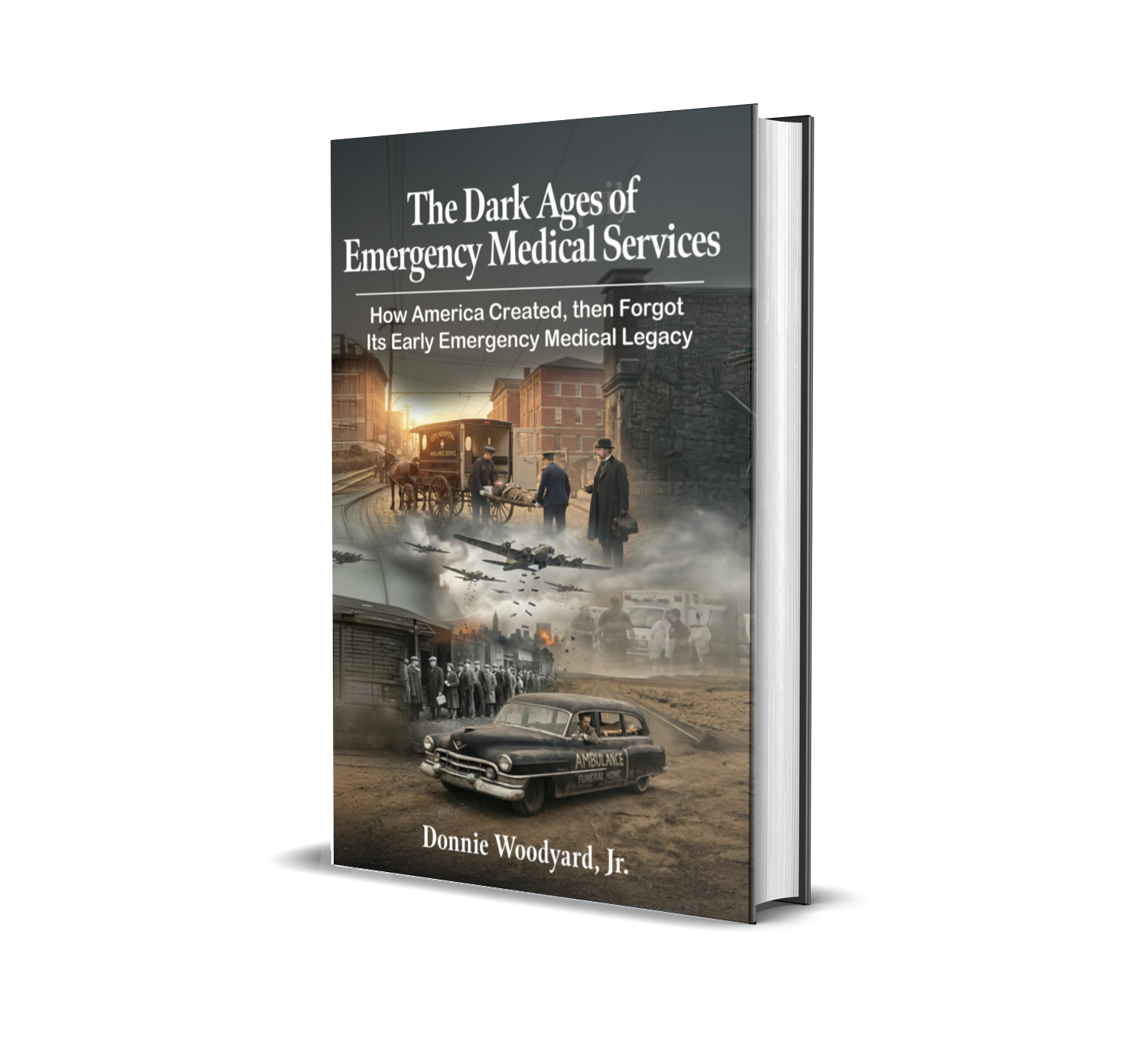
I have spent a good portion of the last several years researching, writing, and talking about what I call the Dark Ages of EMS. Not because the profession's history is depressing, though some of it certainly is, but because I believe you cannot understand where EMS is today without understanding how it got there. The structural failures, the funding neglect, the fragmentation born from home rule and local control, none of that is accidental. It was built, layer by layer, over more than half a century.
So when I came across the New York State Rural Ambulance Services Task Force report, and realized that my friend and colleague Ray Barishansky served as the editor in chief and subject matter expert for this document, I read it with that lens. His fingerprints are all over it in the best possible way. The report is serious, thorough, and unflinching about what it found. It is exactly the kind of work the profession needs more of.
And it reads, in a number of places, like a real-time dispatch from the Dark Ages.
That is not a criticism of the report. It is the opposite. The Task Force did exactly what it was created to do: it went and looked at the actual state of rural EMS in New York, collected data from hundreds of providers, interviewed county coordinators, held town halls, and reported honestly on what it found. What it found, in 43 of New York's 62 counties, is a system under serious stress.
The numbers tell a familiar story. In 2023, only 44 percent of certified EMS practitioners in New York State were actively providing prehospital care. Response times range from a few minutes to over an hour within the same state. Multiple ambulance services have closed outright in recent years. The report found that measuring something as fundamental as how long it takes an ambulance to arrive was effectively impossible in most of the state because the data systems to capture that information simply do not exist.
If you've read The Dark Ages of EMS, you recognize every one of those problems.
The volunteer model that built rural EMS across New York, as in most of the country, was never designed to be permanent. It was an improvised solution to a real need, and for a long time it worked because communities were smaller, people lived where they worked, and the demands on the system were manageable. None of those conditions still apply. The report documents what happens when a system designed for one era is asked to function in another: coverage gaps, burnout, agency closures, and communities left without meaningful access to emergency care.
The funding model has its own chapter in the dark ages story. EMS has been paid as a transportation benefit since the earliest days of Medicare and Medicaid. The report puts this plainly: insurance reimbursements cover, on average, about one third of operational costs. Nothing in that structure accounts for what the report calls the cost of readiness, the time and resources required for an ambulance to simply be ready to respond. And it documents that New York's Medicaid rates are the lowest or among the lowest for every service category when compared to neighboring states. That gap has not appeared recently. It has been growing for decades.
The system fragmentation described in the report is perhaps the most direct echo of the book. Forty-three rural counties, each handling EMS differently. Counties, towns, villages, and individual agencies operating on different CAD systems, dispatching on different protocols, measuring performance by different standards, or not measuring it at all. The task force found that it was impossible to determine, at the state level, how many times different agencies were dispatched to a single call before one actually responded. That level of fragmentation is not a technology problem. It is a governance problem, and it is a very old one.
What The Dark Ages of EMS argues, and what the RASTF report confirms, is that the foundational decisions made in the early decades of modern EMS set structural patterns that have proven remarkably durable. The failure to designate EMS as an essential governmental service. The decision to build coverage on volunteerism without a long-term sustainability plan. The entrenchment of a payment model that treats emergency clinical care as a taxi ride. The absence of any coordinated accountability structure at the state or county level. These were not inevitable outcomes. They were choices, made at specific moments in history, and the communities in New York's rural counties are living with the consequences of those choices today.
The task force produced 38 proposals. Some are urgent, some are long-term, and some are simply statements about what kind of system New York wants to have. The top priority, designating a public health emergency around rural EMS, reflects the task force's own conclusion that the normal pace of legislative action is too slow for what they found in the field. That is not a small admission from a governmentally created body. It is an acknowledgment that the situation has moved beyond incremental reform.
I am glad the RASTF exists, and I am glad Ray was part of shaping this document. It is the kind of serious, state-specific analysis that the profession has too rarely seen. It names the problems directly. It proposes solutions that are grounded in the operational reality of what rural EMS agencies actually face. And it makes the case, repeatedly and with data, that the current path is not sustainable.
The Dark Ages of EMS was written to explain how the profession arrived at the place it occupies today. The New York Rural Ambulance Task Force report is a detailed map of what that place looks like from inside one state. They are not the same document, but they are telling the same story.
History has a way of being present tense when the patterns are never actually broken. Reading the RASTF report, that is exactly what I found.