The Future of
Emergency Medical Services
Read all 13 chapters free — plus foreword, preface & more
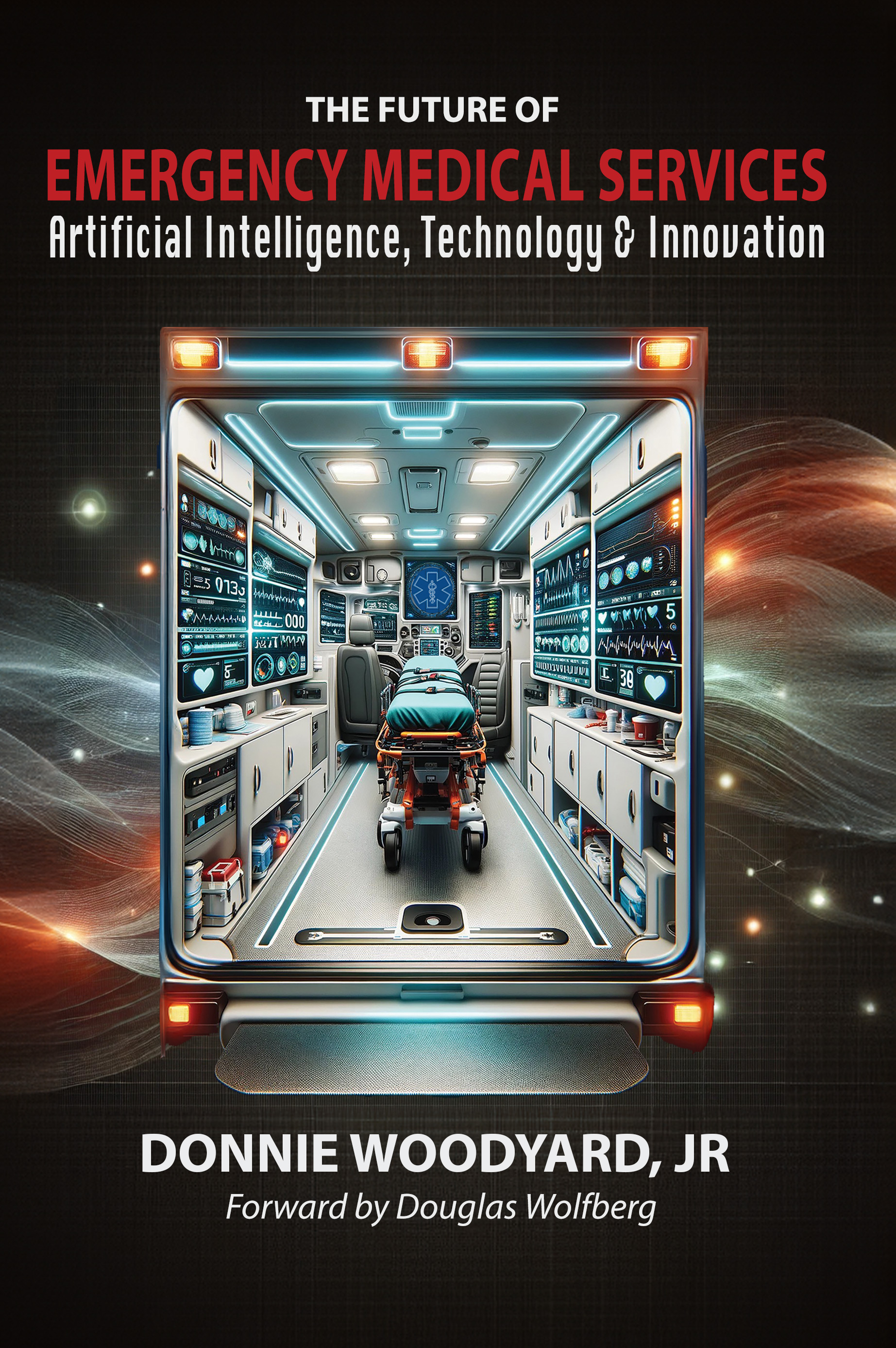
Every chapter of The Future of Emergency Medical Services: Artificial Intelligence, Technology & Innovation is available here — read online, completely free.
Want the paperback? Buy on Amazon.
Download the free EPUB eBook.
782 words
The oldest and strongest emotion
of mankind is fear, and the oldest
and strongest kind of fear
is fear of the unknown.
H.P. Lovecraft,
American writer
Knowledge breeds confidence. Confidence destroys fear.
Robert Kiyosaki,
American author and businessman
In the first quarter of the 21st century, there is, perhaps, no aspect of modern technology breeding more fear than artificial intelligence.
The participants in every corner of society – from politicians to government leaders, from authors to artists, from captains of industry to tech moguls, from clinicians to healthcare leaders, from students to educators, must, whether they choose to or not, confront a world upon which AI has rapidly descended. So swift has been the proliferation of AI that the world has barely been able to grapple with the myriad of implications that come with it. As often happens, technology is outpacing the policy implications it creates. Healthcare is no exception, and EMS is probably even further behind the AI curve than other components of the American medical system.
I believe that the two quotes above frame the issue of AI and future-oriented technologies as well as any. One need only look at healthcare history to see a long line of beneficial technologies that bred fear and required the confidence of knowledge to overcome.
The turn of the 20th century saw the dawn of the science of defibrillation, a technology which has saved countless lives in the 100+ years since it was first demonstrated in 1899. The thought of applying electrical current to a person led many to eschew the use of defibrillation – primarily out of fear for its consequences. Despite its clear and demonstrated benefits, to this day research reveals that utilization of public access AEDs is, in part, inhibited by fear.
The advent of the polio vaccine, in which strains of the actual polio virus are administered to inoculate a healthy individual against the development of the disease, required a massive leap of faith (and data) to overcome fear. That fear inevitably came with administering into a body the very virus that was dreaded the world over and that had caused so much misery (including the paralysis of our 32nd President, Franklin D. Roosevelt). To this day, fear (and misinformation) contribute to a substantial proliferation of vaccine rejection in the population, with the attendant public health challenges that denialism causes.
Leaders of nuclear nations must grapple with the existential issue of AI’s ability to destroy civilization. That’s pretty heady stuff. But leaders in all fields must address questions which, while perhaps less weighty to mankind, are nevertheless crucial to other aspects of science, the arts, industry and healthcare.
This is where Donnie Woodyard (again) does a service to EMS with The Future of Emergency Medical Services: Artificial Intelligence, Technology and Innovation. This important work tackles AI and future-facing technology in EMS from both a macro and a micro perspective. The author pulls back the curtain on the evolution of AI policy in the lofty air of its most political levels, and then progressively zooms in so that the reader can see how it effects – and can benefit - their EMS systems, their people and their patients. Donnie’s work allows EMS leaders, technologists, educators and practitioners to replace their fears with knowledge – and to build their confidence with that knowledge to help shape a future enhanced by the limitless potential of AI.
As a lover of history, my favorite aspect of this book is the way that Donnie weaves the threads of our past with the filaments of our future. The Future of EMS draws a straight line from our profession’s greatest leaders and thinkers – and the ways they challenged the status quo and embraced progress – to the future unfolding before us. This book gives EMS leaders a road map on how to harness new technologies for good, rather than being consumed with the fear of the unknown and allowing that fear to drive technological paralysis. It all begins with knowledge and understanding. The Future of EMS is a must-read for anyone who aspires to help blaze these new trails.
When the history of EMS in the 21st century is written – with all the breathless change it entails – Donnie’s name will be on the list of those who contributed to shaping it. Like Safar, Nagle, Page and Caroline before him, the name Woodyard will undoubtedly take its place in the pantheon of this generation’s EMS thought leaders. I enjoyed this book, and EMS owes Donnie a debt of gratitude for writing it. I hope others find it as insightful and revelatory as I did.
To the future!
Mechanicsburg, Pennsylvania
July 2024
234 words
To my inspiring sister: Your unwavering dedication as an Emergency Department nurse and now as a nursing supervisor, spanning over 20 years, is a testament to your professional excellence. You have skillfully balanced your demanding career while raising a beautiful family of five children. Your resilience and commitment have been a beacon of inspiration to me and countless others.
Also, to my amazing team of trailblazers in Sri Lanka: Between 2006 and 2013, I had the privilege of leading an extraordinary group of visionary leaders. Despite facing insurmountable challenges and obstacles, you embraced a vision for a better Sri Lanka—a vision for a national EMS system. Together, we achieved remarkable milestones: teaching the first EMT classes, writing the first textbooks in Sinhala and Tamil, creating training videos, establishing national standards, forming the first Registry of EMTs for the country, and setting up the first medical emergency phone number, dispatch center, aeromedical transport, and international standard ambulance service. Today, these leaders continue to innovate, lead, and implement a system that stands as one of the best in the world. Your dedication and perseverance have laid a foundation that will benefit generations to come.
I also extend my deepest appreciation to the Southwest Texas Regional Advisory Council for inviting me to speak on the ‘Future of EMS’ at their 2024 regional conference. It was the preparation for this presentation that motivated me to write this book.
839 words
The landscape of Emergency Medical Services is at a pivotal juncture. With the advent of Artificial Intelligence (AI), the potential to transform emergency care is immense. This book explores the profound impact AI can have on EMS, drawing on historical insights, current trends, and future possibilities.
The rapid adoption of AI across various sectors has highlighted its transformative potential. From predictive analytics to advanced diagnostics, AI is reshaping healthcare and many other industries. Despite this, EMS has been relatively slow in embracing these innovations. While most of the healthcare industry has been planning and preparing for AI integration for years, if not decades, EMS has lagged behind. This book seeks to bridge that gap by providing EMS clinicians with a comprehensive understanding of AI, its applications, and the roadmap for its integration into emergency services.
The objectives of this book are threefold:
Educate EMS clinicians, leaders, educators and regulators about the fundamentals of AI.
Highlight the historical evolution of EMS to show how the founders of our profession had the foresight to understand the future of medicine and the vital role that EMS would play. By learning from their approach and tactics, we can apply those same lessons as we face this critical juncture.
Provide a strategic framework for the responsible and ethical integration of AI into EMS operations.
Through detailed chapters, we will explore the pioneering efforts of the EMS founders in the 1950s, 60s, and 70s, who embraced and implemented a vision that created the modern EMS system and the concept of emergency medicine. By studying their leadership traits, we can learn how to approach this critical junction of AI and EMS. While this book provides insights into the current state of AI in healthcare and potential future trends that could redefine EMS, for a comprehensive history of EMS, refer to my other book, "EMS in the United States: Fragmented Past, Future of Opportunity." This journey will address the challenges of adopting new technologies, the ethical considerations involved, and the practical steps for integrating AI into EMS practices.
It is essential for EMS leaders, educators and regulators to embrace and lead in the integration of AI. Ignoring it is not an option, as AI is not going away. EMS leaders have a crucial responsibility to understand and spearhead the integration of these advancements. This book offers essential insights and practical guidance, ensuring EMS not only keeps pace but leads within the broader healthcare landscape. As an EMS leader, educator, or clinician, you'll find the knowledge needed to ethically and responsibly embrace and implement AI and technology, safeguarding against the risk of being left behind.
Furthermore, it is imperative that EMS presents a unified voice in this endeavor, regardless of the patch worn or the agency structure. By reflecting on the past and leveraging the lessons learned from EMS visionaries like Dr. Peter , Dr. Charles Rockwood, and Dr. Deke Farrington, we can effectively navigate the integration of AI, ensuring the profession continues to evolve and improve. The pioneering spirit, collaborative efforts, and relentless dedication of early EMS leaders provide a guiding framework for current and future leaders.
I hope this book serves as a valuable resource for EMS leaders, educators, and practitioners, inspiring them to embrace AI and lead the way in transforming emergency medical services for the better. By learning from the successful integration of AI in other medical fields, EMS can effectively navigate the challenges and leverage AI to build a more efficient, responsive, and innovative emergency medical services system.
Thank you for embarking on this journey with me. Together, we can shape the future of EMS, harnessing the power of AI and technology to enhance patient care and operational efficiency.
To the reader:
Emergency Medical Services is more than just a profession—it is a calling, a passion, and a dedication to serving others. As EMS clinicians, we have chosen a path of sacrifice to serve our communities, friends, and neighbors. This commitment is honorable and vital, as it has been the foundation of our profession for the past 50 years. Our survival and growth have been driven by passionate innovators at the local level who have often made significant sacrifices to provide this essential, yet frequently underfunded, service.
Today, EMS stands at a critical junction. We have a unique opportunity to embrace the new possibilities that come with technology and innovation, particularly those fueled by the artificial intelligence revolution. The pace of change is unprecedented, and as EMS clinicians, we have the chance to emerge as thought leaders in our field. By doing so, we can reimagine the future of emergency medical services.
As we navigate this transformative period, it is crucial that our actions and decisions are grounded in ethics, responsibility, and a commitment to patient-centered care. The advancements we adopt must always prioritize the well-being of those we serve.
Thank you for joining me on this journey. Together, we can shape the future of EMS and ensure that our profession continues to thrive, innovate, and provide exceptional care to our communities.
Sincerely,
Chapters
3,004 words
Every minute counts in emergency medical services. EMS clinicians are highly skilled at providing life-saving care in chaotic situations. However, unlike hospitals where critical patients are managed by multidisciplinary teams, EMS often relies on one or two clinicians to handle the most critical cases in less-than-ideal conditions, for extended periods, and in mobile, confined spaces like ambulances or helicopters. EMS clinical care is frequently delivered to the most critical patients in the most challenging environments, with the most limited support the patient will experience during their illness or injury. Artificial Intelligence (AI) is positioned to revolutionize EMS by improving diagnostic accuracy, optimizing resource allocation, and expediting response times. With AI as a trusted partner, EMS clinicians gain enhanced capabilities and support, ensuring they can deliver the highest quality care even in the most demanding situations.
Since its inception in the 1960s and 1970s, modern EMS has become an essential part of the United States healthcare system. It serves as a comprehensive emergency response service, interfacility transfer solution, primary care provider, preventive care advocate, and community health safety net. However, this under-resourced and fragmented model is increasingly stressed and is collapsing in parts of the country. Tragically, EMS in the United States appears to be on an under-resourced and unsustainable trajectory.
A detailed analysis by the American Ambulance Association and the Academy of International Mobile Healthcare Integration (AIMHI) reviewed press releases and news articles related to EMS from January 2021 to June 2024. Out of 2,058 reports analyzed, a staggering 47% highlighted a severe staffing crisis, and 34% focused on a critical funding shortage. Together, these issues accounted for 80% of the media coverage. Additionally, 103 reports documented EMS system closures or agencies withdrawing from communities, with 92% of all articles citing staffing challenges, funding issues, and delayed response times. [1] These alarming statistics underscore an urgent need for transformative intervention to address these critical issues.
In recent years, several states have taken legislative action. In 2022, Colorado passed legislation [2] establishing a five-year EMS System Sustainability Task Force. [3] This legislative mandate charges the task force with evaluating the sustainability of Colorado's EMS system. Similarly, Idaho created the Idaho Emergency Medical Services Sustainability Task Force through legislative mandate. [4]
Augmented Reality
The integration of artificial intelligence with augmented reality (AR) technologies like Microsoft's HoloLens, and other similar devices, are revolutionizing telehealth and telemedicine. Imagine EMTs equipped with AR headsets that provide real-time data overlays, remote specialist guidance, and interactive training scenarios, significantly enhancing their capabilities in the field. This is no longer science fiction; Sri Lanka's National EMS system has already successfully implemented this technology. [31] EMTs routinely receive real-time procedural guidance, access vital signs on a heads-up display, initiate telehealth consultations for complex cases, and reference a vast library of protocols and decision support information.
AR holds immense potential for low-frequency, high-risk procedures. Imagine real-time holographic overlays projected onto a patient, guiding EMTs through complex medical interventions with step-by-step instructions and critical anatomical landmarks. Combined with advanced telehealth consultations with specialists, this could significantly expand the scope of practice for EMS clinicians.
In 2019, Surgeons at Imperial College London have teamed up with Microsoft to use the HoloLens, an augmented reality (AR) headset, during reconstructive surgeries on patients with severe leg injuries. [32] These procedures require precise knowledge of the blood vessels near the fracture site. By overlaying holographic images onto the leg, surgeons can view bone fractures and the surrounding blood vessels before making any incisions. Since its inception, this visualization technique has dramatically improved, enhancing patient outcomes and shortening surgery times, benefiting both patients and medical professionals. This AR assisted surgery has been more reliable and faster than the traditional audible Doppler ultrasound technique.
In out-of-hospital care, the opportunities are limitless. For example, AI and AR can reduce medication errors and prevent protocol deviations by providing real-time feedback to EMTs and paramedics. These systems can, in real-time, cross-check patient allergies and current medications against treatment protocols, alerting paramedics to potential adverse reactions before they administer drugs. This real-time guidance ensures that EMTs adhere to established protocols and reduces the likelihood of human error, ultimately enhancing patient safety and care quality.Augmented Reality and mixed reality in medicine and surgery aren't just concepts for the future—they are powerful technologies being actively used today, revolutionizing patient care.
This technological leap will fundamentally reshape the traditional EMS model, which is currently focused on patient transport to often expensive and distant facilities. The future lies in a true field-based practice of medicine. Empowered by AI and AR, EMS clinicians will have the tools required to ensure all patients receive the right care at the right time and location. This paradigm shift will not only improve patient outcomes but also optimize resource allocation within the healthcare system.
The transformative potential of AI in EMS is undeniable. However, significant challenges remain. Resource limitations, resistance to change, and the need for comprehensive training must be addressed. Equipping EMS clinicians with a foundational understanding of AI and its applications is crucial for the successful integration of this powerful tool. By embracing AI, EMS can unlock a future of improved quality and efficiency in emergency medical care, solidifying its position at the forefront of medical innovation.
Proactive leadership in EMS is paramount. AI's ability to enhance decision-making, optimize resource allocation, and improve patient outcomes cannot be understated. Early preparation for and integration of AI will empower EMS to unlock its full potential, ultimately leading to a more efficient, effective, and responsive emergency medical services system. By becoming the innovation and thought leader in out-of-hospital care, EMS can set the standard for integrating cutting-edge technology and deliver exceptional care well into the future.
AI in EMS: Case Studies
Today, EMS has a unique, time-sensitive opportunity to learn valuable lessons from the broader healthcare industry’s successful integration of AI and technology. By examining how AI and related technologies are being rapidly adopted in the medical field, EMS can swiftly transition from concept to implementation, harnessing the transformative potential of these innovations. Some forward-thinking early adopters have already recognized this potential. The following case studies highlight pioneering efforts in EMS that leverage AI to enhance efficiency, accuracy, and patient care.
Sri Lanka’s Connected Ambulance
In Sri Lanka, an island nation of 23 million people off the southern coast of India, the concept of the "Connected Ambulance" is revolutionizing emergency medical services. The World Bank described it as “one of the world’s most digitally advanced… ambulance services.” [33] This system integrates AI and augmented reality (AR) to provide real-time procedural guidance and access to patient data, dramatically expanding the scope of practice for EMS clinicians while improving the quality of care delivered enroute to hospitals. AI algorithms analyze patient data from various sources, offering paramedics crucial insights and recommendations in real time. This technology not only enhances diagnostic accuracy but also supports EMS clinicians in making timely, data-driven decisions during critical situations. When a physician consultation is needed, the Connected Ambulance technology transforms the telehealth concept into an integrated and immersive experience for both the physician and the EMS crew.
Additionally, Sri Lanka ambulances are equipped with a heads-up display via the Microsoft HoloLens so that EMS clinicians can stay focused on the patient while viewing clinical data, monitoring data, protocols, and guidance projected in hologram form. This advanced technology allows them to overlay guides virtually on the patient, assisting with low-frequency and high-risk procedures. This capability significantly enhances the precision and confidence of EMS providers, ensuring that even the most complex interventions are performed with the utmost care and accuracy.ePCR AI-Assisted Documentation
In May 2024, Mediwave deployed the first custom-built AI-assisted electronic patient care reports (ePCR) [34] system designed for EMS clinicians. This system utilizes natural language processing (NLP) to transcribe verbal patient assessments and interactions into detailed, accurate medical reports while also identifying the associated National EMS Information System (NEMSIS) data fields. By reducing the time and effort required for documentation, the Mediwave ePCR system allows EMS providers to focus more on patient care. Additionally, the AI system ensures that all necessary information is captured and organized correctly, enhancing the accuracy and completeness of patient records. This innovation not only improves efficiency but also reduces the risk of documentation errors, leading to better patient outcomes and more reliable data for healthcare providers.
AI in 911 Dispatch: Life EMS Ambulance, Michigan
In Grand Rapids, Michigan, Life EMS Ambulance implemented an AI-powered dispatch system in early 2024 that significantly improves call handling and response times. The AI system, known as Predictive Dynamic Deployment, uses machine learning algorithms to analyze historical call data and predict future emergency call locations. [35] This predictive capability allows the dispatch center to position ambulances strategically, ensuring that resources are optimally deployed to meet demand. The result is faster response times and improved patient care. AI also could assist dispatchers by filling in voice to text fields, real-time multi-language translation, and prioritizing calls based on severity and urgency, ensuring that the most critical cases receive immediate attention.The Near-Future Reality
In the heart-pounding rush of an emergency, even seasoned EMS clinicians, often working solo, can feel overwhelmed. Unlike a hospital setting with a team of specialists, EMS clinicians battle to assess the situation and administer care under immense pressure. This is where AI steps in, not to replace their expertise, but to act as a vigilant assistant.
Imagine a new paramedic, Sarah, treating a patient experiencing a heart attack. Her focus is laser sharp as she assesses the patient, takes vitals and administers initial interventions. Meanwhile, in the background, AI silently analyzes the constant stream of data from the patient's monitor, and even a live video. This intelligent partner doesn't miss a beat, scrutinizing vast amounts of information for subtle variations that might signal a rapid decline. As the paramedic’s focus is on performing an intervention, contacting the hospital, or making a note in the chart, anticipating a potential crisis, AI discreetly alerts Sarah, providing a subtle prompt or highlighting a concerning trend. This early warning system empowers Sarah to re-focus and intervene before the situation worsens, potentially saving a life with a swift adjustment in treatment.
The power of AI extends beyond prediction. When combined with augmented reality, AI transforms into an intelligent companion for EMS clinicians. As Sarah prepares to administer medication, for instance, the AI assistant will validate and document she has the correct medication, verify the patient has no known allergies or medication interactions based on data already in the patient’s ePCR (from prior doctor or hospital records), and project real-time dosage guidance directly onto her vision through AR glasses. No more mental calculations or scrambling through protocols in those critical moments – AI ensures the right medication is given at the right dose, every time. Furthermore, AI acts as a watchful guardian, monitoring protocol adherence and offering discreet guidance if key elements are missed, or providing more robust guidance during less frequent, high-risk procedures. By providing this intelligent support, AI empowers even less experienced EMS clinicians to deliver exceptional care, even when outnumbered in the face of an emergency. This translates to improved patient outcomes and a more confident workforce, ready to tackle any situation with a powerful AI partner by their side.
Embracing AI: A Lifeline for the Future of EMS
EMS leaders, educators, and clinicians in the United States must urgently embrace AI and technology to remain competitive and capable of delivering high-quality care. While physicians and nurses have made significant strides in AI adoption, EMS lags behind, posing a risk to the sustainability, efficiency, and overall quality of patient care. The time to act is now, and EMS leaders must seize this opportunity to revolutionize the field.
AI is not just a tool; it has the potential to be a force multiplier for EMTs and paramedics, amplifying their expertise and enhancing their capabilities. This advancement translates into superior patient outcomes and extends quality care to even the most remote and rural areas. By responsibly integrating AI into EMS, we ensure that every response is smarter, faster, and more effective.
Despite the evident benefits, EMS has been slower to adopt AI compared to other healthcare sectors. This lag presents both challenges and unique opportunities. EMS clinicians can learn from the experiences of other healthcare fields, adopting best practices and avoiding common pitfalls. However, delaying AI adoption could be detrimental. Just as ridesharing disrupted the taxi industry, the methods and technologies of emergency response are poised for significant transformation. Today's EMS leadership must be innovators and thought leaders, driving this change to ensure the profession remains at the forefront.
The risks of failing to adapt are substantial. A reluctance to embrace AI increases the risk of further fragmentation within the current EMS model. New innovators, recognizing the void, could leverage technology to provide more cost-effective alternatives, particularly in lucrative areas like interfacility and scheduled transports. This could significantly impact the financial viability of established EMS agencies.
As AI continues to evolve, it is essential for EMS leadership to create national frameworks, policies, and regulations that address ethical considerations. Issues such as data privacy, algorithmic bias, and the need for transparency must be carefully managed to ensure that AI applications are both effective and equitable. EMS leaders must proactively establish guidelines and policies that promote the responsible use of AI.
AI and technology provide a lifeline for the U.S. EMS system, addressing system sustainability, workforce recruitment and retention, and financial stability through improved billing and new opportunities for out-of-hospital clinicians to render care. The integration of AI into EMS is not a choice; it is a necessity. By embracing AI, EMS can revolutionize patient care and operational efficiency, ensuring a sustainable and innovative future.
EMS leaders, educators, and clinicians must rise to the challenge, embracing AI and technology just as our physician and nursing colleagues have done. This is our moment to harness the transformative power of AI, ensuring that we provide the best possible care for our patients, take care of our workforce, and preserve and control the future of our industry. The time to act is now.
Summary
In the United States, emergency medical services are at a critical junction, with staffing crises, funding shortages, and system closures threatening its sustainability. Unlike hospitals, EMS clinicians often operate in less-than-ideal conditions, making swift, accurate care challenging. Artificial intelligence offers a transformative solution by improving diagnostic accuracy, optimizing resource allocation, and expediting response times. Recent analyses highlight the urgent need for such innovations to address critical issues facing EMS, particularly in rural and frontier areas.
Several states have recognized the unsustainability of their EMS systems and established task forces to evaluate and address these challenges. Legislative actions and official reports underscore severe workforce shortages, financial constraints, and outdated operational models. Without immediate intervention, many communities face the risk of EMS system collapse, leading to delayed or non-existent emergency responses. AI has the potential to modernize EMS, enhancing efficiency and quality of care through billing and payment reforms, career progression opportunities, and ensuring patients receive timely and appropriate care.
The broader healthcare industry is already benefiting from AI, with hospitals, doctors, and nurses using it to reduce workloads, improve efficiency, and enhance patient outcomes. AI-powered diagnostic tools, natural language processing for medical records, and predictive analytics are transforming healthcare delivery. Similarly, AI can assist EMS by streamlining administrative tasks, improving clinical decision-making, and enhancing patient diagnostics, allowing clinicians to focus more on patient care rather than paperwork.
EMS must urgently embrace AI and technology to remain competitive and capable of delivering high-quality care. Early adopters, like Sri Lanka's Connected Ambulance and AI-assisted documentation tools, demonstrate AI's potential to revolutionize EMS. By integrating AI responsibly, EMS has new powerful tools to address system sustainability challenges, improve workforce recruitment and retention, and ensure financial stability. EMS leaders must drive this change, establishing frameworks and policies that promote the responsible use of AI, ensuring a sustainable and innovative future for emergency medical services.
The Transformative Future of AI in EMS
|
2,235 words
AI is on the path to transform the world quicker and more dramatically than previous technological innovations, like electricity, automobiles, and airplanes, weaving its influence into every facet of society. In 2023, SkyQuest Technology Group projected that AI in healthcare market will attain a value of $286.77 billion (USD) by 2031, with a compound annual growth rate (CAGR) of 38.1% over the forecast period (2024-2031). [36] This remarkable growth is driven by the widespread adoption of digital technologies in healthcare and the rising acceptance of AI solutions. Additionally, the growing demand for precision medicine and predictive analytics is expected to further boost AI's presence in healthcare. Across all markets, AI is anticipated to be worth $1,339.1 billion (USD) by 2030. [37]
What is AI?
Artificial Intelligence is not just a single technology; it is a collection of advanced technologies designed to perform tasks that traditionally require human intelligence. These tasks encompass a broad spectrum of cognitive functions, including learning, reasoning, problem-solving, perception, and language understanding. By mimicking these human capabilities, AI systems can process vast amounts of data, recognize patterns, make decisions, and interact naturally with humans.
AI is an interdisciplinary field that draws on various domains, each contributing uniquely to its overall capabilities. Among these, the primary fields currently revolutionizing medicine and healthcare are machine learning, natural language processing (NLP), computer vision, and robotics.
Machine Learning (ML): Machine learning is a subset of AI that focuses on developing algorithms that can learn from and make predictions or decisions based on data. Unlike traditional programming, where explicit instructions are given, ML systems improve their performance as they are exposed to more data. Within ML, deep learning has emerged as a powerful technique. Deep learning involves neural networks with multiple layers that can analyze complex datasets. This approach has proven particularly effective in tasks such as image and speech recognition. For example, in healthcare, ML algorithms can analyze medical images to detect abnormalities, predict patient outcomes based on historical data, and assist in diagnosing diseases.
Natural Language Processing (NLP): NLP is the field of AI that focuses on the interaction between computers and humans through natural language. It enables machines to understand, interpret, and generate human language. NLP technologies are used in a variety of applications, such as transcribing medical records, analyzing patient interactions, and providing real-time language translation.
In EMS, NLP can assist in documenting patient care reports, extracting relevant information from patient histories, and facilitating communication between multilingual patients and EMS clinicians. This ensures accurate and efficient documentation, reducing the administrative burden on EMS providers and allowing them to focus more on patient care.
Computer Vision: Computer vision is a field of AI that enables computers to interpret and make decisions based on visual data from the world. It involves processing and analyzing images and videos to understand their content. In healthcare, computer vision is utilized for tasks such as analyzing medical imaging to identify diseases, monitoring patient conditions in real-time through cameras, and even assisting in surgery by providing enhanced visual information. These capabilities enhance diagnostic accuracy and streamline patient care processes.
Robotics: Robotics in healthcare encompasses a broad range of applications, from surgical robots that enhance precision to autonomous delivery robots in hospitals. Surgical robots can perform minimally invasive procedures with high accuracy, reducing recovery times and minimizing the risk of complications. Autonomous delivery robots can transport medications, supplies, and even laboratory specimens within healthcare facilities, improving operational efficiency and reducing the workload on human staff.
In the EMS context, robotics can also extend to the use of drones for delivering AEDs, blood and blood products, or medical supplies to remote locations or for rapid response in disaster scenarios.
However, the true potential of AI is often realized when these technologies are combined. For example, an AI system could use NLP to transcribe a patient care report and then apply ML algorithms to analyze the data for predictive analytics. Robotics could be integrated to assist EMS clinicians with tasks ranging from patient transport to administering medication under guidance from an AI system.
By combining these technologies, AI systems can provide comprehensive support to EMS providers. For instance, an AI-driven system might predict a patient's condition based on initial assessments and historical data, recommend interventions, and ensure that the necessary supplies are delivered promptly to the scene. This holistic approach maximizes the efficiency and effectiveness of emergency medical services.
AI technologies are continually evolving, and their applications in healthcare are expanding. As these technologies develop, their integration into EMS will likely become more seamless and impactful, driving significant improvements in patient care and operational efficiency.
Understanding the foundational technologies of AI and their potential applications is the first step for EMS clinicians to embrace this transformative force. By leveraging machine learning, natural language processing, and robotics, EMS can advance towards a future where AI plays a crucial role in enhancing emergency medical services.
A Brief History of Artificial Intelligence
Innovators: This group includes pioneering hospitals and tech-savvy physicians who have already adopted and experimented with AI tools, leading the way in integrating these technologies into clinical practice. They have set the stage by demonstrating the potential benefits and addressing early challenges.
Early Adopters: Influential leaders in healthcare have recognized the value of AI and are integrating it into their workflows. They play a crucial role in setting trends and influencing the broader healthcare community. Their successful implementations provide proof of concept that encourages wider adoption.
Early Majority: The healthcare industry is currently entering this phase. This group requires solid evidence of AI's benefits and reliability before adoption. Recent surveys indicate a growing number of healthcare organizations investing in AI, driven by its proven effectiveness in improving diagnostic accuracy, administrative efficiency, and patient care outcomes. [42]
Late Majority: As AI becomes more mainstream and its benefits are widely recognized, this more skeptical group will adopt it. They will rely on the experiences and evidence provided by the Early Majority to justify their investment in AI technologies.
Laggards: This group will be the last to adopt AI, often due to resistance to change or lack of resources. They will only integrate AI into their systems once it becomes an industry standard and unavoidable for competitive or regulatory reasons.
The current state of AI in healthcare demonstrates significant investment and rapid integration, with billions of dollars being funneled into various applications such as diagnostics, charting, nursing, and patient monitoring. [43] As AI continues to advance, its role in transforming healthcare will become increasingly pivotal, fostering a future where technology and human expertise work seamlessly together to achieve optimal health outcomes.
However, there are significant risks associated with being in the Late Majority or Laggard categories. Healthcare providers who delay adopting AI will face competitive disadvantages, including higher operational costs and less efficient patient care. These groups will struggle to catch up with the innovations already widely adopted by their peers, potentially leading to suboptimal patient outcomes and reduced market relevance. Additionally, late adopters might find themselves under pressure from regulatory bodies and industry standards, which increasingly favor the integration of advanced technologies. Ethically and responsibly embracing technology earlier can mitigate these risks and ensure that healthcare providers remain at the forefront of medical innovation and patient care.
EMS, AI and the Adoption Curve
Despite AI's rapid adoption in many healthcare sectors, the emergency medical services sector is unfortunately lagging in adopting and identifying a roadmap for integrating AI. Several factors contribute to this lag. Nationally, EMS often operates under tight budgets, with many systems operating at a financial deficit and lacking budget resources to invest in innovation and new technologies. Many EMS agencies rely on public funding and donations, which are frequently insufficient to cover the costs associated with implementing AI systems. The high initial investment required for AI infrastructure, including hardware, software, and training, can be prohibitive for many EMS organizations.
Across the United States, EMS systems are struggling for mere operational and financial survival, staffing, and maintaining operational costs. A 2024 Journal of Emergency Medical Services (JEMS) article summarized the current reality, stating, “A sustainable financial model is crucial for the continued provision of high-quality emergency care and the wellbeing of EMS professionals." [44] This financial instability further complicates the adoption of new technologies like AI, as agencies prioritize immediate operational needs over long-term investments. Moreover, unlike the broader healthcare industry where there are financial incentives and fierce competition among software vendors driving rapid innovation, EMS is served by a relatively small number of vendors. This limited competition results in fewer incentives for innovation. Additionally, most EMS education must happen when personnel are off duty, generally requiring overtime or adjustments to staffing, which imposes a direct financial burden on already financially struggling EMS services.
“A sustainable financial model is crucial
for the continued provision of high-quality emergency care and the wellbeing of
EMS professionals."
Orlando E. Rivera, DNP, MBA, RN (April 2024)
In addition to financial challenges, the integration of AI into EMS is hindered by cultural resistance to change, and the significant training requirements needed to effectively implement AI tools. EMS personnel are trained to rely on proven methods, and the high-pressure environment of emergency care leaves little room for experimentation. Comprehensive training programs are essential to equip EMS providers with the skills needed to use AI tools effectively, but these programs require time and resources that many agencies cannot spare.
Addressing these barriers requires a multifaceted approach, including securing alternative funding sources, fostering a culture of innovation within EMS, and developing robust training programs. By overcoming these challenges, EMS can harness the transformative power of AI to enhance patient care and operational efficiency, ensuring that EMS providers remain at the forefront of medical innovation and continue to deliver high-quality emergency care.
Relating this to the AI Technology Adoption Curve, as an industry, EMS is currently positioned between the Innovators and Early Adopters stages. This slow progression poses significant risks if not addressed promptly. Without a clear roadmap and proactive integration of AI, the EMS industry risks falling further behind the broader healthcare industry. This delay can lead to competitive disadvantages, such as higher operational costs, less efficient patient care, and reduced market relevance. Moreover, as regulatory bodies and industry standards increasingly favor the integration of advanced technologies, late adopters might face compliance challenges and potential penalties.
Without a clear roadmap and proactive integration of AI, the EMS industry risks falling further behind the broader healthcare industry.
The long-term consequences of the EMS industry's failure to integrate AI are substantial. EMS will miss critical opportunities to reduce delivery costs, which other healthcare sectors are already capitalizing on through improved diagnostic accuracy and streamlined operations. Moreover, the inability to adopt modern technology could exacerbate workforce attrition, as healthcare professionals become frustrated with outdated systems. Another significant risk is that new innovators will encroach upon services traditionally offered by EMS. For instance, driverless vehicles could soon replace some patient transports currently handled by ambulances, threatening the financial stability of many EMS agencies. These routine transports often mean the difference between a balanced budget and a budget shortfall. Therefore, it is imperative for the EMS industry to embrace AI proactively, secure the necessary resources, and cultivate a culture that supports technological advancement. This will ensure EMS remains relevant and effective in delivering high-quality emergency care.
Summary
Artificial intelligence is poised to revolutionize EMS by enhancing diagnostic accuracy, optimizing resource allocation, and expediting response times. AI's transformative potential in healthcare is underscored by projections of the AI healthcare market reaching $286.77 billion by 2031, driven by the adoption of digital technologies and the demand for precision medicine. AI technologies like machine learning, natural language processing, and robotics can significantly improve EMS operations. Machine learning algorithms can predict patient outcomes and prioritize interventions, while natural language processing can streamline documentation and communication. Robotics can assist with tasks such as delivering medical supplies to remote locations, enhancing the efficiency and effectiveness of EMS.
However, the integration of AI into EMS faces several challenges, including financial constraints, data quality issues, algorithmic bias, data privacy concerns, and resistance to change. EMS systems often operate under tight budgets, making it difficult to invest in AI infrastructure and training. Ensuring high-quality, representative data sets and addressing biases are crucial for reliable AI outputs. Robust data governance and security measures are necessary to protect sensitive patient information. Additionally, comprehensive training programs are essential to equip EMS providers with the skills needed to use AI tools effectively.
The adoption of AI in healthcare follows the technology adoption curve, with EMS currently lagging other healthcare sectors. The EMS industry is positioned between the Innovators and Early Adopters stages, posing significant risks if not addressed promptly. Financial instability, cultural resistance to change, and limited competition among software vendors hinder the adoption of AI in EMS. Overcoming these barriers requires securing alternative funding sources, fostering a culture of innovation, and developing robust training programs to harness AI's transformative power.
Failure to integrate AI proactively could lead to competitive disadvantages, such as higher operational costs, less efficient patient care, and workforce attrition. The EMS industry must embrace AI to remain relevant and effective in delivering high-quality emergency care. By learning from the broader healthcare industry's successful integration of AI and adopting best practices, EMS can ensure a sustainable and innovative future, leveraging AI to enhance patient outcomes and operational efficiency.
3,830 words
The history of Emergency Medical Services in the United States is a tale of vision, collaboration, and relentless dedication. It is marked by the efforts of key leaders who, during the 1960s and 1970s, transformed a fragmented system into a cohesive national framework. These pioneers not only had the foresight to envision a comprehensive EMS system but also the determination to implement and execute their vision. Revisiting their contributions and the core principles that guided their success provides critical lessons for today’s EMS clinicians and leaders faced with new opportunities for integrating AI.
Prior to the 1960s, EMS was not a recognized medical profession, and staffed ambulances did not exist in most parts of the nation. Where ambulance services did exist, they were characterized by inconsistent practices and a lack of standardization. The definition and quality of ambulance services varied widely across different regions, leading to significant disparities in the quality of emergency medical care. It took the efforts of dedicated individuals to create a unified system that could reliably deliver emergency medical services nationwide. Influential figures such as Dr. Peter Safar, Dr. Charles Rockwood, JD “Deke” Farrington, Dr. Norman McSwain, Dr. Eugene Nagle, Dr. Nancy Caroline, Rocco Morando, and Jim Page, JD laid the foundation for modern EMS. But why were they successful in changing the United States, and much of the world?
These visionary pioneers embraced principles of curiosity, collaboration, excellence, standards, adaptability, inclusivity, and continuous innovation. These principles not only drove the success of the early EMS leaders but also provide a roadmap for addressing the current challenges in EMS, particularly the integration of AI technologies.
The boldness and vision of these early leaders serve as an inspiration for current and future EMS clinicians. As we face the rapid advancements in AI technology, the same qualities of curiosity, collaboration, and innovation will be essential for navigating the future of EMS. Understanding the historic development of EMS and the principles that guided its pioneers allows us to better appreciate the importance of visionary leadership in advancing the field and ensuring that EMS remains effective and responsive to community needs.
Visionary Leaders of EMS
The development of EMS in the United States was driven by the visionary efforts of several pioneering leaders. These individuals not only envisioned a cohesive national EMS system but also took decisive steps to implement and execute their vision, shaping the EMS landscape we know today.
Dr. Peter Safar, known as the "Father of CPR" and Critical Care Medicine, was instrumental in developing modern EMS. His 1969 paper submitted to the Airlie House Conference on EMS advocated for computerized ambulance report forms for nationwide data analysis and patient care improvement. Safar's work extended beyond CPR; he established the Freedom House Ambulance Service in Pittsburgh, PA, a predominantly African American service that became a pioneer in the modern paramedic system and served as the education blueprint for the first National Standard Curriculum for EMT-Paramedic.Dr. Charles Rockwood was the driving force behind organizing the EMS program in San Antonio, Texas in the early 1970s, serving as its first medical director. This initiative transformed emergency care in the city. Moreover, the textbook he helped publish in collaboration with Dr. Farrington and others, "Emergency Care and Transportation of the Sick and Injured," became the first standard reference for EMT training curricula throughout the country. Published by the American Academy of Orthopedic Surgeons (AAOS), this textbook, known as the "orange book," remains important to this day.
Dr. JD “Deke” Farrington pioneered pre-hospital emergency care, developing the first formal training programs for EMTs. His work emphasized the importance of structured education and continuous professional development. His course outline was later transformed into the "Emergency Care and Transportation of the Sick and Injured." Dr. Farrington served as the first physician Chair of the National Registry of EMTs board of directors, and in 1975, he called upon the medical establishment to officially recognize EMT-Paramedics as a bona fide Allied Health medical profession. His contributions laid the groundwork for the professionalization of EMS and set high standards for training and practice.
Dr. Norman McSwain led the establishment of a pilot paramedic program in Kansas before the national standard. He later revolutionized trauma care by developing the Prehospital Trauma Life Support (PHTLS) courses, significantly improving how EMS clinicians approach trauma and enhancing patient survival rates. His work in trauma care has had a lasting impact on EMS practices and training programs worldwide.
Dr. Eugene Nagle integrated advanced medical techniques into pre-hospital care, advocating for the use of defibrillators and advanced airway management by paramedics. His efforts paved the way for EMS to provide more advanced care in the pre-hospital setting.
Dr. Nancy Caroline was a trailblazer in EMS physician-led medical direction and EMS education. Her textbooks and training programs set the national standard for paramedics, ensuring EMS clinicians were well-equipped with the knowledge and skills needed to save lives. Dr. Caroline also played a significant role in the formation of the Freedom House Ambulance Service, working alongside Dr. Safar.
James O. Page , JD was a visionary in EMS management and advocacy. He founded the Journal of Emergency Medical Services (JEMS) and was a relentless advocate for EMS professionalization, pushing for legislative and organizational advancements. His work has had a profound impact on the development and recognition of EMS as a vital component of healthcare.
Dr. David Boyd, a pioneer in trauma and EMS, conceptualized and established trauma units that combined monitoring, resuscitation, and immediate surgery. His work led to the development of specialized statewide trauma centers and the implementation of a computerized trauma registry, significantly advancing trauma care.
Roddy A. Brandes, an often-under-recognized figure, established Mecklenburg Emergency Services in Charlotte, NC, and played a pivotal role in advocating for the standardization and enhancement of EMS. His testimony before Congress and subsequent actions led to the formation of the National Highway Traffic Safety Administration (NHTSA) and the establishment of national EMS guidelines and standards. Roddy served as a prominent leader of the Ambulance Association of America and the first chair of the board for the National Registry of EMTs.
Rocco Morando, an EMT training coordinator at The Ohio State University, realized the urgent need for national standards and a way to assess the entry-level competency of EMTs and paramedics against a national standard. Rocco Morando collaborated with the visionaries and became the first executive director of the National Registry of Emergency Medical Technicians, ensuring that EMS clinicians met a consistent, professional, and independently validated standard across the nation.
These visionary pioneers embraced principles of curiosity, collaboration, excellence, standards, adaptability, inclusivity, and continuous innovation. These principles not only drove the success of the early EMS leaders but also provide a roadmap for addressing the current challenges in EMS, particularly the integration of AI technologies.
Their boldness and vision serve as an inspiration for current and future EMS clinicians. As we face the rapid advancements in AI technology, the same qualities of curiosity, collaboration, and innovation will be essential for navigating the future of EMS. Understanding the historic development of EMS and the principles that guided its pioneers allows us to better appreciate the importance of visionary leadership in advancing the field and ensuring that EMS remains effective and responsive to community needs.
Core Principles of Visionary Leaders
The pioneers of EMS were united by several core principles that not only guided their work but also ensured the successful implementation of their visionary ideas. These principles remain relevant as EMS continues to evolve, particularly with the integration of AI and other advanced technologies.
Embrace Curiosity
Curiosity was a driving force behind the founding of EMS. Visionary leaders constantly sought new knowledge and explored innovative solutions to improve emergency medical care. This relentless pursuit of better methods and technologies was crucial in establishing modern EMS. Today, as EMS faces the integration of AI, the same curiosity is essential. EMS leaders must be open to exploring AI's potential applications, from predictive analytics to advanced diagnostic tools, to stay at the forefront of medical innovation.
Work in Collaboration
Collaboration was a cornerstone of early EMS development. These leaders understood the power of teamwork and fostered partnerships across multiple disciplines, often working together from different parts of the United States without the benefits of modern communication tools. This collaborative spirit was instrumental in creating a unified EMS system that could serve communities nationwide. In the context of AI integration, collaboration remains vital. Effective implementation of AI in EMS requires input from technologists, medical professionals, policymakers, and the community to develop solutions that are practical, ethical, and beneficial for patient care.
Demand Excellence
High standards were non-negotiable for the pioneers of EMS. They demanded excellence in every aspect of their work, from developing training programs to establishing protocols. This commitment to excellence ensured the highest quality of care and set a benchmark for future advancements. As AI becomes more integrated into EMS, maintaining these high standards is crucial. EMS leaders must ensure that AI technologies are rigorously tested, validated, and implemented in a way that enhances patient care without compromising quality.
Value Standards
Uniform standards were essential to ensure consistency and quality in EMS. Early leaders emphasized the importance of standardized training and operations to provide reliable and effective emergency medical services. Establishing and adhering to standards will be equally important as AI is integrated into EMS. Consistent standards ensure that AI applications are used effectively across different regions, providing equitable and high-quality care.
Adapt to Change
Adaptability was crucial for EMS pioneers as they navigated the rapidly changing landscape of emergency medical care. They were open to new ideas and willing to evolve their practices to incorporate the latest advancements. This flexibility allowed them to develop a system that could respond to various medical emergencies effectively. In today's context, EMS must continue to be adaptable to integrate AI technologies successfully. This means being willing to update protocols, train staff in new tools, and continuously evaluate the impact of AI on patient care.
Foster Inclusivity
Inclusivity was a key principle for EMS visionaries. They believed in bringing together diverse perspectives and expertise to enhance EMS. This approach not only improved the quality of care but also ensured that EMS services were accessible to all communities. As EMS moves towards integrating AI, inclusivity remains critical. Ensuring diverse voices are included in the development and implementation of AI technologies will help create solutions that are equitable and effective for all populations.
Innovate Continuously
Continuous innovation was at the heart of EMS development. The founders were always looking for ways to improve and advance the field. This commitment to innovation led to significant advancements in emergency medical services and set the stage for future developments. Today, EMS must continue to embrace innovation, particularly in the realm of AI and emerging technologies. By fostering a culture of continuous improvement, EMS can leverage AI to enhance patient care, streamline operations, and respond more effectively to emergencies.
By embracing these principles, the early pioneers of EMS were able to transform their visionary ideas into practical realities, creating a cohesive and effective EMS system. These principles continue to be relevant today as we face the challenges and opportunities presented by AI and other emerging technologies in EMS. Current and future EMS leaders should draw upon inspiration from these pioneers to drive innovation and excellence in emergency medical services today, ensuring that the field continues to evolve and improve.
Despite their groundbreaking achievements, the early founders of EMS faced significant obstacles. There were no national standards, no established funding mechanisms, and a significant public education challenge. In the early days, patient transport was often conducted by hearses owned by funeral homes, with little to no patient care provided. Many receiving hospitals were not equipped to handle patients arriving by ambulance, and emergency rooms were rare. Moreover, emergency medicine was not yet recognized as a medical specialty, communication networks were rudimentary, and the 911 emergency number did not exist.
Yet, despite these challenges, these visionary leaders unified around a solid vision for the future and achieved it. In doing so, they transformed not only the nation but also set a precedent that changed the world. Today, EMS is at a similar juncture. The future of AI promises to dramatically change our entire society, akin to how electricity, automobiles, and airplanes have revolutionized the world. There are challenges today—some seemingly insurmountable—just as the EMS founders faced. However, by learning from the resilience and innovation of EMS pioneers, today's leaders can navigate the integration of AI to ensure EMS continues to advance and improve, meeting the needs of future generations.
A vision without implementation
is merely a good idea, and good ideas
don't change the world.
Implementation and Execution of the Vision
A vision without implementation is merely a good idea, and good ideas don't change the world. The founders of EMS did not merely dream of a new profession and an effective emergency medical services system; they took concrete steps to make it a reality. Their ability to implement and execute their vision was grounded in their commitment to the core principles of curiosity, collaboration, excellence, standards, adaptability, inclusivity, and continuous innovation.Once these pioneers had a collective vision, they moved swiftly to turn their ideas into action. For example, Dr. Peter Safar, in his 1969 paper presented at the Airlie House Conference on EMS, argued for the uniformity of ambulance report forms on a national scale to evaluate the public health aspects of emergency medical services. [45] He advocated for adapting these forms to computerized bookkeeping and prospective studies, such as the evaluation of patient care quality. This proposal was revolutionary, considering that computers at the time were large, costly, and primarily used in specialized fields like NASA. Safar's ability to see beyond the technological and financial limitations of his era allowed him to articulate a vision that inspired others. His proposal for standardized patient care report forms laid the groundwork for what would later become the National EMS Information System (NEMSIS). This system, implemented decades later, enables the collection and analysis of EMS data on a national scale, significantly improving the quality of care.
These leaders did not merely conceptualize a better EMS system; they actively worked to bring their vision to life. Dr. Charles Rockwood, Dr. JD “Deke” Farrington, Dr. Norman McSwain, and others took actionable steps, such as developing standardized training programs, advocating for the professionalization of EMS, and integrating advanced medical techniques into pre-hospital care. Their dedication to the core principles of curiosity, collaboration, excellence, standards, adaptability, inclusivity, and continuous innovation enabled them to overcome significant challenges and transform EMS into the organized, effective system we rely on today.
Their success was not just due to their visionary ideas but also their relentless focus on execution. They understood that having a vision is not enough; it must be backed by decisive action and unwavering commitment. The rapid advancements they achieved were a result of this proactive approach. Just as the early pioneers overcame technological and financial barriers by moving quickly and decisively, today's EMS leaders must navigate the complexities of integrating AI into EMS with the same sense of urgency and purpose.
By adhering to the principles that guided the founders—embracing curiosity, fostering collaboration, demanding excellence, valuing standards, adapting to change, fostering inclusivity, and innovating continuously—modern EMS clinicians can ensure that their vision for the future becomes a reality. It is crucial that current EMS leaders learn from the past and act decisively to implement new technologies, ensuring that EMS continues to evolve and improve, meeting the needs of future generations just as their predecessors did.
Applying the Core Principles of
Visionary Leadership Today
Today's EMS leaders stand at the threshold of a new era in emergency medical services, driven by the impending transformative potential of artificial intelligence. To navigate this landscape effectively, they must apply the same core principles that guided the visionaries who built the modern EMS system. Embracing curiosity, working in collaboration, demanding excellence, valuing standards, adapting to change, fostering inclusivity, and innovating continuously are crucial for successfully integrating AI into EMS.
Embrace Curiosity
Curiosity drives innovation and progress. EMS leaders must foster a culture of curiosity within their organizations, encouraging exploration and experimentation with AI technologies. By staying informed about the latest advancements in AI and continuously seeking new knowledge, leaders can identify innovative solutions that enhance patient care and operational efficiency. This proactive approach can uncover new applications for AI, such as predictive analytics for patient outcomes, advanced diagnostic tools, and AI-driven operational management systems.
Work in Collaboration
The complexity of integrating AI into EMS necessitates extensive collaboration both within and outside the profession. First and foremost, EMS leaders must work together to develop a unified national professional voice. This internal collaboration is crucial for establishing standardized practices and fostering a cohesive approach to AI integration. Once a unified voice is established, EMS leaders can form strategic partnerships with technology companies, academic institutions, and other healthcare organizations. These external collaborations will provide valuable expertise, resources, and insights, accelerating the development and implementation of AI solutions tailored to the specific needs of EMS.
Additionally, fostering a collaborative environment within EMS organizations is essential. Encouraging EMS clinicians, IT specialists, and administrators to work together will facilitate smoother integration and adoption of AI tools. This internal teamwork will enhance the overall effectiveness and efficiency of AI implementation, ultimately leading to better patient outcomes and a more responsive EMS system.
Demand Excellence
High standards are essential for ensuring the quality and reliability of AI applications in EMS. Leaders must demand excellence in every aspect of AI integration, from selecting the right technologies to implementing robust training programs for staff. Rigorous testing and validation of AI systems are crucial to ensure they perform reliably under the high-pressure conditions typical of emergency medical services. By upholding a commitment to excellence, EMS leaders can ensure that AI technologies enhance patient care without compromising quality or safety.
Value Standards
Uniform standards are essential for ensuring the quality and reliability of AI applications in EMS. Leaders must demand excellence in every aspect of AI integration, from selecting the right technologies to implementing robust training programs for staff. Rigorous testing and validation of AI systems are crucial to ensure they perform reliably under the high-pressure conditions typical of emergency medical services. By upholding a commitment to excellence, EMS leaders can ensure that AI technologies enhance patient care without compromising quality or safety.
Adapt to Change
The rapid pace of technological advancement requires a high degree of adaptability. EMS leaders must be willing to embrace change and modify existing practices to incorporate AI technologies. This involves staying flexible and open to new ideas, continuously evaluating the impact of AI on EMS operations, and being ready to pivot strategies as needed. By fostering an adaptable mindset, leaders can navigate the dynamic landscape of AI integration, ensuring that their organizations remain at the forefront of medical innovation.
Foster Inclusivity
Inclusivity ensures that diverse perspectives and expertise are brought to the table, enhancing the development and implementation of AI in EMS. Leaders should strive to create an inclusive environment where all stakeholders, including EMS clinicians, patients, technologists, and community members, have a voice in the AI integration process. This inclusive approach not only leads to more equitable and effective AI solutions but also builds trust and acceptance among those who will be using and benefiting from these technologies.
Innovate Continuously
Continuous innovation is key to staying ahead in the rapidly evolving field of AI. EMS leaders should encourage a culture of innovation, where new ideas are welcomed, and experimentation is supported. By investing in research and development, staying updated on emerging technologies, and continuously seeking ways to improve, leaders can ensure that their organizations remain at the cutting edge of AI integration. This commitment to innovation will drive ongoing improvements in EMS, enhancing patient care and operational efficiency.
It is essential for EMS to not resist or fear AI but rather embrace it as a tool for improvement. The industry requires leaders who can see how to leverage this technology to enhance the current system and lay the foundation for the EMS of the future. EMS leaders must challenge themselves to consider how much of their time is spent planning for the future versus responding to day-to-day needs. It is imperative that system administrators prepare for the needs of tomorrow, ensuring they are not left behind as other industries advance with AI integration.
EMS leaders must challenge themselves to reflect: How much time do you spend planning for the future versus responding to the demands of today?
By applying these core principles, EMS leaders can effectively integrate AI into their operations, transforming emergency medical services and setting a new standard for excellence in patient care. The lessons learned from the pioneers of EMS provide a valuable roadmap for navigating the challenges and opportunities presented by AI, ensuring that EMS continues to evolve and improve in the face of technological advancements.
Summary
The rich history of EMS in the United States provides visionary leaders with the framework for shaping a cohesive national EMS system. Just like in the 1960s and 1970s, today’s EMS clinicians can draw on the transformative efforts of pioneers who unified a fragmented and inconsistent emergency care system. Before these reforms, EMS lacked standardization and uniformity, leading to significant disparities in care quality. Key figures like Dr. Peter Safar, Dr. Charles Rockwood, JD “Deke” Farrington, Dr. Norman McSwain, Dr. Eugene Nagle, Dr. Nancy Caroline, Rocco Morando, and Jim Page played crucial roles in establishing a reliable and effective EMS framework that continues to serve as a global benchmark.
These pioneers embraced core principles that guided their work: curiosity, collaboration, excellence, standards, adaptability, inclusivity, and continuous innovation. Their ability to quickly and effectively implement these principles turned visionary ideas into tangible realities. For example, the development of standardized training programs, professional recognition for EMTs, and the integration of advanced medical techniques into pre-hospital care were all significant achievements that resulted from their dedication and swift action. These historical achievements underscore the importance of visionary leadership in driving progress within EMS.
Despite numerous obstacles, such as the absence of national standards, funding mechanisms, and public awareness, these leaders unified around a solid vision and achieved monumental advancements. Their successes transformed the EMS landscape, establishing essential components like standardized patient care report forms and advanced trauma care protocols. This historical context provides a powerful lesson for contemporary EMS leaders: decisive action and adherence to foundational principles can overcome even the most formidable challenges.
Today, EMS leaders face the rapid advancement of AI technology, which promises to revolutionize emergency medical services. By applying the core principles demonstrated by EMS pioneers—curiosity, collaboration, excellence, standards, adaptability, inclusivity, and continuous innovation—modern EMS clinicians can effectively integrate AI into their operations. This proactive approach will ensure that EMS continues to evolve, meeting the needs of future generations and maintaining its position at the forefront of medical innovation.
3,683 words
Despite the promise of AI, EMS faces a complex maze of challenges in integrating these technologies. The fragmented nature of isolated, community-based EMS system, encompassing diverse operational models, funding, structure and personnel, poses a significant hurdle. Standardizing practices and sharing resources effectively across this spectrum requires coordinated efforts. Leaders must also grapple with merging AI with often outdated infrastructure and retraining personnel for new tools in a fast-paced, high-stakes environment.
Beyond logistical hurdles, regulatory and ethical considerations loom large. Ensuring patient privacy, obtaining informed consent, and addressing liability issues are paramount. Regulatory frameworks for AI in healthcare are still evolving, requiring EMS organizations to stay abreast of new laws and guidelines. Ethical concerns, such as algorithmic bias and equitable access to AI benefits, must be meticulously managed to maintain public trust and uphold the standards of care.
Culturally, EMS clinicians may resist AI due to fears of job displacement or increased workloads. Overcoming this resistance requires robust change management strategies, continuous education, and clear communication about the benefits and limitations of AI. Building a culture that embraces innovation while safeguarding the human aspects of care is crucial.
Moreover, leaders must be cognizant of inherent biases and fallacies that can impede the adoption of new technologies. Cognitive biases, such as the status quo bias, can lead to a preference for existing methods over innovative solutions. Addressing these biases involves fostering a culture of curiosity and openness, encouraging evidence-based decision-making, and involving all stakeholders in the adoption process.
Navigating these multifaceted challenges demands a strategic approach that combines technical expertise, ethical vigilance, and proactive cultural management. By addressing these obstacles head-on, EMS can harness the transformative power of AI to enhance patient outcomes, streamline operations, and ensure the long-term sustainability of emergency medical services.
Even talented and successful leaders
can make mistakes, often influenced by cognitive biases.
Case Study: The Blackberry and Microsoft
Response to the iPhone
When Apple introduced the iPhone in 2007, it revolutionized the mobile phone market and set new standards for what smartphones could achieve. At that time, BlackBerry was the dominant mobile device for business users worldwide. BlackBerry executives, however, failed to recognize the transformative potential of the iPhone. Anchored in their belief that the physical keyboard was essential for business users, they dismissed the iPhone's touchscreen interface as a passing fad. They also viewed the iPhone's reliance on high-speed data as a critical flaw, convinced that existing network infrastructure couldn't support the high data demands of such a device. This misjudgment was rooted in their extensive experience and success with data-efficient devices, which led to a significant cognitive bias.
Similarly, Microsoft's CEO, Steve Ballmer, underestimated the iPhone's impact, famously laughing off its potential and expressing confidence that Microsoft's mobile devices would continue to dominate the market. Both BlackBerry and Microsoft failed to foresee the consumer and business shift towards more integrated, user-friendly mobile experiences that the iPhone epitomized. These misjudgments highlight how cognitive biases—such as anchoring to past successes and underestimating disruptive innovations—can lead even successful leaders to overlook significant shifts in their industry.BlackBerry's executives, for instance, were anchored in their past success and could not envision a future where devices consumed huge amounts of data and lacked a physical. This anchoring bias, coupled with a resistance to change and an overconfidence in their existing technology, blinded them to the potential of the iPhone. Similarly, the reaction of Steve Ballmer, the CEO of Microsoft, to the iPhone's introduction showcased a combination of status quo bias and the Dunning-Kruger effect (amongst others), where he underestimated the capabilities of the iPhone and overestimated the strength of Microsoft's mobile offerings.
These examples illustrate that talented and successful leaders can, and do, get things wrong due, in part, to cognitive biases. As EMS grapples with the integration of AI, it is imperative to learn from these past mistakes. AI is a reality – it’s not going away, and it is poised to revolutionize every aspect of medicine, business, education, and numerous other professions. Therefore, EMS leaders must avoid the pitfalls of cognitive bias by fostering a culture of curiosity, openness, and proactive engagement with emerging technologies. Let us not be like the BlackBerry or Microsoft CEOs when presented with the future—let's embrace it, understand it, and lead its implementation to ensure EMS remains at the forefront of medical innovation.
Cognitive Bias and Technology Integration in EMS
The integration of AI into EMS is not just a technological challenge but also a psychological one. Cognitive biases significantly impact change and the adoption and implementation of new technologies. EMS leaders must have an awareness of the various cognitive biases and their implications and be prepared with strategies to mitigate their effects.
Anchoring Bias
Anchoring bias occurs when individuals rely too heavily on the first piece of information they encounter (the "anchor") when making decisions. In the context of AI integration, EMS clinicians might anchor their expectations and judgments on initial, possibly flawed, interactions with AI systems. For example, if an AI system initially provides inaccurate predictions or recommendations, practitioners may develop a negative perception of AI, making them resistant to further use. Overcoming this bias requires continuous education and exposure to accurate, updated information about AI's capabilities and improvements.
Sunk Cost Fallacy
The sunk cost fallacy involves continuing an endeavor based on cumulative prior investment (time, money, resources) despite new evidence suggesting that the decision may not be beneficial. EMS organizations may persist with old technology and tools due to significant initial investments, even when better alternatives are available. Recognizing this fallacy is crucial to making objective, data-driven decisions about AI technologies. Leaders should be willing to reassess and pivot strategies based on new evidence and outcomes.
Groupthink
Groupthink refers to the tendency of group members to conform to a consensus viewpoint without critically evaluating alternative perspectives. In EMS settings, groupthink can lead to the uncritical acceptance or rejection of change. Leadership must encourage diverse opinions and critical discussions to avoid the pitfalls of groupthink and ensure well-rounded decision-making. Fostering an environment where questioning and alternative viewpoints are welcomed can prevent the conformity trap and enhance decision-making quality.
Dunning-Kruger Effect
The Dunning-Kruger effect describes a cognitive bias where individuals with low ability at a task overestimate their ability. In EMS, practitioners with limited knowledge about AI might overestimate their understanding, leading to poor implementation and utilization of AI tools. Continuous education and training are essential to bridge knowledge gaps and foster realistic self-assessment among EMS clinicians. Providing regular, comprehensive training and updates on AI can help ensure that all personnel are adequately informed and competent in using AI technologies.
Optimism/Negativity Biases
Optimism bias is the tendency to overestimate positive outcomes, while negativity bias is the inclination to focus on negative outcomes. Both biases can skew perceptions of AI in EMS. Practitioners with optimism bias might overlook potential risks, whereas those with negativity bias might focus excessively on potential failures. A balanced perspective, grounded in evidence, is vital for realistic expectations and effective AI integration. Leaders should present a balanced view of AI, highlighting both potential benefits and risks.
Availability Heuristic
The availability heuristic involves judging the likelihood of events based on readily available information. In EMS, if practitioners frequently hear about AI failures, they may perceive AI as unreliable, even if such incidents are rare. Conversely, hearing about AI successes might lead to unrealistic expectations. Ensuring access to comprehensive, balanced information about AI's capabilities and limitations can mitigate this bias. Sharing real-world case studies and evidence-based outcomes can help provide a more accurate picture.
Curse of Knowledge
The curse of knowledge bias occurs when experts forget what it is like to be a novice, making it challenging to communicate complex information effectively. AI developers and trainers must be mindful of this bias when educating EMS clinicians, ensuring that training materials are accessible and understandable to those with varying levels of expertise. Tailoring communication and training materials to the audience's knowledge level can improve understanding and acceptance.
Framing Effect
The framing effect describes how the presentation of information influences decision-making. In EMS, how AI is introduced and discussed can significantly impact acceptance. Positive framing, highlighting benefits and successes, can encourage adoption, while negative framing, focusing on challenges and risks, can deter it. Balanced, transparent communication is essential to foster informed decision-making. Leaders should frame AI discussions in a way that emphasizes potential improvements in patient care and operational efficiency.
Black or White Fallacy
The black or white fallacy, or false dichotomy, involves seeing situations in only two opposing ways. In the context of AI, EMS clinicians and leaders might view AI as either entirely beneficial or entirely problematic, ignoring the nuanced reality. Promoting a more nuanced understanding of AI's strengths and limitations can help EMS clinicians make balanced decisions. Emphasizing the complexity and multifaceted nature of AI can help mitigate this binary thinking.
Backfire Effect
The backfire effect occurs when people strengthen their beliefs in the face of contradictory evidence. EMS clinicians skeptical of AI might become more entrenched in their views if they encounter initial challenges with AI tools. Addressing this requires ongoing support, clear evidence of AI benefits, and patience in changing entrenched beliefs. Providing continuous support and highlighting incremental successes can help shift entrenched negative perceptions.
Confirmation Bias
Confirmation bias involves favoring information that confirms preexisting beliefs. Practitioners might selectively focus on evidence that supports their views on AI, ignoring contrary information. Encouraging a culture of critical thinking and evidence-based practice can help counteract confirmation bias. Leaders should promote an evidence-based approach and encourage the consideration of diverse perspectives.
Reactance Bias
Reactance bias is the tendency to resist suggestions or changes perceived as threats to autonomy. EMS clinicians might resist AI tools if they feel these tools undermine their professional autonomy. Involving practitioners in the decision-making process and demonstrating how AI can enhance rather than replace their roles can mitigate this bias. Highlighting the supportive role of AI in enhancing professional practice can help reduce resistance.
Burden of Proof
The burden of proof bias involves demanding more evidence to accept new ideas than to maintain existing beliefs. EMS clinicians may require overwhelming evidence of AI's efficacy before adoption. Providing clear, robust evidence and pilot programs can help build confidence in AI technologies. Reviewing how other healthcare professionals have implemented AI technology and providing robust, peer-reviewed evidence can help build trust in AI.
False Cause Fallacy
The false cause fallacy involves assuming a causal relationship where none exists. Practitioners might attribute unrelated issues to the introduction of AI, leading to unwarranted skepticism. Clear, data-driven explanations of AI's impact can address misconceptions. Providing clear, evidence-based explanations of AI's role and impact can help dispel false causality.
Bandwagon Fallacy
The bandwagon fallacy involves adopting beliefs or actions because others are doing so. While this can facilitate adoption, it can also lead to uncritical acceptance of AI tools. Ensuring decisions are based on evidence rather than trends is crucial for effective AI integration. Leaders should encourage decisions based on thorough evidence rather than popularity or trends.
Anecdotal/Narrative Fallacy
Anecdotal evidence or compelling stories can overshadow statistical evidence, leading to skewed perceptions of AI. Balancing anecdotal experiences with robust data can help practitioners develop a realistic understanding of AI's capabilities and limitations. Ensuring a balance of anecdotal and empirical evidence in discussions about AI can help provide a more accurate perspective.
Hindsight Bias
Hindsight bias involves seeing events as predictable after they have occurred. Practitioners might judge AI implementations harshly based on hindsight, overlooking the complexity of real-time decision-making. Acknowledging the inherent uncertainties in EMS and AI can foster a more supportive environment for innovation. Encouraging a forward-thinking approach that acknowledges the complexity and unpredictability of innovation can help mitigate hindsight bias.
Psychology of Regret
Fear of regret can lead to decision paralysis or overly cautious approaches to AI adoption. Encouraging a culture that accepts calculated risks and learns from failures can help mitigate the paralyzing effects of regret. Promoting a culture that values learning from both successes and failures can help reduce decision paralysis.
Ambiguity Fallacy
The ambiguity fallacy involves avoiding decisions in the face of uncertainty. EMS clinicians might hesitate to adopt AI due to perceived uncertainties…an infinite number of What-If scenarios. Providing clear guidelines, evidence, and support can help practitioners navigate uncertainties confidently. Offering clear guidance and support can help reduce hesitation and promote informed decision-making.
Fundamental Attribution Error
The fundamental attribution error involves attributing others' actions to their character while attributing one's own actions to situational factors. EMS leaders must recognize this bias and foster a culture of understanding and empathy during AI integration, acknowledging both personal and systemic factors. Promoting empathy and understanding within the organization can help mitigate the effects of this bias.
By understanding and addressing these cognitive biases, EMS organizations can better navigate the challenges of AI integration. Building awareness and implementing strategies to counteract these biases will be crucial for fostering a culture of openness, critical thinking, and effective decision-making in EMS. Leaders should emphasize continuous learning, evidence-based practice, and a collaborative approach to integrating AI, ensuring that the benefits of AI are fully realized while minimizing potential drawbacks.
Strategies for Overcoming
Cognitive Biases in AI Adoption
The integration of AI into EMS presents numerous opportunities for improving patient outcomes and operational efficiency. However, cognitive biases can hinder progress and the effective adoption and implementation of technology, especially AI technologies. Addressing these biases requires strong leadership combined with strategic approaches that foster a culture of continuous learning, collaboration, and evidence-based practice. Here are some strategies for overcoming cognitive biases:
Education and Training
Education is crucial to bridging knowledge gaps and ensuring that EMS clinicians are well-informed about AI technologies. Providing comprehensive training programs can help practitioners develop a realistic understanding of AI capabilities and limitations. Training should be tailored to different levels of expertise, ensuring that both novices and experienced practitioners receive the information they need to effectively use AI tools. AI education and training for EMS clinicians should have been a priority years ago, given the rapid advancements in technology and its potential impact on healthcare. However, it is imperative to integrate AI education into current training programs immediately to keep pace with technological evolution. Understanding AI is no longer optional; it is essential for modern EMS practice.
Change Management
Robust change management strategies are essential to overcoming resistance to AI. Leaders should involve practitioners in the decision-making process, demonstrating how AI can enhance rather than replace their roles. Clear communication about the benefits and limitations of AI, along with addressing concerns about job displacement and workload, can help build acceptance and trust.
Evidence-Based Practice
Encouraging a culture of critical thinking and evidence-based decision-making can counteract cognitive biases such as confirmation bias and the availability heuristic. Leaders should provide clear, robust evidence of AI benefits through pilot programs and real-world case studies. This approach can help practitioners develop a balanced perspective on AI, grounded in empirical data rather than anecdotal experiences.
EMS could quickly leverage and implement the extensive advancements in AI technology already embraced by the broader medical field. While other healthcare sectors have led the way, this allows EMS to benefit from their evidence-based practices and proven successes. Numerous publications and articles highlight how physicians, nurses, and other healthcare professionals have successfully integrated AI, resulting in significant improvements. By leveraging this wealth of research and documented benefits, EMS can make informed, evidence-based decisions about incorporating AI, thereby enhancing patient care and operational efficiency. This strategic approach positions EMS to capitalize on existing knowledge, ensuring a smoother and more effective adoption of AI technologies.
Collaborative Approach
Collaboration with technology companies, academic institutions, and other healthcare organizations is essential for effective AI integration. These partnerships can provide valuable expertise, resources, and insights, accelerating the development and implementation of AI solutions. Within EMS organizations, fostering an environment where diverse opinions and critical discussions are encouraged can prevent groupthink and enhance decision-making quality.
However, it is essential that EMS coordinate and collaborate on a national scale, presenting a single unified voice. Internal professional coordination is crucial to avoid further complicating and fragmenting the system nationally. Consistent standards are essential to ensure that AI integration is seamless and effective across all EMS agencies.
Ethical and Regulatory Considerations
Navigating ethical and regulatory challenges requires a proactive approach. EMS leaders must ensure that AI applications comply with evolving regulatory frameworks and uphold ethical standards, such as patient privacy and informed consent. Addressing algorithmic bias and ensuring equitable access to AI benefits are also critical for maintaining public trust and delivering high-quality care.
At regional, state, and national levels, EMS leadership should be providing guidance on ethical and regulatory considerations. This involves producing white papers, position papers, and other authoritative documents to establish best practices and standards. Coordinating regulations through a national systems lens, rather than on a state-by-state basis, is imperative. This approach ensures cohesion and uniformity, facilitating smoother AI integration across different jurisdictions.
The use of model legislation and model administrative rules can significantly enhance the consistency of regulatory practices. This precedent has been successfully employed by other health professions, leading to streamlined operations and improved compliance. For EMS, the Recognition of EMS Personnel Interstate Compact (REPLICA) serves as a case study in the importance of model legislation. REPLICA has unified the EMS profession by allowing personnel to operate across state lines with consistent standards and protocols, highlighting the benefits of a coordinated regulatory approach.
By adopting similar strategies for AI integration, EMS can achieve a cohesive framework that supports ethical, effective, and equitable use of AI technologies. This will not only enhance patient care but also ensure that EMS remains at the forefront of medical innovation and public trust.Balanced Communication
The framing effect can significantly impact the acceptance of AI technologies. Leaders should present information about AI in a balanced manner, highlighting both potential benefits and risks. Transparent communication can foster informed decision-making and help practitioners develop realistic expectations about AI's impact on their work.
Encouraging Critical Thinking
Promoting a culture of critical thinking can help EMS clinicians recognize and counteract cognitive biases such as the sunk cost fallacy, the false cause fallacy, and the black or white fallacy. Encouraging practitioners to question assumptions, consider alternative viewpoints, and evaluate evidence critically can lead to more informed and effective decision-making.
Incremental Implementation
Adopting a phased approach to AI integration can mitigate the impact of cognitive biases. Starting with pilot projects allows organizations to test AI applications in a controlled environment, gather feedback, and make necessary adjustments before full-scale implementation. This approach can build confidence in AI technologies and demonstrate their practical benefits.
Building Trust in AI Systems
Trust is a critical factor in the adoption of AI. EMS leaders must work to build trust among practitioners, patients, and the broader community by demonstrating the reliability and benefits of AI systems. This involves transparent communication, involving stakeholders in decision-making processes, and addressing any concerns promptly.
Addressing Biases Directly
Leaders should proactively address common cognitive biases such as anchoring bias, optimism/negativity biases, and the Dunning-Kruger effect. Providing continuous support, clear evidence of AI benefits, and fostering a culture of openness can help mitigate these biases and facilitate the effective adoption of AI technologies.
By understanding and addressing cognitive biases, EMS organizations can better navigate the challenges of AI integration. Building awareness and implementing strategies to counteract these biases will be crucial for fostering a culture of openness, critical thinking, and effective decision-making in EMS. Leaders should emphasize continuous learning, evidence-based practice, and a collaborative approach to integrating AI, ensuring that the benefits of AI are fully realized while minimizing potential drawbacks.
Summary
Despite the promising potential of AI, emergency medical services face significant challenges in adopting these technologies. Integrating AI into EMS is not merely about utilizing cutting-edge tools but involves navigating a complex landscape filled with technological, data-related, regulatory, ethical, cultural, and skill-based barriers. The fragmentation within the national EMS system adds another layer of complexity, as various operational models—ranging from government to private systems, and from community-based to volunteer systems—each have their unique challenges and structures. This fragmentation necessitates coordinated efforts across different EMS providers to standardize practices and share resources effectively.
EMS leaders must address the intricate process of merging advanced AI technologies with existing, often outdated, systems. This integration requires substantial investments in infrastructure and retraining personnel to handle new tools and methodologies effectively. The fast-paced, high-stakes environment of EMS, where decisions are made in seconds, further complicates AI adoption. Regulatory and ethical considerations add another layer of complexity, requiring EMS organizations to stay abreast of evolving laws and guidelines to ensure patient privacy, obtain informed consent, and address liability issues. Ethical concerns, such as algorithmic bias and equitable access to AI benefits, must be meticulously managed to maintain public trust and uphold care standards.
Cultural resistance within EMS also poses a significant challenge to AI adoption. Fears of job displacement or increased workloads can lead to resistance among EMS clinicians. Overcoming this resistance requires robust change management strategies, continuous education, and clear communication about the benefits and limitations of AI. Building a culture that embraces innovation while safeguarding the human aspects of care is crucial. Additionally, leaders must be aware of cognitive biases, such as the status quo bias, that can impede the adoption of new technologies. Addressing these biases involves fostering a culture of curiosity and openness, encouraging evidence-based decision-making, and involving all stakeholders in the adoption process.
EMS leaders stand at a critical juncture. The industry must learn from past technological shifts, such as the case study of Blackberry and Microsoft's response to the iPhone, which highlights how cognitive biases can cause even successful leaders to overlook significant changes in their field. As AI promises to revolutionize medicine, business, and education, EMS must not fall behind. EMS leaders are called to proactively engage with emerging AI technologies, ensuring they understand, embrace, and lead its implementation. This strategic engagement with AI will enhance patient outcomes, streamline operations, and ensure the long-term sustainability of emergency medical services. The future of EMS depends on leaders who are willing to innovate and guide their teams through this transformative period.
984 words
The healthcare industry has entered a transformative era, driven by the widespread adoption and integration of artificial intelligence. Unlike some industries where AI is still a novel concept, healthcare has not only embraced AI but is also making multi-billion-dollar investments to harness its potential. This significant financial commitment underscores the recognition of AI's pivotal role in revolutionizing patient care, operational efficiency, and overall healthcare delivery.
VC Investments in Healthcare AI
Since 2019, venture capital (VC) investments in healthcare-specific artificial intelligence have outpaced the tech industry overall, reflecting the sector's recognition of AI's transformative potential. [48] These investments aim to enhance administrative efficiency, patient diagnostics, drug discovery, and more. In 2023 alone, $7.2 billion was funneled into healthcare AI, with projections for 2024 exceeding $11 billion. This remarkable financial commitment highlights the significant role AI is expected to play in revolutionizing patient care and operational efficiency within the healthcare industry. Currently, one in four healthcare VC dollars is allocated towards AI-enabled companies, underscoring the industry's strategic focus on AI-driven solutions.
Most of these investments are directed towards administrative and clinical applications, accounting for 60% of the current venture capital investment in healthcare AI. This focus is driven by the relatively lower regulatory and adoption hurdles compared to other areas such as drug discovery. AI's capability to streamline administrative tasks, improve clinical decision-making, and enhance patient diagnostics makes it a highly attractive area for investment. For example, in 2023, $1.5 billion was invested in AI patient diagnostics, with diagnostic imaging companies experiencing significant growth since 2021. [49]
These substantial investments underscore the industry's commitment to leveraging advanced technologies to revolutionize patient care. By focusing on administrative efficiencies, clinical decision support, and predictive analytics, healthcare providers can deliver more personalized and effective care. The continued growth and investment in AI signal a promising future where these technologies will play a central role in improving health outcomes and operational efficiencies.
The strategic focus on AI within healthcare presents a unique opportunity for EMS to align with these national priorities. EMS leaders must recognize the importance of embracing AI and preparing for its integration into emergency medical services. By developing comprehensive guidelines and fostering a culture of innovation and continuous learning, EMS can harness the transformative potential of AI to enhance patient outcomes, streamline operations, and ensure the long-term sustainability of emergency medical services.
Globally, AI investments are transforming the healthcare landscape. In the US, venture capital investments in AI have catalyzed developments across key sectors such as healthcare, with AI investments totaling $290 billion over the last five years. This surge is projected to boost annual GDP growth by 0.5 to 1.5% over the next decade, translating to $1.2 trillion to $3.8 trillion in real terms. Major US healthcare companies and venture capital firms are actively investing in AI-powered medical diagnostics and remote patient monitoring technologies, driven by an aging population and the need for more efficient healthcare solutions. [50]
In China, the AI market is projected to exceed $61 billion by 2025, with venture capital investments totaling approximately $120 billion. The nation's rapid strides in AI development are supported by substantial government backing and strategic plans like "Made in China 2025." Similarly, Japan is embracing AI to address its aging population, with significant investments in AI-driven business processes and a strong emphasis on regulatory reform to accelerate innovation.
The future of AI in healthcare is promising, with significant investments driving innovation and improvements in patient care. The increasing focus on AI ethics, transparency, and equitable access ensures that these advancements benefit all segments of the population. As the healthcare industry continues to evolve with AI, EMS must seize the opportunity to integrate these technologies and lead the way in transforming emergency medical services for the better.
The substantial investments in AI underscore the transformative potential of these technologies in healthcare. By learning from global trends and aligning with national priorities, EMS can effectively integrate AI to enhance patient care and operational efficiency, ensuring a sustainable future for emergency medical services.
Summary
The healthcare industry is undergoing a rapid and profound transformation, driven by decades of research combined with significant investments in artificial intelligence. This commitment reflects the recognition of AI's crucial role in revolutionizing patient care, operational efficiency, and overall healthcare delivery. Beginning with early AI systems like MYCIN in the 1970s, AI has steadily advanced, influencing various medical fields and establishing its importance in healthcare.
AI's growth in healthcare can be attributed to technological advancements and its ability to enhance its own capabilities. Moore's Law, which predicts the doubling of computational power every two years, has enabled more complex AI algorithms. Some experts believe AI's power is doubling even faster. This exponential growth is further accelerated by AI's capacity to build on its knowledge, creating significant advancements in understanding and application.
Since 2019, venture capital investments in healthcare-specific AI have surpassed those in the broader tech industry. In 2023, $7.2 billion was invested in healthcare AI, with projections for 2024 exceeding $11 billion. Most investments are directed towards administrative and clinical applications, which have fewer regulatory hurdles. This focus on AI-driven solutions aims to improve administrative efficiency, clinical decision-making, and patient diagnostics.
Global investments in AI are also transforming healthcare. In the US, AI investments totaling $290 billion over the past five years are expected to significantly boost GDP growth. In China and Japan, substantial investments are driving AI advancements, supported by government backing and strategic initiatives.
The future of AI in healthcare transform medicine, with significant investments driving innovation and improvements in patient care. The focus on AI ethics, transparency, and equitable access ensures that these advancements benefit all segments of the population. EMS must seize this opportunity to integrate AI, enhancing patient outcomes, streamlining operations, and ensuring the sustainability of emergency medical services. By aligning with global trends and national priorities, EMS can lead the way in transforming emergency medical services for the better.
4,371 words
The transformative impact of AI in healthcare is not a vision for the future; it is a present reality shaped by deliberate strategies and comprehensive frameworks. Leading medical associations and organizations have been diligently developing position papers, guidelines, and policies to ensure the ethical, effective, and equitable integration of AI into medical practice. These resources should serve as blueprints for EMS, demonstrating how structured approaches can facilitate significant advancements in patient care and operational efficiency.
In September 2023, Elsevier Health released its Clinician of the Future 2023 report, providing insights into how doctors and nurses perceive the changes and challenges in healthcare, including the rise of generative AI products and platforms. The report reveals that nearly half of all doctors and nurses are eager to see AIutilized to support clinical decision-making, further affirming the need for a technological shift in healthcare. This enthusiasm among clinicians highlights the growing acceptance and anticipation for AI's role in enhancing healthcare practices and outcomes.Leading national associations of medical professionals have underscored the importance of AI in healthcare through policy documents and guidelines. For example, in 2019, the American Medical Association (AMA) published its policy document on Augmented Intelligence in Health Care, setting the stage for ethical and effective AI use. [51] In 2022, the American Nursing Association (ANA) released The Ethical Use of Artificial Intelligence in Nursing Practice, providing a framework for integrating AI in nursing while maintaining ethical standards. [52] In 2024, the American College of Physicians (ACP) issued a policy position paper on the use of AI in healthcare, emphasizing the role of AI in improving patient care and clinical efficiency. [53] Additionally, the American Academy of Family Physicians (AAFP) published Using an AI Assistant to Reduce Documentation Burden in Family Medicine in 2021, highlighting the practical benefits of AI in reducing administrative tasks. This small sample of professional organizations representing national medical leadership demonstrates the broad support and strategic importance of AI across the healthcare industry.
Unfortunately, EMS has not yet unified as a profession to adopt or publish similar papers. This lack of a coordinated, national approach to AI integration leaves EMS trailing behind other healthcare sectors that are rapidly advancing through strategic AI adoption. The absence of a unified stance on AI within EMS underscores the urgent need for EMS leaders to collaborate, develop, and disseminate comprehensive guidelines and policy documents to guide the ethical and effective use of AI in emergency medical services.
By examining these frameworks, EMS leaders can gain valuable insights into the best practices for AI implementation, learning from the successes and strategies of their healthcare counterparts. This knowledge transfer is crucial for adopting AI in EMS, ensuring that the profession not only catches up with but also thrives in the age of technological innovation.
Case Study: Microsoft and Epic Software's Investment in AI: The Transformation of Healthcare
The collaboration between Microsoft and Epic Software represents a significant investment in the AI transformation of healthcare. This partnership aims to leverage the strengths of both companies to address some of the most pressing needs in the healthcare industry. By integrating advanced AI technologies into healthcare workflows, Microsoft and Epic are pioneering innovative solutions that promise to enhance patient care, improve operational efficiency, and support healthcare providers. [54]Microsoft, a major player in the healthcare industry, is now leveraging its cloud computing capabilities and AI expertise to develop transformative solutions. Through its Azure platform, Microsoft provides the computational power and data analytics tools necessary for advanced AI applications. Microsoft's AI initiatives in healthcare focus on several key areas:
Clinical Decision Support: AI tools assist healthcare professionals in diagnosing diseases, predicting patient outcomes, and personalizing treatment plans. For instance, Microsoft's AI algorithms can analyze vast amounts of medical data to identify patterns and provide insights that support clinical decision-making.
Operational Efficiency: AI-driven solutions streamline administrative tasks, such as scheduling, billing, and resource management, reducing the burden on healthcare staff and allowing them to focus more on patient care.
Patient Engagement: Microsoft's AI technologies enhance patient engagement through virtual health assistants, chatbots, and personalized health recommendations, improving patient satisfaction and adherence to treatment plans.
Since 2015, Microsoft has invested billions of dollars in AI research, acquisition of technology, and development to advance its healthcare capabilities. [55] These investments have enabled the development of sophisticated AI models and the integration of AI tools into healthcare systems worldwide.
Epic Software’s AI Integration
Epic Software, a leading provider of electronic health record (EHR) systems, has integrated AI into its platform to support healthcare providers in delivering high-quality care. Epic’s AI capabilities focus on:
Predictive Analytics: Epic uses AI to predict patient outcomes, such as the likelihood of readmission or the risk of developing certain conditions. These predictions help healthcare providers intervene early and tailor care plans to individual patient needs.
Workflow Optimization: AI tools within Epic’s EHR system streamline clinical workflows by automating routine tasks and providing real-time insights to healthcare providers. This enhances efficiency and reduces the cognitive load on clinicians.
Natural Language Processing (NLP): Epic leverages NLP to extract valuable information from unstructured clinical notes, improving the accuracy of patient records and supporting better clinical decision-making.
Epic’s commitment to AI has been reinforced through substantial financial investments. In collaboration with Microsoft, these investments aim to enhance the functionality and integration of AI within Epic's systems, ensuring that healthcare providers can leverage the latest technological advancements.
Collaborative Efforts and Future Prospects
The collaboration between Microsoft and Epic has expanded significantly, focusing on the integration of generative AI technologies to address healthcare’s most pressing needs. This partnership aims to accelerate the impact of AI in healthcare by combining Microsoft’s cloud and AI capabilities with Epic’s extensive healthcare data and EHR systems.
AI-Driven Innovations: The partnership is working on AI-driven innovations that can transform various aspects of healthcare, including personalized medicine, predictive analytics, and automated administrative processes.
Generative AI: The collaboration is already utilizing the power of generative AI to automate clinical charting and improve patient communication. They are also creating new models for healthcare delivery, such as virtual health assistants and automated patient support systems.
Scalable Solutions: By leveraging the scalability of Microsoft’s Azure platform, the partnership aims to develop solutions that can be deployed across different healthcare settings, from small clinics to large hospital networks.
The financial commitment to AI by companies like Microsoft and Epic has been substantial. Since 2015, globally, billions of dollars have been invested in AI research, development, and implementation. These investments have funded the creation of advanced AI models, the integration of AI into healthcare workflows, and the development of new AI-driven healthcare solutions.
The partnership between Microsoft and Epic Software, which is just one example of many similar partnerships, exemplifies the transformative potential of AI in healthcare. By combining Microsoft’s AI and cloud capabilities with Epic’s comprehensive EHR systems, this collaboration is revolutionizing healthcare at a lightening pace. The advancements in clinical decision support, operational efficiency, and patient engagement highlight the significant impact AI can have on the healthcare industry. EMS leaders must take note of these developments and proactively embrace AI technologies to enhance the quality and efficiency of emergency medical services, ensuring they remain at the forefront of medical innovation.AMA’s Framework for Healthcare AI
The American Medical Association established a comprehensive framework [56] for the development and use of artificial intelligence in healthcare. Building on its policy for augmented intelligence, the AMA’s framework emphasizes the integration of ethics, evidence, and equity. This initiative, termed Trustworthy Augmented Intelligence in Health Care, aims to guide the ethical and effective deployment of AI technologies in the medical field. The framework is structured around the concept of the quadruple aim, which focuses on enhancing patient care, improving population health, boosting the work life of healthcare providers, and reducing healthcare costs.
AMA’s Vision: AI and the Quadruple Aim
AI Enhances Patient Care
AI systems are designed to respect patient rights and empower them to make informed decisions about their care. Research indicates that AI can significantly improve clinical outcomes, quality of life, and patient satisfaction.
AI Improves Population Health
AI addresses critical clinical needs and works to improve health outcomes for all patients. It aims to eliminate health inequities rooted in historical and ongoing injustices affecting marginalized communities, such as those based on race, gender, sexual orientation, disability, income, and geography.
AI Improves Work Life of Healthcare Providers
Physicians are actively involved in developing and implementing AI tools that augment their capacity to deliver high-quality, clinically validated care, while concurrently dramatically reducing the administrative burdens associated with medicine – like documentation.
AI Reduces Costs
AI technologies are implemented with oversight and regulatory structures that mitigate potential risks while maximizing benefits. Compliance with relevant laws and regulations, based on clinical validation and high-quality evidence, ensures affordability and accessibility.
Clearly Defined Roles and Responsibilities
To put the ethics-evidence-equity framework into practice, the AMA delineates clear roles for various participants. Developers of clinical AI systems are responsible for creating AI technologies that adhere to ethical standards and enhance healthcare delivery. They must ensure that these technologies are designed with patient safety and effectiveness in mind. Healthcare organizations and leaders are charged with deploying AI systems in clinical settings. Their role includes ensuring compliance with regulations, promoting best practices, and fostering an environment where AI can be effectively integrated into existing workflows. Physicians are tasked with integrating AI into patient care, evaluating its efficacy, and ensuring it aligns with clinical and ethical standards. They play a crucial role in interpreting AI outputs and incorporating them into clinical decision-making.
Guidance for Physicians
Practicing physicians are encouraged to use the AMA’s AI framework to assess healthcare AI innovations. Key questions include:
Does it work: Ensuring the AI system meets expectations for ethics, evidence, and equity.
Does it work for my patients: Confirming the AI system improves care for the physician’s patient population and can be implemented ethically.
Does it improve health outcomes: Verifying that the AI system demonstrably enhances health outcomes.
AI Stakeholder Insights
The AMA’s framework was developed through extensive consultations with key AI stakeholders in healthcare. These consultations aimed to build a robust evidence base while maintaining a strong commitment to ethics and equity. Insights gathered from these consultations highlight the need for transparency, which involves clear communication about AI development intents, the collaboration between physicians and AI, and the protection of patient data. Additionally, there is a need for guardrails and education. This includes establishing validation mechanisms for AI systems to ensure their safety and effectiveness, preventing the exacerbation of health inequities, and enhancing physician education on AI to ensure they are well-prepared to integrate these technologies into their practice.
Translating Principles into Practice
The framework’s principles advocate for responsible AI use, ensuring it addresses meaningful clinical goals, upholds medical values, promotes health equity, supports oversight, and clarifies accountability. The AMA Code of Medical Ethics provides additional perspectives on ensuring quality, sound innovation, and professionalism in healthcare systems. [57]
AMA’s framework for healthcare AI sets a benchmark for ethical, evidence-based, and equitable AI integration. By emphasizing clear roles, transparency, and continuous education, it ensures AI’s transformative potential is harnessed responsibly, ultimately improving patient care, population health, and the work life of healthcare providers while reducing costs. This model serves as an exemplary blueprint for other healthcare sectors, including EMS, to follow in adopting AI technologies.
Nursing Profession’s Approach to AI Integration
The nursing profession has been proactive in preparing for the integration of artificial intelligence for many years, recognizing the profound implications of AI on patient care, clinical practices, and the broader healthcare ecosystem. In 2022, the American Nursing Association (ANA) published a comprehensive position statement titled The Ethical Use of Artificial Intelligence in Nursing Practice. [58] This document provides yet another robust framework for incorporating AI into healthcare, ensuring that technological advancements are harnessed ethically and effectively to enhance patient care.
Ethical Guidelines and Framework
The ANA's position statement emphasizes the ethical principles that must guide AI integration in nursing. Key ethical considerations include:
Patient Privacy and Confidentiality: Ensuring AI systems uphold the highest standards of patient data privacy and confidentiality.
Informed Consent: Patients must be informed about the use of AI in their care and provide consent, understanding the potential benefits and limitations.
Equity and Access: AI technologies should be developed and implemented in ways that promote health equity and do not exacerbate existing disparities in healthcare access and outcomes.
Promoting Patient-Centered Care
The ANA highlights that AI should be leveraged to enhance patient-centered care. AI tools can support nurses in delivering more personalized and precise care by analyzing vast amounts of data to identify patterns and predict patient needs. This approach aligns with the core nursing values of holistic and individualized patient care.
Professional Development and Education
To effectively integrate AI into nursing practice, the ANA underscores the importance of continuous education and professional development. Nurses must be equipped with the knowledge and skills to work alongside AI technologies. The position statement calls for integrating AI training into nursing education programs and ongoing professional development initiatives.
Collaboration and Multidisciplinary Approaches
The ANA advocates for a collaborative approach to AI integration, involving nurses in the design, development, and implementation of AI systems. This multidisciplinary strategy ensures that AI tools are user-friendly and tailored to the practical needs of nursing practice, enhancing their effectiveness and adoption.
Regulatory and Oversight Mechanisms
Regulation and oversight are crucial to ensuring that AI applications in nursing practice meet ethical standards and deliver safe, effective care. The ANA's position statement emphasizes the need for clear regulatory frameworks and standards to guide the development and use of AI in nursing. These frameworks should address issues such as accountability, liability, and the validation of AI tools.
A Vision for the Future
The ANA envisions a future where AI technologies are seamlessly integrated into nursing practice, enhancing the capabilities of nurses and improving patient outcomes. By adhering to ethical principles, promoting continuous education, and fostering collaboration, the nursing profession can harness the transformative potential of AI while maintaining the human touch that is central to nursing care.
The ANA's position statement on the ethical use of AI in nursing practice provides a comprehensive roadmap for integrating AI into nursing. By examining these guidelines, EMS leaders can gain valuable insights into best practices for AI implementation, ensuring that technological advancements are leveraged to enhance patient care and operational efficiency.
American College of Physicians’ Policy on AI in Healthcare
The American College of Physicians (ACP) has recognized the undeniable reality that AI is transforming healthcare. In June 2024, the ACP developed a comprehensive policy position paper titled "Artificial Intelligence in the Provision of Health Care." [59] Published in the Annals of Internal Medicine, this document outlines the ACP's foundational positions and recommendations for the ethical and effective use of AI in healthcare. This framework is designed to ensure that AI technologies enhance patient care while upholding professional integrity and addressing potential disparities.
The ACP emphasizes that AI should support, not replace, clinical decision-making. The framework is built on ethical principles from the ACP Ethics Manual, focusing on patient-centeredness, privacy, and transparency. Key recommendations include ensuring that AI technologies are tested and validated in diverse clinical settings to promote equity and reduce health disparities. The ACP also calls for transparency in AI development and implementation, with clear communication to patients and healthcare providers about the use of AI in their care.
Moreover, the ACP advocates for ongoing research to understand the clinical and ethical implications of AI, emphasizing the importance of robust data to identify and mitigate biases. The policy highlights the need for multisector collaborations between government, industry, academia, and nonprofits to address these challenges. The ACP's recommendations also stress the importance of reducing administrative burdens on clinicians, thus enhancing their ability to provide patient care.
Central to the ACP's policy is the call for comprehensive education and training at all levels of medical education. This ensures that physicians are equipped to work effectively in AI-enabled healthcare environments. Additionally, the policy underscores the necessity of regulatory oversight and a unified governance framework to ensure the safe and ethical deployment of AI technologies.
ACP Policy Recommendations
Below are the ACP's foundational positions and recommendations for incorporating AI into healthcare, serving as a crucial resource for healthcare professionals and organizations navigating this transformative technology.
ACP firmly believes that AI-enabled technologies should complement and not supplant the logic and decision making of physicians and other clinicians.
ACP believes that the development, testing, and use of AI in health care must be aligned with principles of medical ethics, serving to enhance patient care, clinical decision making, the patient–physician relationship, and health care equity and justice.
ACP reaffirms its call for transparency in the development, testing, and use of AI for patient care to promote trust in the patient–physician relationship. ACP recommends that patients, physicians, and other clinicians be made aware, when possible, that AI tools are likely being used in medical treatment and decision making.
ACP reaffirms that AI developers, implementers, and researchers should prioritize the privacy and confidentiality of patient and clinician data collected and used for AI model development and deployment.
ACP recommends that clinical safety and effectiveness, as well as health equity, must be a top priority for developers, implementers, researchers, and regulators of AI-enabled medical technology and that the use of AI in the provision of health care should be approached by using a continuous improvement process that includes a feedback mechanism. This necessarily includes end-user testing in diverse real-world clinical contexts, using real patient demographics, and peer-reviewed research. Special attention must be given to known and evolving risks that are associated with the use of AI in medicine.
ACP reaffirms that the use of AI and other emerging technologies in health care should reduce rather than exacerbate disparities in health and health care. To facilitate this effort:
ACP calls for AI model development data to include data from diverse populations for which resulting models may be used.
ACP calls on Congress, HHS, and other key entities to support and invest in research and analysis of data in AI systems to identify any disparate or discriminatory effects.
ACP recommends that multisector collaborations occur between the federal government, industry, nonprofit organizations, academia, and others that prioritize research and development of ways to mitigate biases in any established or future algorithmic technology.
ACP recommends that developers of AI must be accountable for the performance of their models. There should be a coordinated federal AI strategy, built upon a unified governance framework. This strategy should involve governmental and nongovernmental regulatory entities to ensure:
the oversight of the development, deployment, and use of AI-enabled medical tools;
the enforcement of existing and future AI-related policies and guidance; and
mechanisms to enable and ensure the reporting of adverse events resulting from the use of AI.
ACP recommends that in all stages of development and use, AI tools should be designed to reduce physician and other clinician burden in support of patient care.
ACP recommends that training be provided at all levels of medical education to ensure that physicians have the knowledge and understanding necessary to practice in AI-enabled health care systems.
ACP recommends that the environmental impacts of AI and their mitigation should be studied and considered throughout the AI cycle.
ACP's forward-thinking approach serves as a powerful example for EMS leaders. Just as the ACP has taken decisive steps to prepare for and lead the integration of AI in healthcare, EMS must also embrace, prepare for, and lead in the adoption of AI. By developing comprehensive guidelines and fostering a culture of innovation and continuous learning, EMS can harness the transformative potential of AI to enhance patient outcomes, streamline operations, and ensure the long-term sustainability of emergency medical services.
It is essential for EMS to develop a unified voice around these critical policy areas. By coming together as a unified profession, EMS can create its own roadmap for embracing, implementing, and leveraging technology. Leadership must prioritize the development of strategic plans that address the integration of AI, aiming to improve the profession, enhance workforce capabilities, and elevate patient care standards. Through collaborative efforts, EMS can establish a robust framework that not only mirrors the advancements seen in broader healthcare but also sets a precedent for innovation and excellence within emergency medical services.
EMS Contextualization of Policy Recommendations
While EMS has not yet embraced AI to the same extent as leading healthcare organizations, there is a valuable opportunity to learn from their journey. By examining the strategies and frameworks developed by these organizations, EMS can contextualize these principles to meet the unique needs of our profession and establish a robust framework for AI integration. Here are the key recommendations adapted for EMS:
Complement, Not Replace: EMS leaders must ensure that AI-enabled technologies complement rather than replace the clinical judgment and decision-making of EMS clinicians. AI tools should enhance EMS personnel’s capabilities, supporting all levels of EMS clinicians in making informed decisions quickly and accurately without supplanting their critical thinking and expertise.
Ethical Integration: The development, testing, and implementation of AI in EMS must align with core ethical principles. These technologies should aim to improve patient care, enhance decision-making processes, strengthen the patient-provider relationship, and promote equity and justice within the healthcare system. Ethical guidelines must be strictly followed to ensure that AI applications do not compromise the trust and integrity of EMS services.
Unified Regulation: EMS must advocate for the creation and adoption of unified model legislation and model administrative rules for AI regulation specific to EMS. Given the highly mobile nature of EMS, which often involves crossing state boundaries, a nationally consistent regulatory framework is essential. Cohesive regulations will help streamline operations, reduce disparities, and implement best practices uniformly across the nation.
Transparency: Transparency is crucial in the deployment of AI tools in EMS. EMS organizations must inform patients and EMS clinicians when AI tools are being utilized in care decisions. Clear communication fosters trust and ensures all stakeholders are aware of the technology's role in the care process, enhancing acceptance and cooperation.
Privacy and Confidentiality: Protecting the privacy and confidentiality of patient and EMS practitioner data is paramount. AI developers, implementers, and researchers must prioritize data security, ensuring that all AI models are developed and deployed with stringent privacy protections to prevent data breaches and misuse.
Safety and Effectiveness: The safety and effectiveness of AI tools must be a primary concern for EMS leaders. AI technologies should undergo rigorous testing and continuous improvement processes, including real-world clinical testing and peer-reviewed research. This ensures that AI tools deliver reliable and equitable care, maintaining high standards of patient safety and service quality.
Reducing Health Disparities: AI must be leveraged to reduce health disparities rather than exacerbate them. EMS should include diverse population data in AI model development and collaborate with federal entities, industry partners, and academic institutions to identify and mitigate biases within AI systems. This approach will help ensure equitable access and outcomes across all communities.
Accountability: AI developers and implementers must be held accountable for their models' performance. EMS must advocate for a coordinated strategy that involves both governmental and nongovernmental entities to oversee the deployment and use of AI tools, enforce relevant policies, and ensure mechanisms are in place for reporting and addressing adverse events. Accountability measures are essential to maintaining the integrity and reliability of AI applications in EMS.
Reducing Practitioner Burden: AI tools must be designed to alleviate the administrative and operational burden on EMS clinicians, thereby enhancing their ability to focus on patient care. Tools that streamline documentation, optimize workflow, and support decision-making can significantly reduce stress and improve job satisfaction among EMS personnel.
Education and Training: Comprehensive education and training on AI must be integrated into EMS training programs at all levels, with a priority on including AI ethics and awareness in all entry-level EMS education. This will ensure that EMS clinicians are well-equipped with the knowledge and skills necessary to effectively use AI tools in their practice. Continuous learning opportunities should also be provided to keep EMS personnel updated on the latest AI advancements and applications.
By establishing clear guidelines and fostering a culture of continuous learning and innovation, EMS can harness AI's potential, improving patient outcomes and operational efficiency while maintaining ethical and equitable standards. These recommendations provide a roadmap for EMS to lead in AI adoption, ensuring that the profession thrives in the age of technological innovation.
|
The EMS profession in the United States remains fragmented, with each state having unique rules and regulations governing the practice. Apart from the EMS Compact (REPLICA), there is limited uniformity or similarity among state EMS laws. This lack of consistency hinders the development of a cohesive, national EMS system and creates barriers for a unified professional identity. To overcome these challenges, EMS should further embrace, as other medical professions have, model legislation and model administrative rules.
Example: Nurse Model Act & Rules Model legislation serves as a blueprint for states to create uniform laws that can bring consistency and standardization to the EMS profession. By adopting similar legislative frameworks, states can ensure that EMS providers have a consistent scope of practice, standardized training and licensure requirements. This alignment is crucial not only for improving the quality and reliability of EMS care but also for facilitating interstate collaboration and resource sharing. Learning from our physician, nursing, and allied health colleagues, who have successfully implemented model legislation, EMS can benefit immensely from a unified approach that enhances the profession's credibility and effectiveness on a national scale. Moreover, model administrative rules are vital for the practical implementation of these legislative frameworks. These rules provide detailed guidelines on how the laws should be applied and enforced, ensuring that all EMS providers adhere to the same standards of care and operational procedures. Uniform administrative rules help eliminate discrepancies in the interpretation and application of EMS laws, leading to more predictable and equitable outcomes for patients and providers alike. By working towards the adoption of model legislation and administrative rules, the EMS profession can achieve greater coherence, efficiency, and quality in emergency medical services nationwide, ultimately improving patient care and public safety across the country. |
1,478 words
Reinforcing the bipartisan dedication to advancing artificial intelligence, both the Trump and Biden administrations have enacted significant measures to bolster American leadership in AI, particularly in the healthcare sector.
In February 2019, President Donald Trump launched the American AI Initiative through Executive Order 13859, recognizing AI's crucial role in the Nation’s future economic and security landscape. This initiative focused on five main areas: boosting AI research funding, unlocking Federal AI computing and data resources, establishing AI technical standards, developing America’s AI workforce, and collaborating with international partners. These priorities were later solidified into law on January 1, 2021, with the enactment of the National AI Initiative Act of 2020 [60], emphasizing the importance of AI integration across various sectors, including healthcare.
Building on this foundation, President Joseph Biden signed an Executive Order on October 30, 2023, to further promote AI advancements across different industries, with a strong emphasis on healthcare. This Executive Order illustrates the administration's commitment to utilizing AI to enhance health outcomes while ensuring the development and deployment of AI technologies are safe, secure, and trustworthy. It underscores a dedication to ethical standards and robust security measures, highlighting the significant impact AI can have on transforming healthcare.
These efforts from both administrations reflect a united, bipartisan approach to harnessing AI's potential, emphasizing the critical role AI plays in modernizing and improving the efficiency and effectiveness of healthcare in the United States.
Key Provisions of President Trump’s Executive Order
In February 2019, President Donald Trump signed Executive Order 13859 to promote American leadership in artificial intelligence. This initiative emphasized five key areas:
1. Promoting AI Research and Development (R&D):
The order called for sustained investment in AI R&D, collaborating with industry, academia, international partners, and other non-Federal entities to generate breakthroughs and rapidly transition them into capabilities that enhance economic and national security.
2. Enhancing Access to Federal Data and Computing Resources:
Agencies were directed to improve access to high-quality Federal data, models, and computing resources, ensuring their usability for AI research while maintaining safety, security, privacy, and confidentiality protections. This included efforts to reduce barriers and enhance the quality and traceability of these resources.
3. Setting Technical Standards and Reducing Barriers:
The order directed the development of technical standards to minimize vulnerability to attacks and reflect Federal priorities for innovation and public trust. It also aimed to reduce barriers to AI testing and deployment, promoting innovation while protecting civil liberties, privacy, and national security.
4. Building America's AI Workforce:
Emphasizing education and training, the order aimed to equip American workers with AI skills. This included STEM education with a focus on computer science and AI, as well as apprenticeships and skills programs to prepare the current and future workforce.
5. Fostering Public Trust and Protecting American Values:
The order mandated efforts to foster public trust and confidence in AI technologies, protecting civil liberties, privacy, and American values. This included promoting an international environment that supported American AI research and innovation while protecting critical AI technologies from strategic competitors and adversaries.
This executive order aimed to solidify the United States' leadership position in AI by promoting innovation, ensuring safety and security, and preparing the workforce for AI integration, thereby maintaining economic and national security.
Key Provisions of President Biden’s
Executive Order
The 2023 Executive Order by President Joseph Biden outlines several critical actions to ensure AI's responsible development and deployment:
Promoting Safety and Security: The order mandates rigorous testing and validation of AI systems to ensure their safety and security. This includes setting standards for robustness and resilience against adversarial attacks, as well as measures to protect sensitive health data from breaches and misuse.
Enhancing Transparency and Accountability: The Executive Order calls for increased transparency in AI development processes. It requires developers to provide clear documentation of AI models and their decision-making processes, which is essential for fostering trust among healthcare providers and patients.
Ethical Considerations and Equity: A key component of the Executive Order is its emphasis on ethical AI development. This includes ensuring AI technologies do not exacerbate existing health disparities but instead contribute to health equity. The order calls for the inclusion of diverse data sets in AI model training to mitigate biases and ensure fair treatment across different populations.
Fostering Innovation and Collaboration: The Executive Order encourages collaboration between federal agencies, private sector entities, and academic institutions to drive AI innovation. It highlights the need for shared resources, expertise, and data to accelerate AI advancements in healthcare.
Supporting Workforce Development: Recognizing the need for a skilled workforce to develop and manage AI technologies, the Executive Order includes provisions for educational programs and training initiatives. These efforts aim to equip healthcare professionals with the knowledge and skills necessary to effectively integrate AI into their practice.
Presidential Perspective on AI in Healthcare
President Biden's administration also views AI as a critical tool for revolutionizing healthcare. In a December 14, 2023, press release, the White House emphasized AI's potential to significantly improve health outcomes. The administration is committed to delivering on the promise of AI by ensuring that its development and deployment are guided by principles of safety, ethics, and equity.
The press release highlights that AI can:
Improve Patient Care: AI can enhance diagnostic accuracy, personalize treatment plans, and improve patient monitoring. These advancements can lead to better health outcomes and increased patient satisfaction.
Reduce Healthcare Costs: By optimizing operational efficiencies and reducing administrative burdens, AI has the potential to lower healthcare costs. This can make healthcare more affordable and accessible to a broader population.
Address Health Disparities: AI can play a pivotal role in identifying and addressing health disparities. By leveraging diverse data sets and ensuring equitable access to AI technologies, healthcare providers can deliver more inclusive and fair care.
Key Implications Following the Executive Orders
Both President Trump's Executive Order 13859 and President Biden's Executive Order reinforced the critical role of AI in business and healthcare, supported by the National AI Initiative Act of 2020 (NAIIA). These efforts highlight a bipartisan commitment to advancing AI technologies responsibly and effectively.
Advancing AI Research: Significant funding has been allocated for AI research, emphasizing ethical AI development, bias mitigation, and reliability in healthcare applications.
Public-Private Partnerships: There is a strong focus on fostering public-private partnerships to leverage expertise and resources from both sectors. These collaborations aim to accelerate AI innovation and ensure widespread accessibility of advancements.
Regulatory Frameworks: Comprehensive regulatory frameworks are being developed to address the unique challenges posed by AI in healthcare. These frameworks ensure that AI technologies are safe, effective, and equitable.
Education and Workforce Development: New initiatives are being launched to expand AI education and workforce development programs. These initiatives prepare the next generation of healthcare professionals to effectively use AI technologies in their practice.
The combined efforts of these executive orders and the NAIIA underscore the importance of AI in shaping the future of healthcare, emphasizing a unified commitment to innovation, safety, and equitable access.
Implications for Emergency Medical Services
The strategic focus on AI by multiple U.S. administrations underscores its significance across business, government, and medicine. EMS must understand, embrace, and implement AI, recognizing it as a core tool rather than a novel technology.
Alignment with National Priorities: The White House's continued emphasis on AI presents an opportunity for EMS to align with these national priorities. EMS leaders must recognize the critical importance of adopting AI and prepare for its integration into emergency medical services.
Framework for Integration: The Presidential Executive Orders and the National AI Initiative Act of 2020 provide a robust framework prioritizing safety, transparency, ethics, and equity in AI development and deployment. EMS must develop comprehensive guidelines and foster a culture of innovation and continuous learning to harness AI's transformative potential.
Enhanced Patient Outcomes: By embracing AI, EMS can significantly enhance patient outcomes through improved diagnostic accuracy, timely interventions, and personalized care plans. AI can assist in predicting patient needs and optimizing resource allocation, ensuring that EMS can deliver the right care at the right time and place.
Operational Efficiency: AI technologies streamline operations by automating administrative tasks, improving data accuracy, and enhancing decision-making processes. This results in more efficient use of resources, reduced response times, and better overall service delivery.
Long-Term Sustainability: To ensure the long-term sustainability of emergency medical services, EMS must leverage AI to address current challenges such as workforce shortages, financial constraints, and the need for updated operational models. AI provides innovative solutions to these pressing issues, ensuring EMS can continue to meet community needs effectively.
By proactively integrating AI, EMS can solidify its position at the forefront of medical innovation, ensuring exceptional care and operational efficiency. The time to act is now, and EMS must lead the charge in adopting these advancements to secure a sustainable and innovative future.
2,245 words
In 1969, Dr. Peter Safar, often hailed as the "Father of Modern CPR" and a pioneer of the modern EMS system, presented a groundbreaking paper at the Airlie House Conference. His vision was clear and ambitious: a national standard for patient care reports for ambulances, which would be computerized and analyzed to improve patient outcomes and EMS operations. This foresight laid the foundation for the modern system of reporting emergency medical services data. Dr. Safar is also regarded as the father of critical care medicine, the founder of the Freedom House Ambulance Service, and the co-architect of the nation’s first EMT-paramedic curriculum, developed along with Dr. Nancy Caroline. Today, EMS reports are generated and transmitted to the National EMS Information System (NEMSIS), creating one of the most powerful real-time healthcare data sets in the United States.
Today, Dr. Safar's 1969 vision is a reality; EMS reports are generated and transmitted to the National EMS Information System (NEMSIS), creating one of the most powerful real-time healthcare data sets in the United States. Over 55 million patient care reports, each containing structured data elements, are transmitted in near real-time to a national, centralized system. This data enables powerful research and near real-time analytics, monitoring the impact of various syndromes ranging from opioid overdoses to heat emergencies, pandemics, and potential biological outbreaks. It serves as a significant source for tracking and understanding the nuances of EMS practice across the nation, providing critical insights that drive improvements in patient care and operational efficiency.The National Emergency Medical Services Information System is a collaborative effort designed to improve prehospital patient care through the standardization, aggregation, and utilization of EMS data at local, state, and national levels. NEMSIS develops and maintains a national standard for documenting patient care information resulting from prehospital EMS activations. This information, submitted by State and Territory EMS Officials, is stored and shared in the National EMS Data Repository at NEMSIS, creating a comprehensive dataset that can be analyzed to drive improvements in EMS practices and patient outcomes.
The Power of Structured Data in NEMSIS
The National EMS Information System leverages structured data, enabling near real-time analysis essential for public health, national security, syndromic surveillance, and establishing a national scope of practice. This data collection requires EMS clinicians to input hundreds of data elements via electronic patient care reporting (ePCR) forms. Despite user interface improvements, this process remains labor-intensive, involving numerous drop-down menu selections to ensure comprehensive and accurate data capture.
EMS clinicians must also provide detailed narratives to "paint the picture" of the scene, the patient, the treatment provided, the challenges faced, and the observed outcomes. Unlike hospital settings where complex cases are managed by teams with dedicated scribes, in the prehospital environment, critical patients are often treated by a single EMT or paramedic, or at most a team of two. This dual responsibility of providing immediate patient care while documenting detailed reports places a significant burden on EMS professionals.
The structured data within NEMSIS is invaluable for several reasons:
Public Health Monitoring: It enables tracking health trends and outbreaks, such as monitoring non-fatal overdoses, which is essential for timely public health interventions.
Syndromic Surveillance: Real-time data helps in the early detection of syndromes that might indicate emerging public health threats, enhancing preparedness and response efforts.
National Security: Swift analysis of EMS data contributes to national security by identifying potential bio-threats or mass casualty events.
Scope of Practice: It assists in defining and refining the national scope of practice for EMS clinicians, ensuring consistency and quality in prehospital care across the country.
The value of the data within NEMSIS is immense. Dr. Safar's vision was decades ahead of the available technology, but today EMS has the most robust, near-real-time patient data set in the world, covering over 55 million patient encounters annually. However, entering the data remains time-consuming, cumbersome, and frustrating for many EMS clinicians.
Legal and Evidentiary Importance of Patient Care Documentation
With the rise in legal actions involving EMS clinicians, the importance of thorough and accurate patient care documentation cannot be overstated. Patient care reports are written contemporaneously at the time of the incident, long before EMS clinicians know the outcome of the patient or are aware of any potential legal inquiries. Consequently, the information contained in these reports provides critical insights into the situation as it was at the time of the incident, serving as valuable evidence in legal proceedings.
Revolutionizing Documentation with AI: The Role of Large Language Models
In 2024, Global Wavenet Pte Ltd, a Singapore-based global technology firm, launched its U.S. ePCR documentation tool for EMS. This AI-assisted documentation system that leverages large language models to revolutionize patient care reporting.
Key Features of AI-Assisted Documentation:
AI-Assisted Documentation: Transcribes voice inputs during patient care, summarizing and structuring medically relevant information.
Multiple Documentation Formats: Supports common formats like SOAP, CHART, and DRAATT, integrating seamlessly into any ePCR system.
Multi-Speaker Recognition: Accurately captures and organizes voices from multiple EMS clinicians into a coherent narrative.
Seamless Integration: Easily pastes narratives into any ePCR charting system, saving 10-20 minutes per patient encounter.
Review and Edit: Allows EMS clinicians to review generated reports, make necessary edits, and integrate them into their preferred ePCR .
Accuracy and Compliance: Ensures correct spelling and grammar, even for complex medical terminology, and complies with HIPAA [61] and advanced encryption standards.
Barriers to Full Adoption and Integration
Despite the clear advantages, the widespread adoption of AI-assisted documentation in EMS has not yet been fully realized. There are several reasons for this lag, primarily rooted in the historical and structural challenges within the EMS sector.
Many existing ePCR systems were not designed to easily integrate with AI technologies. Traditional ePCR vendors now face the challenge of outdated software cores, known as technical debt, which require significant changes and investments to fully leverage and integrate AI. These systems were originally engineered to collect data through structured inputs, such as drop-down menus, and then generate structured output data for NEMSIS. The new AI-assisted approach requires systems capable of analyzing and importing structured data from large language models, allowing EMS clinicians to verify and manipulate the data before it is transmitted to NEMSIS.
Additionally, EMS as a field has not made the same level of investment in frameworks, blueprints, policies, and positions for AI integration as other healthcare sectors. While these reasons are understandable, given the financial and operational constraints faced by many EMS organizations, they are also inexcusable given the potential benefits of AI.
The Future of AI in EMS: Beyond Documentation
The current advancements in AI-assisted documentation are just the beginning of how AI will serve as a powerful partner to EMS. The technology available today can provide instant quality assurance and feedback to EMS clinicians as they generate reports. For instance, in the case of a cardiac patient experiencing chest pain, there are several critical steps a paramedic should follow and document, such as performing a 12-lead EKG, considering transport to a hospital with a catheterization lab, and administering aspirin. An AI assistant could prompt a paramedic if any of these steps were not completed or documented. In some situations, it could remind the paramedic of an overlooked element, ensuring comprehensive documentation.
This real-time feedback can not only assist in ensuring that all performed actions are documented but also provide an additional set of eyes for single care providers managing complex patients. This improves patient outcomes, enhances the medical and legal documentation of events, and increases billing and revenue cycles.
Moreover, the AI assistant will further enhance EMS capabilities by checking medication dose calculations, validating the correct medication administration, and checking for medication interactions and contraindications in real time. It will provide nanosecond monitoring and documentation of the patient, ensuring all vital data is accurately recorded. The AI will also ensure billing and insurance claims are factual and optimized, automating communication with hospitals to streamline the patient transfer process. All these functions will support and reinforce the EMS clinician, allowing them to focus more on patient care and less on administrative tasks.
By integrating these advanced AI features, EMS can transform the quality and efficiency of emergency medical services. The combination of EMS clinicians' expertise with the precision and speed of AI technology will lead to superior patient outcomes, enhanced operational efficiency, and a more robust healthcare system. This evolution will ensure that EMS is not just keeping pace with advancements in healthcare technology but is also leading the way in innovative, high-quality patient care.
Professional Responsibility in AI Integration
Despite the transformative potential of AI-assisted documentation, the role of EMS clinicians remains indispensable. AI tools are designed to assist, augment and streamline the role of the EMT and Paramedic, but they do not replace the critical judgment and expertise of human professionals. When AI technology is used in documentation, EMS clinicians must rigorously review and approve AI-generated reports to ensure that the documentation meets the high standards required in both medical and legal contexts. This human oversight is essential for verifying the accuracy and completeness of the information, identifying any potential errors or omissions, and ensuring that the narrative accurately reflects the patient's condition and the care provided.
AI tools are designed to assist, augment and streamline the role of the EMT and Paramedic, but they do not replace the critical judgment and expertise of human professionals.
The integration of AI into EMS documentation presents a unique opportunity for practitioners to enhance their workflows and improve overall patient care. By embracing these advanced tools, EMS clinicians can reduce the time and effort spent on manual data entry, allowing them to focus more on direct patient care. AI-assisted documentation systems can significantly reduce the cognitive load on EMS clinicians, minimize the risk of documentation fatigue, and enhance the overall efficiency of EMS operations. However, it is crucial that practitioners remain actively engaged in the documentation process to maintain the integrity and accuracy of patient care reports.
In addition to enhancing efficiency, the professional responsibility of EMS clinicians in the context of AI integration includes ensuring that all generated reports comply with regulatory standards and best practices. This involves a thorough review to confirm that the documentation adheres to HIPAA guidelines, incorporates accurate medical terminology, and meets the legal requirements for evidence in potential legal proceedings. EMS clinicians must be vigilant in their oversight to prevent any discrepancies or inaccuracies that could compromise the quality of care or lead to legal challenges.
By integrating AI tools into their documentation processes, EMS clinicians can harness the power of technology to improve patient outcomes and streamline operations. However, the ultimate responsibility for the quality and accuracy of patient care documentation rests with the human professionals who use these tools. By actively engaging with AI systems, EMS clinicians can ensure that the benefits of advanced technology are fully realized while upholding the highest standards of patient care and professional integrity. This balanced approach will pave the way for a more efficient, effective, and reliable future in emergency medical services.
Summary
In 1969, Dr. Peter Safar envisioned a national standard for computerized patient care reports to enhance patient outcomes and EMS operations. His groundbreaking concept laid the foundation for the NEMSIS. Today, NEMSIS enables detailed analysis and improvements in EMS practices across the United States by aggregating and standardizing patient care information from local, state, and national levels.
NEMSIS's structured data system, though powerful, requires significant manual entry of numerous data elements through ePCR forms. This process, while necessary for accurate data collection, is time-consuming and burdensome for EMS clinicians who must balance patient care with meticulous documentation. Thorough and accurate patient care documentation is crucial, especially in the context of legal actions, as these reports provide vital contemporaneous insights into patient care situations.
The integration of AI and large language models into EMS documentation marks a significant advancement in this field. AI-assisted tools, such as those developed by Wavenet, offer substantial improvements over traditional ePCR methods. These tools convert voice inputs into structured, medically relevant information while ensuring compliance with medical and legal standards, thereby reducing the documentation burden on EMS clinicians. This allows for greater focus on patient care, enhances the accuracy and efficiency of reporting, and helps combat workforce fatigue and burnout.
Despite these advancements, full adoption of AI-assisted documentation in EMS faces challenges, including technical debt, outdated ePCR system architectures, and insufficient investment in AI frameworks and policies. However, the potential of AI will enable EMS to build on Dr. Safar's legacy, paving the way for a more efficient, effective, and innovative future in emergency medical services.
1,164 words
Real-time decision support systems (DSS) are transforming the landscape of emergency medical services by providing EMS clinicians with instantaneous access to critical information and analytics. These systems utilize AI and machine learning to analyze real-time data, offering actionable insights that can significantly impact patient care. The integration of DSS in EMS can streamline decision-making processes, reduce response times, and improve the accuracy of medical interventions.
One of the primary benefits of real-time DSS is the ability to synthesize data from multiple sources rapidly. This includes patient health records, environmental conditions, traffic data, and more. By aggregating and analyzing this information, DSS can provide EMS clinicians with a comprehensive understanding of the situation at hand, enabling them to make informed decisions quickly. For example, a DSS can alert paramedics to potential hazards enroute to a call, suggest the most efficient routes, and predict patient needs based on historical data and current symptoms.
Enhancing Situational Awareness
Situational awareness is critical in emergency medical services, where practitioners often operate in high-pressure, unpredictable environments. AI-powered DSS can enhance situational awareness by providing real-time updates and predictive analytics. These systems can monitor a range of variables, such as patient vitals, environmental conditions, and resource availability, to offer a dynamic and accurate picture of the situation. This allows EMS clinicians to anticipate challenges, adapt their strategies, and optimize patient care.
For instance, in the case of a multi-casualty incident, a real-time DSS can help coordinate the response by tracking the status and location of each patient, identifying available medical resources, and suggesting optimal triage and treatment strategies. This level of situational awareness can reduce burdens on limited EMS clinicians that are potentially task-saturated, while ensuring resources are utilized effectively and that patients receive timely and appropriate care.
Case Study: Sri Lanka’s National Emergency Service and AI-Enhanced EMS Response
In 2023, Sri Lanka’s national emergency medical service, 1990 Suwaseriya, pioneered the integration of AI and mixed reality technologies to revolutionize emergency medical response. Launched with the assistance of Global Wavenet, a Singapore-based technology firm, this initiative has set a new benchmark for EMS operations worldwide. The system leverages AI to provide real-time decision support, enhance situational awareness, and improve patient outcomes, illustrating the transformative potential of these technologies in emergency medical services.
The AI-driven system in Sri Lanka utilizes advanced data analytics and machine learning algorithms to process vast amounts of real-time data from multiple sources, including electronic patient care reports (ePCRs) , GPS data, and environmental sensors. This integration enables rapid, informed decision-making by EMS clinicians, ensuring timely and efficient patient care. The mixed reality component, powered by augmented reality (AR) headsets,allows paramedics to access critical patient information, visualize medical procedures, and receive remote guidance from specialists, all while attending to the patient.This innovative approach has demonstrated significant improvements in response times, accuracy of medical interventions, and overall patient outcomes. By providing EMS clinicians with real-time insights and decision support, the system enhances their ability to deliver high-quality care under pressure. The success of Sri Lanka’s AI-enhanced EMS system serves as a compelling example of how advanced technologies can be harnessed to elevate emergency medical services globally.
The Power of Augmented and Mixed Reality in EMS
Augmented reality (AR) and mixed reality (MR) technologies further enhance the capabilities of real-time DSS by providing EMS clinicians with immersive, interactive tools to assist in patient care. AR and MR can overlay critical information onto the practitioner's field of view, allowing them to access patient data, visualize medical procedures, and receive remote guidance without diverting their attention from the patient.
In Sri Lanka’s connected ambulance initiative, paramedics equipped with AR headsets can see real-time patient vitals, step-by-step procedural guides, and even holographic images of anatomical structures. This technology enables paramedics to perform complex medical tasks with greater precision and confidence. Additionally, MR can facilitate remote consultations with specialists, who can see exactly what the paramedic sees and provide real-time advice and instructions, significantly enhancing the quality of care provided in the field.
A Future Paramedic's AI-Enhanced Response
As introduced in an earlier chapter, imagine a scenario where a single paramedic is managing a medical emergency involving a critically ill patient. The paramedic, skilled and competent, is simultaneously assessing the patient, establishing an IV, communicating with the patient and their family, and coordinating with the receiving hospital. Amidst these tasks, the paramedic is also attempting to document the incident. During this high-stress situation, several changes in the patient's vital signs and condition occur that could be easily missed due to cognitive load and resource limitations, even by the most experienced paramedics.
However, with the assistance of AI and AR technologies, the paramedic is equipped with an automated assistant that provides real-time decision support. The AI system continuously monitors the patient's vitals and detects subtle changes that may indicate the early stages of shock or other unrecognized medical conditions. The AR headset overlays alerts and recommendations directly into the paramedic's field of view, highlighting trends and potential issues that require immediate attention. This real-time support enables the paramedic to intervene more rapidly and effectively, potentially preventing the patient's condition from deteriorating.
Improving Patient Outcomes
The goal of integrating AI, AR, and MR in EMS is to improve patient outcomes. By providing EMS clinicians with the tools and information they need to make better decisions, these systems can enhance the quality of care delivered in the field. Real-time DSS can assist with diagnosing conditions, recommending treatments, and monitoring patient responses, thereby increasing the accuracy and effectiveness of medical interventions.
Moreover, AI-powered DSS can facilitate continuous learning and improvement within EMS organizations. By analyzing data from past incidents, these systems can identify patterns, highlight areas for improvement, and provide feedback to EMS clinicians. This continuous feedback loop helps to refine protocols, enhance training programs, and ultimately elevate the standard of care provided to patients.
Overcoming Challenges and Embracing the Future
While the benefits of AI and real-time decision support in EMS are clear, there are challenges to be addressed for widespread adoption. These include ensuring data privacy and security, integrating new technologies with existing systems, and providing adequate training for EMS clinicians. Overcoming these challenges requires a collaborative effort from technology developers, EMS organizations, and regulatory bodies.
The future of EMS lies in the seamless integration of advanced technologies that enhance decision-making, improve patient outcomes, and streamline operations. The success of initiatives like Sri Lanka’s AI-enhanced EMS system demonstrates the potential of these technologies to revolutionize emergency medical services. By embracing AI, AR, and MR, EMS organizations can continue to evolve, providing high-quality care to patients when they need it most.
The integration of AI, AR, and MR in EMS represents a significant advancement in emergency medical services. These technologies offer EMS clinicians the tools and information they need to make better decisions, improve patient care, and enhance operational efficiency. As EMS organizations continue to adopt and integrate these advanced systems, the future of emergency medical services will be marked by greater precision, effectiveness, and innovation.
1,865 words
Imagine a world where a heart attack in a remote cabin doesn't mean a race to transport the patient to a cath-lab. Paramedics, equipped with the power of AI, arrive on the scene and instantly analyze vitals, medical history, and environmental factors. They use AI-powered diagnostic tools to identify the blockage and connect with a waiting cardiologist via real-time telehealth. Guided by the specialist, the paramedics perform life-saving interventions, at the cabin, turning a potential tragedy into a story of survival.
This is not science fiction but a glimpse into the likely future of EMS, a future transformed by technology and artificial intelligence. The COVID-19 pandemic exposed the vast potential of EMS beyond emergency response. Now, AI is poised to unlock a new era of patient care, empowering EMS to become a community-embedded medical partner in preventative medicine, chronic disease management, and community outreach.
Beyond the Ambulance: AI as an Invisible Partner
AI won't replace EMS clinicians; it will enhance their effectiveness and value. By seamlessly integrating AI tools into their workflows, EMS clinicians will receive real-time guidance on complex diagnoses and treatment protocols. AI algorithms, trained on vast datasets, will analyze patient information to predict potential complications before they arise. For instance, if a febrile patient is at risk of sepsis, AI will instantly alert the paramedic and suggest appropriate interventions, preventing a potentially life-threatening situation.
The power of AI extends beyond the ambulance. Telehealth consultations with specialists will become commonplace, but not as we know them today. Imagine paramedics using advanced AI-powered interfaces to conduct in-depth examinations with remote specialists. In this scenario, the paramedic seamlessly transitions into an advanced practitioner, performing procedures that were once reserved for interventionalists and specialty physicians. This seamless collaboration will drastically improve patient outcomes and reduce the geographic barriers to receiving specialized care.
Building a Future-Ready Workforce
This transformation requires a future-ready workforce. EMS clinicians will need additional education to understand and utilize AI tools effectively. Educational institutions and EMS organizations must collaborate to develop comprehensive training programs that equip clinicians with the necessary skills and knowledge. Continuous learning will be essential, as AI technology and best practices evolve rapidly.
Education programs must address both the technical and clinical aspects of AI. EMS clinicians will need to learn how to interpret AI-generated insights, integrate AI tools into their workflows, and provide care that is both effective and patient-centered. Additionally, training will emphasize the importance of data privacy, algorithmic bias, and informed consent, ensuring that AI is used responsibly and ethically.
Equally important is reinforcing the human aspects of medicine. EMS education must emphasize physical exam skills, patient communication, and empathy. These essential skills must be revisited and enhanced, ensuring that while technology advances, the human touch in patient care remains paramount.
Educational institutions and EMS organizations will need to collaborate to develop comprehensive training curricula and certification programs. Continuous professional development will also be essential, as AI technology and best practices evolve rapidly. By investing in training and education, EMS organizations can ensure that their clinicians are well-prepared for the future and capable of leveraging AI to its fullest potential.
Medical schools and nursing schools are already preparing their students for the integration of AI in healthcare. As the use of artificial intelligence and machine learning continues to expand in healthcare, the next generation of clinicians will need to be more knowledgeable about such technologies.
“I don’t believe that AI will replace human physicians, but those who use AI will be so much more capable than those who don't.”
Dr. Bernard Chang
At Harvard Medical School, which has created an AI in medicine doctorate track, Dr. Bernard Chang, dean for medical education, is focused on integrating AI and ML into curricula to train medical students to practice medicine in the real world. “We know AI is going to transform how healthcare is delivered. It already is doing that,” he says. “I don’t believe that AI will replace human physicians, but those who use AI will be so much more capable than those who don't.” The focus is on teaching AI to medical students from the ground up, he adds. “They don’t have a way of practicing yet. They’re learning how to be physicians of the future,” Chang says. “What we want to do is get them started off on the right foot.” [62]
Likewise, at Duke University School of Medicine, training incoming healthcare workers to embrace and interrogate this new technology will better determine its influence and how it can be used positively to promote health outcomes, says Dr. Aditee Narayan, associate dean for curricular affairs. “It is important to tie education on AI to the reasons that folks went into medicine in the first place,” she says. For medical schools to be most effective in teaching future physicians about AI, they must support the clinical and research missions of the institution in the AI space. “What will work best is to see the ways that our institution is going to prioritize the use of AI in clinical operations and patient care, and then to align our curricular additions with those new initiatives,” Narayan adds. [63]By mirroring these educational advancements, EMS training programs can ensure that EMS clinicians are equally prepared to meet the challenges and opportunities presented by AI. This will solidify their role as essential players in the future of healthcare, ensuring they are well-prepared and capable of leveraging AI to its fullest potential.
Emphasizing the Human Touch and Empathy
While AI will revolutionize EMS, it is crucial to remember that technology cannot replace the human touch. Empathy, compassion, and the ability to connect with patients on a personal level are essential qualities that AI cannot replicate. As EMS clinicians integrate AI into their practice, education must also focus on enhancing these uniquely human skills.
Empathy, compassion, and the ability to connect with patients on a personal level are essential qualities that AI cannot replicate.
Empathy is at the heart of patient-centered care. It allows EMS clinicians to understand and respond to the emotional and psychological needs of their patients. In stressful and traumatic situations, a comforting word or a compassionate gesture can significantly impact a patient's experience and recovery. AI can provide data and recommendations, but it cannot offer the human connection that patients often need most. Training programs should incorporate modules that re-emphasize the importance of empathy in patient care. Role-playing scenarios, patient interaction workshops, and courses on communication skills can help EMS clinicians develop and refine their ability to connect with patients emotionally. By fostering these skills, EMS clinicians can provide holistic care that addresses both the physical and emotional needs of their patients.
As AI becomes more integrated into EMS, there is a risk of over-reliance on technology at the expense of human interaction. Education must stress the importance of maintaining a balance between using AI tools and engaging with patients on a personal level. EMS clinicians should be trained to use AI as a support tool, not a replacement for their judgment and interpersonal skills. While AI can quickly analyze vital signs and medical histories, it cannot read the subtle cues in a patient's home, their voice or body language that might indicate distress, discomfort, or abuse. EMS clinicians must learn to use AI-generated data in conjunction with their observations and interactions with patients. This balanced approach ensures that technology enhances rather than detracts from the quality of care.
While AI can provide valuable insights and recommendations, the final decision-making must always rest with the human clinician. Training programs should emphasize the importance of compassionate decision-making, where clinical decisions are informed by both AI data and the clinician's understanding of the patient's unique circumstances and preferences. Ethical considerations, cultural sensitivity, and patient autonomy should be integral parts of the decision-making process. By prioritizing these values, EMS clinicians can ensure that their use of AI aligns with the best interests of their patients. This approach fosters trust and strengthens the clinician-patient relationship, which is fundamental to effective healthcare.
Patients are more likely to trust and comply with their treatment plans when they feel understood and cared for by their healthcare providers. Education should highlight strategies for building and maintaining patient trust in the age of AI. This includes clear communication about how AI is used in their care, addressing any concerns patients might have about technology, and ensuring that patients feel heard and respected. Moreover, EMS clinicians should be trained to use AI in a way that enhances patient comfort. For instance, explaining how AI helps improve diagnosis and treatment can reassure patients and make them feel more confident in the care they are receiving. By integrating empathy and communication skills into their use of AI, EMS clinicians can provide a more reassuring and supportive patient experience.
The future of EMS lies in a harmonious blend of advanced technology and human compassion. As AI becomes an integral part of emergency medical services, the importance of the human touch will only grow. Education and training must ensure that EMS clinicians are equipped not only with technical skills but also with the empathy and compassion necessary to provide truly holistic care. By emphasizing the human elements of healthcare, EMS can harness the full potential of AI while preserving the core values that define the profession. This approach will lead to better patient outcomes, higher satisfaction, and a stronger, more resilient EMS workforce prepared to meet the challenges and opportunities of the future.
Summary
The integration of artificial intelligence in Emergency Medical Services is positioned to revolutionize patient care by enhancing the capabilities of all EMS clinicians. In future scenarios, paramedics equipped with AI will diagnose and treat conditions like heart attacks on-site, using AI-powered tools to analyze vitals, consult with specialists in real-time, and perform life-saving interventions. This advanced technology will not replace EMS clinicians but will augment their effectiveness, providing real-time guidance on complex diagnoses and treatment protocols.
To achieve this transformation, EMS clinicians need comprehensive education and training in AI. Collaborative efforts between educational institutions and EMS organizations are essential to develop curricula covering both the technical and clinical aspects of AI. Continuous professional development will ensure clinicians stay updated with evolving AI technology. Medical schools like Harvard and Duke are already integrating AI into their programs, preparing future healthcare workers for the integration of AI.
Despite the technological advancements, maintaining the human touch in patient care is crucial. Empathy, compassion, and personal connection remain essential qualities that AI cannot replicate. Training programs must emphasize these skills alongside technical training, ensuring EMS clinicians can provide holistic care addressing both physical and emotional needs. A balanced approach will use AI-generated data in conjunction with clinicians' observations and interactions with patients.
Building and maintaining patient trust in the age of AI is vital. Clear communication about AI's role in patient care, addressing concerns, and ensuring patients feel understood will enhance trust and compliance with treatment plans. By combining AI with empathy and communication skills, EMS clinicians can provide a reassuring and supportive patient experience. The future of EMS lies in a blend of advanced technology and human compassion, leading to better patient outcomes and a resilient EMS workforce prepared for future challenges.
1,950 words
As we stand at the forefront of integrating artificial intelligence into emergency medical services, it is crucial to consider the responsible and ethical dimensions of this transformative technology. As we have clearly established, AI is revolutionizing healthcare and EMS, but its implementation must be handled with care to avoid pitfalls such as bias, privacy violations, and ethical missteps. By adhering to principles of accountability, transparency, fairness, reliability, privacy, clarity, and sustainability, we can harness AI's power to enhance patient care and operational efficiency while safeguarding ethical standards.
Integrating AI into EMS is not just about leveraging cutting-edge tools; it also involves navigating a complex landscape filled with challenges. AI's ability to absorb and process vast amounts of data without judgment means that individual user choices, however innocent or inadvertent, can significantly affect AI outcomes. As Samta Kapoor, EY Americas Energy AI and Responsible AI Leader, points out, "AI absorbs everything it receives without judgment, so individual user choices can easily affect AI outcomes, becoming a permanent part of the AI universe." [64] The data that AI receives from open-source users cannot be retracted, changed, or extracted. Because AI applies no discernment of its own, its data can be damaging or incorrect. Early adopters of AI in various industries have inadvertently released intellectual property and proprietary corporate data in their rush to jump on the AI bandwagon, opening a clearer window onto the reputational risks and boundaries necessary for sound AI business practices. A responsible AI framework requires caution, consideration, and implementation by experienced professionals with knowledge of the AI landscape.The National Institute of Standards and Technology (NIST) is developing guidelines and leading practices for deploying safe, secure, and trustworthy AI systems. In support of these efforts, NIST has established the U.S. Artificial Intelligence Safety Institute (USAISI), [65] which brings together over 200 organizations to develop science-based guidelines and standards for AI measurement and policy. This collaborative effort aims to lay the foundation for AI safety and prepare the U.S. to address the capabilities of the next generation of AI models and applications.
Guided by the NIST risk management framework, EMS must develop industry-wide principles to help build confidence and trust in AI systems. These principles include:
Accountability: Establish clear internal ownership over AI systems and their impacts across the AI development lifecycle. Gradually open the access pipeline as user success builds.
Transparency: Communicate openly with users about the purpose, design, and impact of AI systems. Help them understand the benefits and risks, enabling informed evaluation and deployment.
Fairness: Design AI systems with consideration for all relevant stakeholders, promoting inclusiveness and positive impact. Align the broader impact of AI technology with organizational missions and ethics.
Reliability: Ensure AI systems meet stakeholder expectations, perform with precision, and remain secure from unauthorized access and corruption. Pull back use immediately for internal evaluation if an AI application behaves unexpectedly.
Privacy: Prioritize data privacy in AI system deployment. Implement a gradual, carefully planned approach to minimize data risks.
Clarity: Provide explicit communication regarding potential risks, policies, and expectations to all AI users. Equip users to assess, validate, and challenge AI outputs if necessary.
Sustainability: Design AI systems that are compatible with goals of sustaining physical safety, social well-being, and planetary health.
The integration of AI into medical technology and healthcare systems is accelerating. As technology advances, the push for safety, soundness, and fairness must occur at all levels. This effort requires checks and balances from innovators, healthcare institutions, and regulatory entities. The medical community must develop standards for innovative technologies and revisit current regulatory systems to ensure healthcare AI is responsible, evidence-based, bias-free, and designed to promote equity.
If AI systems are not examined for ethics and soundness, they may exacerbate existing imbalances related to socioeconomic status, race, ethnicity, gender, disability, and sexual orientation. Bias disproportionately affects disadvantaged individuals, who are more likely to be subjected to less accurate algorithmic outputs. Identifying and eliminating bias is critical for developing fair AI technology.
While many general principles of AI ethics apply across industries, EMS and healthcare has its own set of unique ethical considerations due to the high stakes involved in patient care and the sensitive nature of health data. AI in healthcare must benefit all sectors of the population, as poorly designed AI could worsen existing inequalities. Ensuring accuracy and reliability is paramount, especially when AI is used for diagnosis or treatment, as errors can lead to incorrect medical decisions.
At Cedars-Sinai, a hospital system in Los Angeles, California that cares for more than 1 million people each year across over 40 locations, AI is leveraged to augment rather than replace human expertise. [66] This "human in the loop" approach is essential to mitigate bias and ensure that AI recommendations are reviewed by experienced professionals. Ethical AI frameworks and policies are designed to ensure that the evolution of AI in medicine benefits patients, physicians, and the healthcare community.
The most powerful AI systems are adaptive, capable of learning and evolving outside human observation and independent of human control. However, this adaptability presents unique challenges in AI ethics, requiring ongoing monitoring, review, and auditability to ensure systems remain fair and sound. Recent advancements in AI have accelerated its growth, necessitating robust frameworks to ensure AI algorithms are trustworthy and deserving of trust.
The responsible and ethical use of AI in EMS can be guided by several core principles:
Empowerment and Equity: Design AI systems that empower human EMS clinicians and promote equity. AI can find hidden signals in data faster than humans, helping scientists identify drug candidates or physicians make informed treatment decisions. However, unbiased data and algorithms are essential to ensure AI tools do not perpetuate existing biases. For example, at Pfizer, data scientists and engineers created an innovative digital system to identify and assess potential biases and disparities in AI models, ensuring that AI solutions promote equity and accuracy. [67]
Privacy and Transparency: Respect individuals' privacy and ensure transparency in AI data utilization. Making AI systems "explainable" to users and stakeholders builds trust. Internal processes must protect patient data privacy, safety, and security.
Ownership and Accountability: Take ownership of AI systems, ensuring they meet ethical, legal, and regulatory standards. High ethical standards should apply to both internal operations and third-party partners. Responsible AI practices can drive the adoption of ethics and risk management best practices across the industry.
By adhering to these principles, EMS can leverage AI to improve patient care, and enhance overall well-being. AI's transformative potential must be harnessed responsibly to ensure it benefits all individuals equitably.
The integration of AI into EMS will necessitate closer collaboration with other healthcare providers to create a seamless continuum of care. AI can facilitate better communication and coordination between prehospital and hospital-based care teams, improving overall patient outcomes.
Collaboration also extends to community healthcare providers, such as primary care physicians, specialists, and home health agencies. AI can help EMS clinicians identify patients who require follow-up care and coordinate these efforts with the appropriate providers. This approach ensures that patients receive comprehensive and continuous care, reducing the likelihood of complications and readmissions.
Continuous improvement also requires a feedback loop, where EMS clinicians can provide input on the effectiveness and usability of AI tools. This feedback can inform the development of AI systems, ensuring that they are practical, user-friendly, and aligned with clinical workflows.
To support the ethical use of AI, many healthcare organizations have already developed comprehensive frameworks to guide AI development and deployment. These frameworks ensure that AI technology benefits patients, physicians, and the broader healthcare community while maintaining high ethical standards. Most of these frameworks begins by identifying who might be impacted by AI and how, then takes steps to mitigate any potential adverse impacts. This proactive approach ensures that AI systems are designed and deployed with ethical considerations in mind, promoting equity and fairness in healthcare delivery.
The ethical use of AI evolves over time as organizations progress in their use of new technologies. The most powerful AI systems are adaptive, capable of learning and evolving independently of human control. This adaptability presents unique challenges in AI ethics, requiring ongoing monitoring, review, and auditability to ensure systems remain fair and sound.
Principles for the Responsible and Ethical Integration of AI in EMS
As artificial intelligence becomes increasingly integrated into emergency medical services, it is essential for EMS leaders to increase collaboration with stakeholders. Frameworks must ensure that AI is used responsibly and ethically to enhance patient care and operational efficiency. Here are some core elements that should be considered:
Patient Privacy and Data Security: Ensure robust protection of patient data through compliance with HIPAA and other relevant regulations. Implement advanced encryption and security protocols to prevent unauthorized access and data breaches.
Transparency and Explainability: Use AI systems that provide clear, understandable explanations for their decisions and recommendations. Maintain transparency in AI usage, ensuring patients and clinicians understand how AI tools are utilized in their care.
Algorithmic Fairness and Bias Mitigation: Regularly audit AI algorithms to identify and eliminate biases. Ensure AI tools are trained on diverse datasets to prevent systemic biases against any demographic group.
Clinician Oversight and Final Decision-Making: Keep EMS clinicians as the ultimate decision-makers, using AI as a supportive tool rather than a replacement. Train clinicians to critically evaluate AI-generated insights and integrate them with their clinical judgment.
Continuous Education and Training: Develop ongoing education programs to keep EMS clinicians updated on the latest AI technologies and best practices. Ensure training programs emphasize both the technical and ethical aspects of AI integration.
Patient-Centered Care: Prioritize the human touch in patient interactions, using AI to enhance, not replace, empathetic and compassionate care. Communicate clearly with patients about the role of AI in their care, addressing any concerns and ensuring informed consent.
Ethical Use and Deployment: Establish clear guidelines for the ethical use of AI, focusing on patient well-being and equity. Avoid using AI in ways that could harm or disadvantage patients.
Collaboration with Stakeholders: Engage with a broad range of stakeholders, including patients, healthcare providers, and AI developers, to inform AI integration strategies. Foster interdisciplinary collaboration to ensure AI tools meet the needs of all users.
Accountability and Liability: Define clear accountability structures for AI deployment, ensuring that any errors or malfunctions are addressed promptly and transparently. Implement mechanisms for reporting and addressing adverse outcomes related to AI use.
Innovation and Flexibility: Encourage innovation while maintaining ethical standards, allowing flexibility in adapting AI tools to evolving healthcare needs. Stay adaptable to new advancements in AI, continually reassessing and updating integration practices.
Regulatory Compliance and Standardization: Adhere to national and international regulations governing AI in healthcare. Work towards standardizing AI practices across EMS to ensure consistency and reliability in patient care.
Community Engagement and Trust Building: Build trust with the community by engaging in open dialogues about AI use in EMS. Ensure community members understand the benefits and limitations of AI, fostering acceptance and support for new technologies.
A Call to Action
As we move forward, it is imperative for EMS leaders, professionals, and stakeholders to embrace AI with a commitment to ethical standards and responsible practices. The integration of AI into EMS presents an unparalleled opportunity to transform patient care, operational efficiency, and community health. By adhering to these principles and continuously striving for improvement, we can ensure that AI serves as a powerful tool to enhance the capabilities of EMS while maintaining the highest standards of patient care and ethical integrity. Let us work together to build a future where AI and human compassion coalesce to create a safer, more effective, and equitable healthcare system for all.
1,242 words
Across the nation, EMS systems are facing a crisis of unprecedented proportions, grappling with multifaceted challenges that threaten their very foundation. Financial sustainability remains a persistent issue, with limited funding and escalating operational costs creating a precarious fiscal environment. At the same time, workforce recruitment and retention have reached critical levels, with EMS agencies struggling to attract and keep skilled professionals. The demands on EMS services continue to escalate, driven by increasing call volumes, more complex medical emergencies, and the expectation of rapid response times.
EMS clinicians are at the frontline of this struggle, enduring high stress, long hours, and an ever-growing operational burden. These dedicated professionals are often stretched to their limits, leading to severe burnout and alarming turnover rates. The departure of experienced personnel not only diminishes the quality of care but also places additional strain on those who remain, creating a vicious cycle of overwork and attrition.
The compounded effect of these challenges threatens the reliability, efficiency, and overall effectiveness of EMS systems. As the backbone of emergency medical response, any compromise in their functionality can have dire consequences for community health and safety. The situation is further exacerbated by the growing complexity of healthcare demands, which require EMS providers to adapt quickly and efficiently.
The situation in Colorado exemplifies the broader national crisis. According to the Colorado Emergency Medical Services System Sustainability Task Force Phase I Report, the state’s EMS systems are under significant strain due to workforce shortages and financial instability. [68] In many regions, EMS providers report difficulty in recruiting new staff and retaining current employees, with turnover rates exceeding 20% annually in some areas. Financial challenges are equally severe, with many EMS agencies operating at a deficit due to insufficient reimbursement rates and rising operational costs. These financial constraints limit the ability to invest in essential equipment, training, and technology, further exacerbating the workforce crisis and hindering the delivery of high-quality care.
The Opportunity for Modernization
While AI is not a magic solution, it presents a new opportunity for EMS to modernize and leverage technology to address these pressing issues. Much like other sectors of healthcare have realized the transformative potential of AI, EMS has the chance to adopt advanced technologies to enhance efficiency, improve patient outcomes, and create a more sustainable and resilient system.
Enhancing Financial Sustainability
AI can play a crucial role in improving the financial sustainability of EMS systems. By optimizing resource allocation and streamlining operations, AI can reduce costs and increase efficiency. Predictive analytics can help forecast demand, allowing EMS organizations to better manage their resources and reduce unnecessary expenditures. Furthermore, AI-driven billing and coding systems can enhance revenue cycles by ensuring accurate documentation and maximizing reimbursement rates.
Automating routine administrative tasks with AI can also free up valuable time for EMS clinicians, allowing them to focus on patient care rather than paperwork. This shift not only improves job satisfaction but also enhances operational efficiency, contributing to the overall financial health of EMS organizations.
Addressing Workforce Recruitment and Retention
Workforce recruitment and retention are critical challenges for EMS. High turnover rates and difficulties in attracting new talent exacerbate the strain on existing staff. AI can help alleviate these issues by reducing the cognitive load and administrative burden on EMS clinicians. Real-time decision support systems and AI-assisted documentation tools streamline workflows, enabling practitioners to deliver care more efficiently and effectively.
Moreover, AI can enhance training and professional development for EMS personnel. Simulation-based training programs powered by AI provide realistic, data-driven scenarios that help practitioners hone their skills and prepare for a wide range of emergencies. Continuous learning and improvement through AI-driven feedback can boost job satisfaction and retention, as EMS clinicians feel more competent and supported in their roles.
Improving Patient Outcomes
The integration of AI into EMS offers unparalleled opportunities to improve patient outcomes. Real-time decision support, predictive analytics, and advanced diagnostic tools enable EMS clinicians to make more informed and timely decisions. AI can analyze vast amounts of data quickly, identifying patterns and trends that might be missed by human practitioners. This capability is crucial in high-pressure situations where every second counts.
AI-powered tools can provide early warnings about patient deterioration, suggest optimal treatment protocols, and predict the likelihood of certain medical conditions based on real-time data analysis. By incorporating AI into their practice, EMS teams can deliver more precise and effective care, ultimately improving patient survival rates and recovery times.
Operational Efficiency and Resource Management
EMS systems are often strained by limited resources and high demand. AI can play a pivotal role in optimizing resource allocation, streamlining operations, and reducing response times. Through predictive modeling and real-time analytics, AI can forecast demand for services, identify peak periods, and optimize the deployment of ambulances and medical personnel. This proactive approach can significantly enhance the efficiency of EMS operations, ensuring that resources are available where and when they are needed most.
Additionally, AI can assist in route optimization, helping EMS teams navigate traffic and other obstacles more effectively. This can lead to faster response times and better patient outcomes. By automating routine administrative tasks, AI can also free up valuable time for EMS clinicians, allowing them to focus more on patient care and less on paperwork.
Data-Driven Insights and Continuous Improvement
The integration of AI into EMS enables the collection and analysis of vast amounts of data, providing valuable insights into the effectiveness of medical interventions and overall system performance. By continuously analyzing this data, EMS organizations can identify areas for improvement, refine their protocols, and implement best practices. This data-driven approach fosters a culture of continuous improvement, ensuring that EMS systems evolve and adapt to changing needs and emerging challenges.
AI can also facilitate training and education by providing EMS clinicians with feedback and insights based on real-world data. Simulation-based training programs powered by AI can help practitioners hone their skills and prepare for a wide range of scenarios, ultimately leading to better preparedness and higher standards of care.
Ethical and Equitable Care
AI has the potential to promote more equitable care by reducing human biases and ensuring consistent application of medical protocols. By standardizing decision-making processes and providing objective data-driven recommendations, AI can help ensure that all patients receive the same high level of care, regardless of their background or circumstances. This is particularly important in diverse and underserved communities where healthcare disparities are more prevalent.
The Strategic Vision for AI Integration
The strategic integration of AI in EMS requires a clear vision and a deliberate approach. EMS organizations must prioritize the development of robust AI infrastructure, invest in training and education, and foster a culture of innovation and adaptability. Collaboration with technology developers, policymakers, and other stakeholders is essential to create an ecosystem that supports the effective implementation of AI.
Moreover, the integration of AI should be guided by ethical principles and a commitment to patient privacy and data security. Ensuring that AI systems comply with regulatory standards and protecting patient information are critical components of a successful AI strategy. The integration of AI into EMS is not just a technological upgrade; it is a strategic imperative that can revolutionize patient care, enhance operational efficiency, and drive continuous improvement. By embracing AI, EMS organizations can position themselves at the forefront of medical innovation, delivering higher standards of care and better outcomes for patients. The future of EMS lies in the seamless integration of AI, and it is imperative that EMS leaders recognize and act on this transformative potential.
947 words
In 1975, Dr. JD "Deke" Farrington, a renowned orthopedic surgeon, played a pivotal role in shaping the modern Emergency Medical Services system in the United States. As Chair of the National Registry of Emergency Medical Technicians (NREMT) Board, he wrote a letter to the American Medical Association requesting that EMT-Paramedics be officially designated and recognized as an Allied Health Profession. [69] The AMA agreed, recognizing that paramedics had all the hallmarks of a medical profession: a single unified national certification board (NREMT), national standards (which were being developed at the time), and national accreditation for programs. Through this unified voice, committed to professionalism and closely tied to the broader healthcare industry, the paramedic profession emerged.
Now, as we stand at the threshold of a new era, the integration of Artificial Intelligence into emergency medical services is not just an opportunity but a necessity. The transformative potential of AI to revolutionize emergency care, optimize resource allocation, improve working conditions, and enhance patient outcomes is undeniable. However, this potential can only be realized if EMS leaders, educators, and clinicians recognize the urgency of embracing and leading this change.
The integration of Artificial Intelligence into emergency medical services is not just an opportunity but a necessity.
The broader healthcare industry has been planning and preparing for AI integration for years, if not decades. EMS cannot afford to continue to lag behind our peers; the time to act is now. AI is not a passing trend; it is an integral part of the future of healthcare. By understanding and embracing AI, EMS can ensure that it remains at the forefront of medical innovation, providing the highest quality care for patients and improving operational efficiency.
EMS leaders have a crucial responsibility to guide the ethical and responsible integration of AI into our profession. This involves not only understanding AI's capabilities and limitations but also advocating for its adoption within their organizations. EMS educators must incorporate AI into training programs, ensuring that the next generation of EMS professionals is well-equipped to leverage this technology. Clinicians, on the front lines of patient care, must stay informed about AI advancements and be prepared to integrate these tools into their practice.
Physicians and nurses have already made significant strides in AI integration, setting examples that EMS can follow. By studying their approaches, successes, and challenges, EMS can develop strategies tailored to its unique needs. This learning process will enable EMS to adopt best practices, avoid common pitfalls, and accelerate its journey toward AI integration.
To effectively embrace AI, EMS must present a unified voice, regardless of the patch worn or the agency structure. Internal professional coordination is essential to prevent further fragmentation of the system nationally. Consistent standards across all EMS organizations will ensure that AI integration is seamless and effective. By working together, EMS can leverage collective knowledge and resources, establishing best practices that benefit the entire field.
To advance EMS into the future, we need leaders who embody the boldness, vision, and passion of the pioneering founders of emergency medical services.
The future of EMS is bright, but it requires proactive leadership and a commitment to continuous learning and adaptation. EMS leaders, educators, and clinicians must collaborate to create a cohesive strategy for AI integration, ensuring that the profession remains relevant and effective in the rapidly evolving healthcare landscape. This collaborative approach will not only enhance patient care but also strengthen the EMS workforce and preserve the future of the industry.
AI is here to stay, and its potential to transform EMS is immense. By recognizing the urgency, embracing the responsibility to lead, learning from other healthcare professions, and presenting a unified voice, EMS can successfully integrate AI and revolutionize emergency medical services. Together, we can ensure that EMS remains a dynamic and innovative field, capable of meeting the challenges and opportunities of the future.
Let us commit to this journey with the same visionary spirit that defined the founders of EMS. The time to act is now. We must not let our future happen by chance or be controlled by those outside our profession. Instead, we must seize the opportunity to shape the future of EMS, ensuring that it continues to evolve and thrive in the face of new challenges and opportunities.
Like the founders of EMS in the United States, today's leaders need to embrace these traits as we forge the future of our profession:
Embrace Curiosity: Constantly seek new knowledge and innovations that can enhance EMS.
Work in Collaboration: Foster partnerships and teamwork within the EMS community and beyond.
Demand Excellence: Strive for the highest standards in all aspects of EMS operations and care.
Value Standards: Uphold and advocate for consistent standards to ensure quality and safety.
Adapt to Change: Be flexible and open to new methods, technologies, and practices.
Foster Inclusivity: Promote diversity and inclusion within the EMS workforce.
Innovate Continuously: Encourage and support ongoing innovation to improve EMS services and patient outcomes.
By embodying these traits, EMS leaders can guide our profession through the transformative era of AI and beyond, ensuring a bright and successful future for all.
The path forward is clear: embrace AI, lead with vision and passion, and work together to secure the future of emergency medical services. By doing so, we honor the legacy of pioneers like Dr. Farrington and ensure that EMS remains at the forefront of healthcare innovation. This is our moment to create the future we envision, a future where EMS is stronger, more efficient, and more capable than ever before. The future of EMS is in our hands; let us shape it with courage, wisdom, and determination.
"The best way to predict your future
is to create it."
President Abraham Lincoln
Back Matter
597 words
A
Academy of International Mobile Healthcare Integration
Airlie House Conference [1] [2]
AlexNet
algorithmic bias
allied health profession
ambiguity fallacy
Ambulance Association of America
American Academy of Family Physicians [1] [2]
American Academy of Orthopedic Surgeons
American Ambulance Association
American Association for Artificial Intelligence
American College of Physicians [1] [2]
American Medical Association [1] [2]
American Nurses Association
American Nursing Association [1] [2] [3]
anchoring bias
anecdotal evidence
Anwar, Saud
Apple
Association for the Advancement of Artificial Intelligence
augmented reality [1] [2] [3] [4] [5]
availability heuristic
B
backfire effect
backpropagation
Ballmer, Steve [1] [2]
bandwagon fallacy
Biden, Joseph [1] [2]
black or white fallacy
BlackBerry
Boyd, David
Brandes, Roddy A.
burden of proof bias
C
California
Caroline, Nancy [1] [2]
Cedars-Sinai
Cedarville University
Centers for Medicare & Medicaid Services
China
clinical decision support [1] [2] [3] [4] [5] [6] [7] [8] [9] [10] [11]
cognitive bias
collaboration
Colorado [1] [2]
computer vision
confirmation bias
Connecticut
convolutional neural networks
Cornell Aeronautical Laboratory
critical thinking [1] [2] [3] [4] [5] [6]
curse of knowledge bias
D
Dartmouth College
data privacy
decision support systems
diffusion of innovations theory
dispatch
driverless vehicle
Duke University
Dunning-Kruger effect [1] [2]
E
Elsevier Health
Emergency Medical Services Sustainability Task Force (ID)
EMS System Sustainability Task Force (CO)
EMS Week
ePCR [1] [2] [3] [4] [5] [6] [7] [8] [9] [10] [11] [12] [13]
Epic
Epic Systems Corporation. [1] [2] [3] [4]
equity
ethics
Executive Order
F
false cause fallacy
false dichotomy
Farrington, JD [1] [2] [3] [4] [5]
framing effect
fraud prevention
Freedom House Ambulance Service [1] [2]
fundamental attribution error
G
groupthink
H
hallucinations [1] [2] [3]
hang, Bernard
Harvard Medical School
Harvard University
hindsight bias
Hinton, Geoffrey
HIPAA
HoloLens
I
Idaho
ImageNet Large Scale Visual Recognition Challenge
Indiana University
insurance
Interstate Commission for EMS Personnel Practice
J
Japan
Journal of Emergency Medical Services [1] [2]
K
Kapoor, Samta
L
LeCun, Yann
Liberty University
Life EMS Ambulance
Louisiana
Loyola University
M
machine learning [1] [2]
Massachusetts Institute of Technology
McCarthy, John
McSwain, Norman [1] [2] [3] [4]
Mecklenburg Emergency Services
Medicaid
medical ethics
Medicare
Mediwave
Michigan
Microsoft [1] [2] [3] [4] [5] [6] [7] [8] [9]
Minnesota
mixed reality
model administrative rules
model legislation [1] [2] [3] [4]
Moore's Law
Morando, Rocco
MYCIN [1] [2]
N
Nagle, Eugene
Narayan, Aditee
NASA
National AI Initiative Act of 2020
National EMS ID
National EMS Information System [1] [2] [3] [4] [5] [6] [7] [8] [9]
National Highway Traffic Safety Administration
National Institute of Standards and Technology
National Library of Medicine
National Registry of EMTs [1] [2] [3] [4] [5]
National Standard Curriculum
natural language processing [1] [2] [3] [4]
Natural Language Processing
negativity bias
non-fatal overdoses
O
Ohio State University
optimism bias
P
Page, James O.
perceptron
Permanente Medical Group
Population Health
Predictive Analytics
Predictive Dynamic Deployment
Prehospital Trauma Life Support
psychology of regret
Q
Quadruple Aim
R
reactance bias
Recognition of EMS Personnel Interstate Compact
recruitment
retention
robotics
Rockwood, Charles [1] [2] [3]
Rogers, Everett
Rosenblatt, Frank
S
Safar, Peter [1] [2] [3] [4] [5] [6] [7] [8] [9] [10] [11]
self-supervised learning
Sinclair Community College
Singapore
SkyQuest Technology Group
South Dakota Department of Health
Sri Lanka [1] [2] [3] [4]
stakeholders
Stanford University
status quo bias
sunk cost fallacy
supervised learning [1] [2]
Suwaseriya
T
technical debt
technology adoption curve [1] [2]
Texas
Trump, Donald [1] [2]
U
U.S. Artificial Intelligence Safety Institute
University of Hawaii
University of Maryland Baltimore County
V
venture capital
visionary leadership
Volkswagen
W
Wavenet [1] [2] [3] [4]
White House [1] [2]
Workflow Optimization
workforce
World Bank
488 words
Donnie Woodyard Jr., MAML, NRP, is the author of EMS in the United States: Fragmented Past, Future of Opportunity and has an extensive three-decade-long career in Emergency Medical Services. His journey started in high school when he volunteered with the local rescue squad as an EMT in Pearisburg, Virginia. This initial experience sparked his interest in EMS, leading him to become a Paramedic at the age of 19 upon graduating from Sinclair Community College in Dayton, Ohio. Pursuing higher education, Donnie acquired another undergraduate degree from Indiana University and a Master’s Degree in Management and Leadership from Liberty University. Currently, he is completing the Executive Leaders Program at the Naval Postgraduate School, a Certificate in AI in Healthcare from Harvard Medical School, and working on his Doctorate degree in Public Administration.
In 1999, Donnie achieved certification as a Critical Care Paramedic through a combined program by the University of Maryland Baltimore County and Loyola University. This achievement was attained during his pre-med studies at Cedarville University. He also holds an IBSC Board Certification as a Wilderness Paramedic. Over his lengthy career, Donnie has taken on multiple EMS leadership roles, serving as an EMS Chief in volunteer and salaried positions, an EMS instructor, and the Paramedic Program Director for a Community College and a hospital-based Paramedic education program.
Donnie currently serves on the Board of Directors for the National EMS Museum, and previously served on the Board of Directors for the National Association of State EMS Officials and the Colorado Emergency Medical Practice Advisory Council. He also served in multiple state and national leadership roles, including the State EMS Director for Louisiana and Chief of the Emergency Medical & Trauma Services Branch for the State of Colorado. As the Chief Operating Officer for the National Registry of EMTs, Donnie initiated several technological advancements including the National EMS ID Number, the NREMT mobile app, and the National EMS Coordinated Database.
Donnie's contributions have been integral to implementing the United States EMS Compact. He served as Colorado’s Commissioner, the Vice-Chair and Chair of the Executive Committee for the Interstate Commission for EMS Personnel Practice, and in 2023, he was appointed as the Executive Director for the EMS Compact.
Donnie's influence extends beyond national boundaries. He is recognized for establishing the modern EMS System in Sri Lanka and advising on EMS and trauma system designs in several South Asian countries. He has authored, edited, and consulted on EMS textbooks published in Sinhala, Tamil, Khmer, and Bengali languages.
Beyond his work in EMS, Donnie is a skilled Scuba Dive Master, with over 800 dives to his credit. He is also an airplane pilot and currently serves as a Squadron Commander with the United States Air Force Auxiliary – Civil Air Patrol. His commitment to public service is further exemplified by his humanitarian work, having participated in disaster, war, and medical response aid missions in many countries including Haiti, Sri Lanka, Ethiopia, and Bangladesh.
1,451 words
[1] AIMHI. (n.d.). News. Retrieved June 24, 2024, from https://aimhi.mobi/news
[2] C.R.S. 25-3.5-108
[3] S.B. 22-225, 73rd General Assembly. (2022). Retrieved from https://leg.colorado.gov/bills/sb22-225
[4] Idaho Department of Health and Welfare. (n.d.). Emergency Medical Services Sustainability Task Force (EMSSTF). Retrieved June 24, 2024, from https://healthandwelfare.idaho.gov/about-dhw/boards-councils-committees/emergency-medical-services-sustainability-task-force-emsstf
[5] New England Public Media. (2022, July 22). Officials look into sustainability of emergency medical operations across Connecticut. Retrieved June 24, 2024, from https://www.nepm.org/2022-07-22/officials-look-into-sustainability-of-emergency-medical-operations-across-connecticut
[6] Rick Funk, EMS Chief for Payette County Paramedics
[7] Russell, M. (2024, March 14). Bill advances to declare Idaho EMS an essential service. Idaho Reports. Retrieved June 24, 2024, from https://blog.idahoreports.idahoptv.org/2024/03/14/bill-advances-to-declare-idaho-ems-an-essential-service/
[8] South Dakota Department of Health. (n.d.). EMS sustainability assessment. Retrieved June 24, 2024, from https://doh.sd.gov/healthcare-professionals/ems-trauma-program/ems-sustainability-assessment/
[9] League of Minnesota Cities. (n.d.). League convenes task force to address challenges to emergency medical services delivery and sustainability. Retrieved June 24, 2024, from https://www.lmc.org/news-publications/news/all/league-convenes-task-force-to-address-challenges-to-emergency-medical-services-delivery-and-sustainability/
[10] University of Illinois College of Medicine Peoria. (2023, March 15). Administrative tasks take up more time than patient care for many PCPs. Retrieved June 24, 2024, from https://peoria.medicine.uic.edu/news-stories/administrative-tasks-take-up-more-time-than-patient-care-for-many-pcps/
[11] American Academy of Family Physicians. (2021, December 17). Phase 2 report: AI in family medicine practice. Retrieved from https://www.aafp.org/news/practice-professional-issues/20211217sukiphase2rpt.html
[12] Singer, N. (2023, June 26). Doctors review AI's accuracy in patient records. The New York Times. https://www.nytimes.com/2023/06/26/technology/ai-health-care-documentation.html
[13] Ayers JW, Poliak A, Dredze M, et al. Comparing Physician and Artificial Intelligence Chatbot Responses to Patient Questions Posted to a Public Social Media Forum. JAMA Intern Med. 2023;183(6):589–596. doi:10.1001/jamainternmed.2023.1838
[14] Saha, A., Bosma, J. S., Twilt, J. J., van Ginneken, B., Bjartell, A., & Padhani, A. R., et al. (2024). Artificial intelligence and radiologists in prostate cancer detection on MRI (PI-CAI): An international, paired, non-inferiority, confirmatory study. The Lancet Oncology. https://doi.org/10.1016/S1470-2045(24)00220-1
[15] Harvard T.H. Chan School of Public Health. (n.d.). Executive education online: Applied artificial intelligence for health care. https://www.hsph.harvard.edu/event/exec-ed-online-applied-artificial-intelligence-for-health-care-2/
[16] University of Hawai'i at Mānoa. (2023, June 8). Study finds AI model to predict clinical trial outcomes. Retrieved from https://manoa.hawaii.edu/news/article.php?aId=11568
[17] Ahmad, H. K., Milne, M. R., Buchlak, Q. D., Ektas, N., Sanderson, G., Chamtie, H., Karunasena, S., Chiang, J., Holt, X., Tang, C. H. M., Seah, J. C. Y., Bottrell, G., Esmaili, N., Brotchie, P., & Jones, C. (2023). Machine learning augmented interpretation of chest X-rays: A systematic review. Diagnostics (Basel, Switzerland), 13(4), 743. https://doi.org/10.3390/diagnostics13040743
[18] American Nurses Association. (2022). The ethical use of artificial intelligence in nursing practice: Position statement. Retrieved from https://www.nursingworld.org/~48f653/globalassets/practiceandpolicy/nursing-excellence/ana-position-statements/the-ethical-use-of-artificial-intelligence-in-nursing-practice_bod-approved-12_20_22.pdf
[19] American Nurses Association. (2022). The ethical use of artificial intelligence in nursing practice: Position statement. ANA Center for Ethics and Human Rights, ANA Board of Directors. https://www.nursingworld.org/~48f653/globalassets/practiceandpolicy/nursing-excellence/ana-position-statements/the-ethical-use-of-artificial-intelligence-in-nursing-practice_bod-approved-12_20_22.pdf
[20] Nuffel, S., Simoens, S., & Huys, I. (2021). The economics of artificial intelligence in healthcare: Value, costs, and benefits. Nature Medicine, 27(2), 206-210. https://doi.org/10.1038/s41591-021-01273-1
[21] Zhao, M., Hoti, K., Wang, H., et al. (2021). Assessment of medication self-administration using artificial intelligence. Nature Medicine, 27(4), 727–735. https://doi.org/10.1038/s41591-021-01273-1
[22] Whitfield, J. (2023, May 22). How health tech leaders use AI to combat fraud. GovCIO Media. Retrieved April 8, 2024, from https://govciomedia.com/how-health-tech-leaders-use-ai-to-combat-fraud-2/
[23] Davenport T, Kalakota R. The potential for artificial intelligence in healthcare. Future Healthc J. 2019 Jun;6(2):94-98. doi: 10.7861/futurehosp.6-2-94. PMID: 31363513; PMCID: PMC6616181.
[24] Epic. (2023, November 15). Epic integrates AI to streamline clinical note creation. Retrieved from https://www.epic.com/news/ai-clinical-notes
[25] American Medical Association. (n.d.). AI scribe saves doctors an hour at the keyboard every day. Retrieved from https://www.ama-assn.org/practice-management/digital/ai-scribe-saves-doctors-hour-keyboard-every-day
[26] Epic Systems Corporation. (n.d.). AI in healthcare software. https://www.epic.com/software/ai/
[27] Mediwave. (n.d.). Mediwave. Retrieved from https://www.mediwave.io/
[28] Disclaimer: The author was involved in the concept, design, and deployment of this technology.
[29] Sunrise Volkswagen. (2023). Will Volkswagen have a self-driving ambulance ready by 2025?. Retrieved from https://www.sunrise-vw.com/will-volkswagen-have-a-self-driving-ambulance-ready-by-2025/
[30] Waymo. (2023, December 12). Waymo significantly outperforms comparable human benchmarks over 7 million miles. Retrieved from https://waymo.com/blog/2023/12/waymo-significantly-outperforms-comparable-human-benchmarks-over-7-million/
[31] Mediwave. (n.d.). MediRescue connected ambulance. Retrieved from https://www.mediwave.io/medirescue/connected-ambulance/
[32] Krakauer, D. (2019, March 26). Augmented medicine: The power of augmented reality in the operating room. Science in the News. Retrieved June 24, 2024, from https://sitn.hms.harvard.edu/flash/2019/augmented-medicine-the-power-of-augmented-reality-in-the-operating-room/
[33] Wijegunawardana, A. (2023, May 5). Innovating for better health and saving lives: Sri Lanka’s ambulance story. World Bank Blogs. Retrieved June 24, 2024, from https://blogs.worldbank.org/en/endpovertyinsouthasia/innovating-better-health-saving-lives-sri-lankas-ambulance-story
[34] Mediwave. (n.d.). MediRescue ePCR. https://www.mediwave.io/medirescue/epcr/
[35] WZZM 13. (2023, May 22). West MI EMS company uses AI to predict medical emergencies. Retrieved from https://www.wzzm13.com/article/news/health/west-mi-ems-company-uses-ai-predict-medical-emergencies/69-940f05ff-de9a-4bec-a8c0-3fc84536dbe2
[36] Yahoo Finance. (2023, June 5). Artificial intelligence (AI) in healthcare market size is projected to grow from USD 11.6 billion in 2022 to USD 64.2 billion by 2029, at a CAGR of 27.2%. https://finance.yahoo.com/news/artificial-intelligence-ai-healthcare-market-120000102.html
[37] MarketsandMarkets. (2024, May 20). Artificial intelligence (AI) market worth $1,339.1 billion by 2030: Exclusive report by MarketsandMarkets. PR Newswire. Retrieved from https://www.prnewswire.com/news-releases/artificial-intelligence-ai-market-worth-1-339-1-billion-by-2030--exclusive-report-by-marketsandmarkets-302166982.html
[38] The Dartmouth Summer Research Project on Artificial Intelligence was held from June 18 – August 17, 1956.
[39] McCarthy, J., Minsky, M. L., Rochester, N., & Shannon, C. E. (2006). A proposal for the Dartmouth summer research project on artificial intelligence. AI Magazine, 27(4), 12-14. https://doi.org/10.1609/aimag.v27i4.1904
[40] Sondak, V. K., & Sondak, N. E. (1990). New directions for medical artificial intelligence. Computers & Mathematics with Applications, 20(4-6), 313-319. https://doi.org/10.1016/0898-1221(90)90336-I
[41] Rogers, E. M. (2003). Diffusion of innovations (5th ed.). Free Press.
[42] McKinsey & Company. (2023). The state of AI in 2023: Generative AI’s breakout year. https://www.mckinsey.com/capabilities/quantumblack/our-insights/the-state-of-ai-in-2023-generative-AIs-breakout-year
[43] Winslow, R. (2022, December 28). AI in healthcare in 2023: ML, NLP, and more. HealthTech. https://healthtechmagazine.net/article/2022/12/ai-healthcare-2023-ml-nlp-more-perfcon
[44] Rivera, O. (2023, April 15). Reenvisioning EMS funding: Toward a sustainable financial model. JEMS. https://www.jems.com/exclusives/reenvisioning-ems-funding-toward-a-sustainable-financial-model/
[45] National Academy of Sciences. (1969). Emergency medical services: Recommendations for an approach to an urgent national problem: Proceedings of the Airlie Conference on Emergency Medical Services, Airlie House, Warrenton, Virginia, May 5-6, 1969. https://files.eric.ed.gov/fulltext/ED051405.pdf
[46] Van Melle, W. (1978). MYCIN: A knowledge-based consultation program for infectious disease diagnosis. International Journal of Man-Machine Studies, 10(3), 313-322. https://doi.org/10.1016/S0020-7373(78)80049-2
[47] Association for the Advancement of Artificial Intelligence. (n.d.). AAAI. Retrieved from https://aaai.org/
[48] SVB. (n.d.). Artificial intelligence (AI) in healthcare. Retrieved from https://www.svb.com/trends-insights/reports/artificial-intelligence-ai-in-healthcare/
[49] American Hospital Association. (2023, August 22). Digital health funding may be down, but AI still draws interest from investors. Retrieved from https://www.aha.org/aha-center-health-innovation-market-scan/2023-08-22-digital-health-funding-may-be-down-ai-still-draws-interest-investors
[50] World Economic Forum. (2024, May 1). These 5 countries are leading the global AI race: Here’s how they’re doing it. Retrieved from https://www.weforum.org/agenda/2024/05/these-5-countries-are-leading-the-global-ai-race-heres-how-theyre-doing-it/
[51] American Medical Association. (2019). Augmented intelligence in health care. Retrieved from https://www.ama-assn.org/system/files/2019-01/augmented-intelligence-policy-report.pdf
[52] American Nurses Association. (2022). The ethical use of artificial intelligence in nursing practice: Position statement. Retrieved from https://www.nursingworld.org/~48f653/globalassets/practiceandpolicy/nursing-excellence/ana-position-statements/the-ethical-use-of-artificial-intelligence-in-nursing-practice_bod-approved-12_20_22.pdf
[53] Daneshvar, N., Pandita, D., Erickson, S., Sulmasy, L. S., & DeCamp, M., ACP Medical Informatics Committee, & Ethics, Professionalism and Human Rights Committee. (2024). Artificial intelligence in the provision of health care: An American College of Physicians policy position paper. Annals of Internal Medicine. https://doi.org/10.7326/M24-0146
[54] Microsoft. (2023, August 22). Microsoft and Epic expand AI collaboration to accelerate generative AI’s impact in healthcare, addressing the industry’s most pressing needs. Retrieved from https://blogs.microsoft.com/blog/2023/08/22/microsoft-and-epic-expand-ai-collaboration-to-accelerate-generative-ais-impact-in-healthcare-addressing-the-industrys-most-pressing-needs/
[55] The Medical Futurist. (n.d.). Microsoft in healthcare. Retrieved from https://medicalfuturist.com/microsoft-in-healthcare/#
[56] American Medical Association. (n.d.). Advancing health care AI through ethics, evidence, and equity. Retrieved from https://www.ama-assn.org/practice-management/digital/advancing-health-care-ai-through-ethics-evidence-and-equity
[57] American Medical Association. (n.d.). Principles of medical ethics. Retrieved June 24, 2024, from https://code-medical-ethics.ama-assn.org/principles
[58] American Nurses Association. (2022). The ethical use of artificial intelligence in nursing practice: Position statement. Retrieved from https://www.nursingworld.org/~48f653/globalassets/practiceandpolicy/nursing-excellence/ana-position-statements/the-ethical-use-of-artificial-intelligence-in-nursing-practice_bod-approved-12_20_22.pdf
[59] Daneshvar, N., Pandita, D., Erickson, S., et al. (2024). Artificial intelligence in the provision of health care: An American College of Physicians policy position paper. Annals of Internal Medicine. Advance online publication. https://doi.org/10.7326/M24-0146
[60] H.R. 6216, 116th Cong. (2019). Retrieved from https://www.congress.gov/bill/116th-congress/house-bill/6216
[61] Health Insurance Portability and Accountability Act
[62] Hewitt, M. (2024, April 5). Medical schools train next generation of clinicians to better understand AI. HealthTech. Retrieved from https://healthtechmagazine.net/article/2024/04/medical-schools-train-next-generation-clinicians-better-understand-ai
[63] Hewitt, M. (2024, April 5). Medical schools train next generation of clinicians to better understand AI. HealthTech. Retrieved from https://healthtechmagazine.net/article/2024/04/medical-schools-train-next-generation-clinicians-better-understand-ai
[64] Ernst & Young. (n.d.). Balance risk and reward with responsible AI. Retrieved from https://www.ey.com/en_us/insights/ai/balance-risk-and-reward-with-responsible-ai
[65] National Institute of Standards and Technology. (n.d.). AI standards and implementation. Retrieved from https://www.nist.gov/aisi
[66] Cedars-Sinai. (2023, May 10). Pursuing the ethics of artificial intelligence in healthcare. Retrieved from https://www.cedars-sinai.org/newsroom/pursuing-the-ethics-of-artificial-intelligence-in-healthcare/
[67] Pfizer. (2023, March 22). Three principles of responsibility for artificial intelligence (AI) in healthcare. Retrieved from https://www.pfizer.com/news/articles/three_principles_of_responsibility_for_artificial_intelligence_ai_in_healthcare
[68] Emergency Medical Services System Sustainability Task Force. (2023). Emergency Medical Services System Sustainability Task Force: Phase I Report. https://drive.google.com/file/d/1ZWOHCrducXzcRB3RIut5OAVocYb6EFWx/view?pli=1
[69] U.S. Department of Transportation, National Highway Traffic Safety Administration. (n.d.). EMS education agenda for the future: A systems approach. Retrieved June 24, 2024, from https://www.ems.gov/assets/EMS_Education_Agenda-1663283496.pdf
Prefer a physical copy?
Buy on Amazon